Posts in Southeast Asia
ASEAN Summit highlights persisting challenges facing the bloc

Written by Meghan Murphy and Bryanna Entwistle

Unable to stop a deadly civil war within its member states, halt transnational crime that crosses its borders, deliver solutions on maritime rights, or mitigate superpower relations, the bloc feels to many as an increasingly irrelevant mechanism in which to conduct foreign affairs.

Read More
The fragility of democracy in Thailand and the return of the Shinawatra family to power

Written by Aniello Iannone

The persistent influence of the military and entrenched oligarchies continues to subvert the will of the electorate, creating a hybrid political system where democratic processes are overshadowed by authoritarian interventions.

Read More
The new Thai Senate: Less powerful and less predictable

Written by Mathis Lohatepanont

The new senators are largely unknown to the public; their individual preferences can only be gleaned with time, and so how they will behave is largely still a matter of speculation.

Read More
Locked in paralysis: Vietnam's anti-corruption campaign and tightened public sphere

Written by Dr Mai Truong

The government has significantly increased arrests of pro-democracy activists. Recently, many prominent democracy advocates, including Pham Doan Trang, who received the 2024 PEN America Freedom to Write Award, have been detained, and many of the previously mentioned blogs and websites have been shut down.

Read More
Diverting from China: Cambodia’s foreign policy in a new era

Chhay Lim and Kimpor Try

While there is leeway for Cambodia to hedge and pursue an independent foreign policy, the new government under Hun Manet has no choice but to continue diversifying strategic and economic partners.

Read More
Navigating Sinophobia amid Indonesia's economic ascent

Written by Dr Narayani Sritharan and Peter Rizkillah

Sinophobia in Indonesia is not merely a by-product of the BRI but a consequence of economic ambition intersecting with security concerns in a rapidly changing geopolitical landscape.

Read More
Europe is doing too little, too late in Southeast Asia

Written by Dr Denis Suarsana

Countries like Japan, South Korea, and Australia are becoming increasingly important. The EU is markedly punching below its weight in Southeast Asia and needs to fight hard to stay relevant at all. 

Read More
Strongman politics are returning to Southeast Asia

Written by Chris Fitzgerald

Their return represents and legitimises a darker time of dictators, corruption and atrocities, which many older Indonesians and Filipinos hoped was history. It is undoubtedly a step back and suggests strongmen are now the norm, not the exception.

Read More
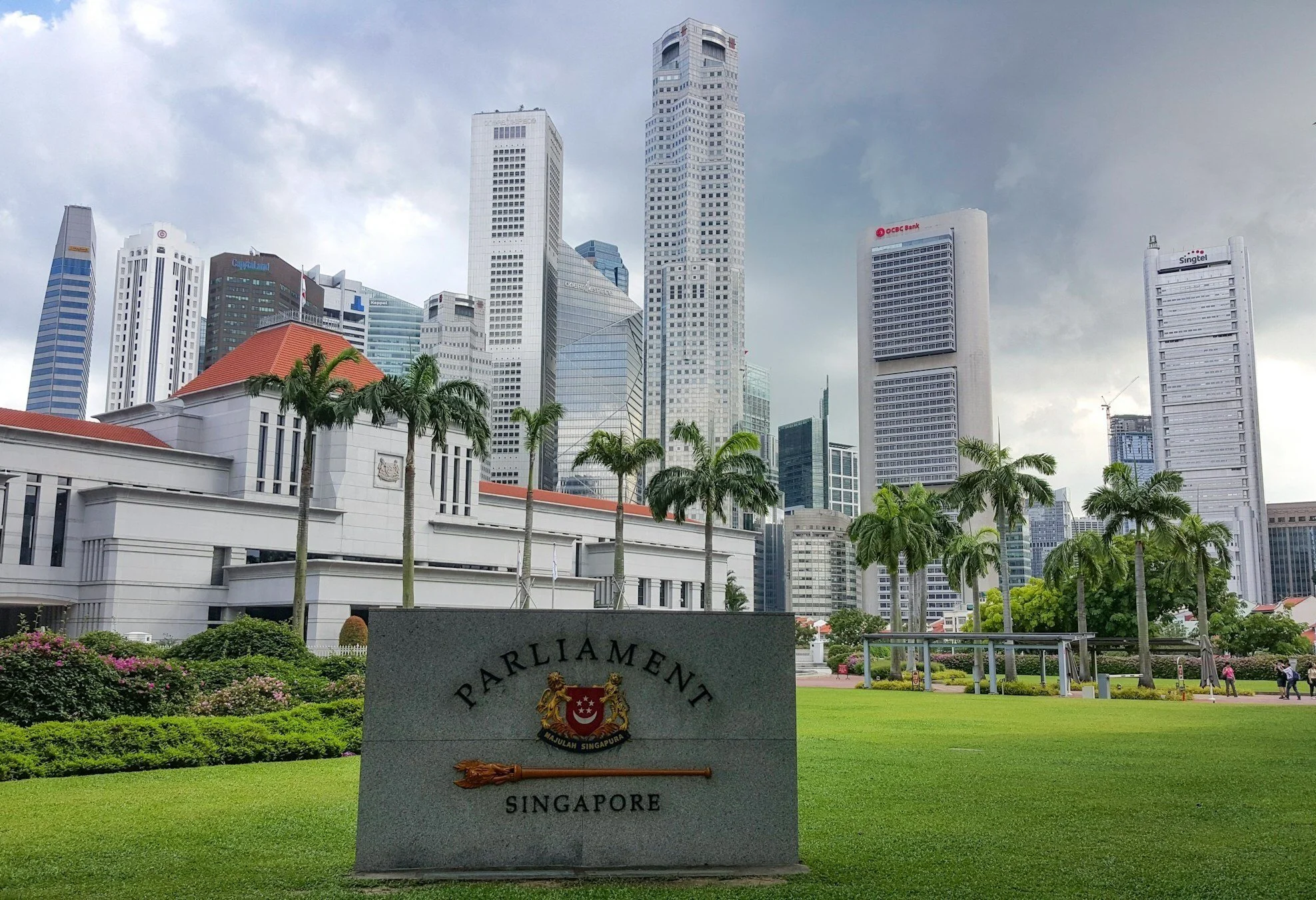
Leadership transition: A curious moment in Singapore’s politics

Written by Pradeep Krishnan

Post-independence politics in Singapore has known a few watershed moments; each noteworthy for chipping away at the PAP’s dominance.

Read More
As the Philippines’ 'agency' in West Philippine Sea rises, so too does its infrastructure development

Written by Joshua Bernard Espeña

In the Philippine context, the country’s newfound middle-power position offers the Southeast Asian state the ability to navigate uncertainties based on clearly defined national interests, and doubling down on its commitment to develop its infrastructures in the West Philippine Sea is one of the ways to do it.

Read More
Southeast Asia9DL9dashline, Joshua Bernard Espeña, Philippines, Philippine sea, maritime infrastructure development, Anti-Access/Area-Denial operations, A2/AD, South China Sea, SCS, drones, imagery intelligence devices, agency, assertive transparency, revisionist moves, middle-power, Southeast Asia, national interests, Philippine Congress, infrastructure development, Martin Romualdez, economic development, resource base, natural resources, Manila, diplomacy, China, Beijing, theory of victory, strategic culture, Ferdinand Marcos Jr, Marcos Jr., National Security Policy (NSP) 2023-2028, NSP 2023-2028, multipolar world, national sovereignty, territorial integrity, national security, resupply missions, joint exercises, construction development, John Mearsheimer, foreign policy objectives, informational spheres, like-minded allies, domestic politics, external powers, foreign policy, Philippine-US alliance, Enhanced Defence Cooperation Agreement, EDCA, Northern Luzon, Huang Xilian, Taiwan, Comprehensive Archipelagic Defence Concept, CADC, Armed Forces of the Philippines, AFP, Mavulis Island, Basco, Batanes province, American interests, Chinese power, Taiwan Strait, West Philippine Sea, Philippine Department of National Defence, archipelagic security, geostrategic agency, Rodrigo Duterte, Philippine-China relations, Malacañang Palace, Cheloy Serafil, Xi, Pantaleon Alvarez, appeasement, Jonathan Malaya, territory, multi-domain future warfare, warfare, As the Philippines’ 'agency' in West Philippine Sea rises, so too does its infrastructure development
Moving forward while moving backwards: More of the same in Thai politics

Written by William J. Jones

In May 2023, the Thai general election saw a political ‘bomb’ drop on Thailand. The progressive reformist Move Forward Party placed first, taking 151 seats in the 500-member parliament, setting the stage for a head-on collision with Thailand’s conservative establishment.

Read More
Facing battlefield losses, Myanmar’s junta may look to ASEAN for off-ramps

Written by Hunter Marston

Identifying possible mediators and key stakeholders is critical at this particular juncture, and given the present circumstances we need not let perfect be the enemy of good.

Read More
In Forum: 2024 — The future of ASEAN

Great power politics in the Indo-Pacific has put the future and centrality of ASEAN under some doubt. How can ASEAN negotiate greater space for itself amid the intensifying great power rivalry?

9DASHLINE asks a select group of experts whether ASEAN can withstand these internal and external pressures.

Read More
Why the EU should become more pragmatic towards Indonesia

Written by Dr Denis Suarsana

A quick and successful conclusion of trade negotiations with Indonesia would not only significantly strengthen Europe's role in the region but would also be an important step in the European strategy of de-risking from China.

Read More
Southeast Asia, Most Popular9DL9DASHLINE, Why the EU should become more pragmatic towards Indonesia, Denis Suarsana, Indonesia, voters, elections, presidential elections, Joko Widodo, Jokowi, Defence Minister Prabowo Subianto, autocratic Suharto regime, Suharto, Europe, EU, trade, climate, Non-Aligned Movement, foreign policy, Bebas dan Aktif, mediator, G20 presidency, G20, Russian invasion of Ukraine, ASEAN chairmanship, ASEAN, conflict in Myanmar, Myanmar, Code of Conduct between China and ASEAN in the South China Sea, Code of Conduct, ASEAN-China Code of Conduct, south china sea, neutral, China, United States, economic development, Ganjar Pranowo, Central Java Province, Anies Baswedan, Jakarta, US-China rivalry, great power rivalry, third way, trading partner, State of Southeast Asia Report, ISEAS-Yusof Ishak Institute, WTO, nickel export ban, palm oil, trade agreement, Indonesia-EU Comprehensive Economic Partnership Agreement (IEU CEPA), European Union, Indonesian elite, EU-ASEAN Summit, coercion, democracy, shopping, Japan, Australia, South Korea, Regional Comprehensive Economic Partnership (RCEP), free trade zone, free trade, moral arrogance, moral, morality, equal partnerships, geopolitics, strategy of de-risking, de-risking, copper, nickel ore, tin, bauxite, China+1, China+1 efforts, investment, Global Gateway, Global Gateway initiative, EU Global Gateway Initiative, EU’s Global Gateway, Europe’s Global Gateway, OECD, hedging, conditionality, hardliner