Written by Adhiraaj Anand
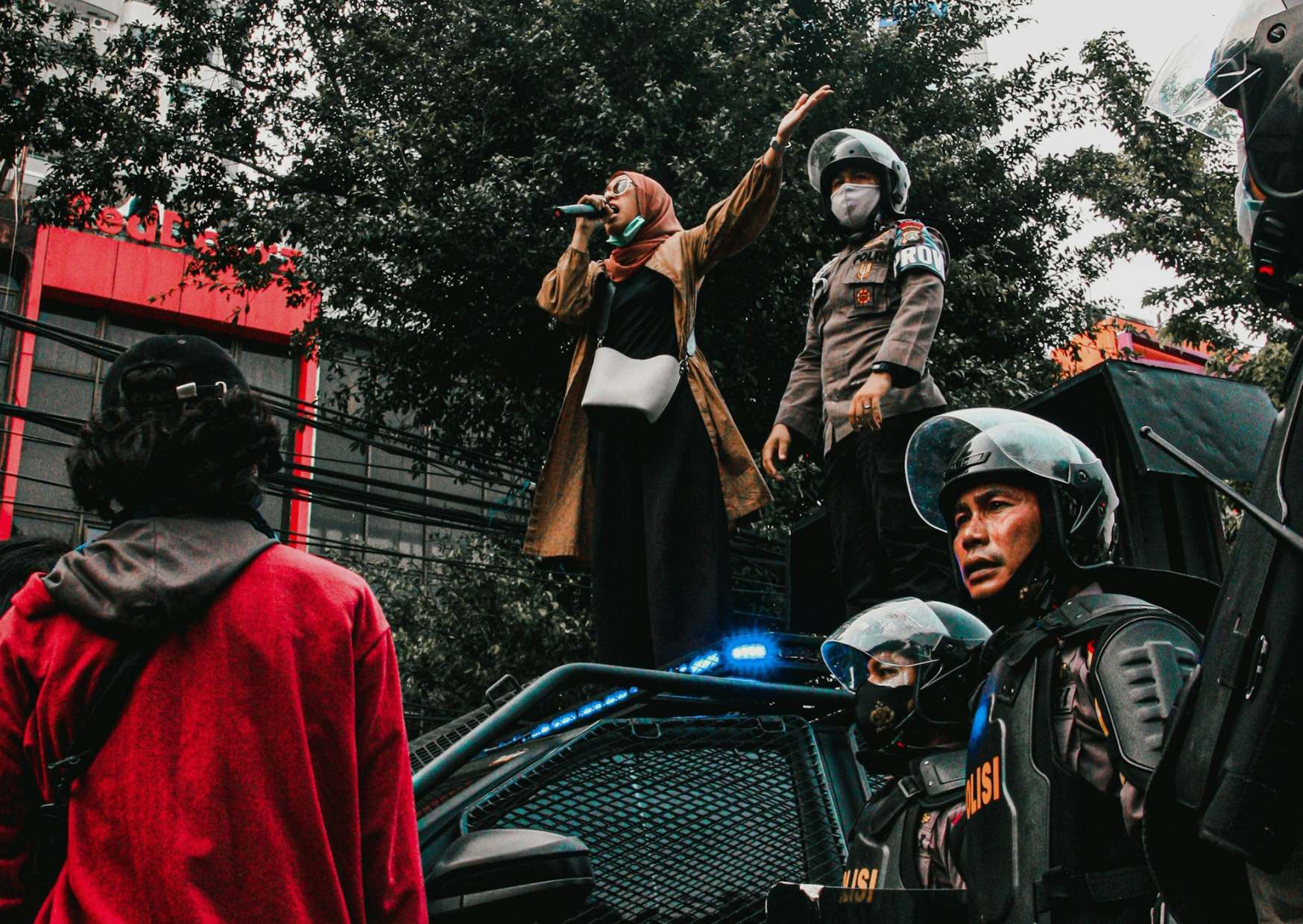
Deeper and more sustained transnational exchanges could foster new regional identities and solidarities between national protest movements, as well as increase their resilience and capacity for innovation.
Read MoreWritten by Adhiraaj Anand
Deeper and more sustained transnational exchanges could foster new regional identities and solidarities between national protest movements, as well as increase their resilience and capacity for innovation.
Read MoreWritten by Taufiq E. Faruque and Rubiat Saimum
Bangladesh no longer intends to operate as a peripheral state within an India-centric security order in South Asia, but as a globally connected security actor seeking to maximise strategic autonomy over its procurement choices, maritime posture, and regional role.
Read MoreWritten by Jia Yin Chen and Luc van de Goor
Crucially, countering cognitive warfare is not just about timely dissemination of factual counter-narratives. It must also build each citizen’s defences against disinformation — making them more skeptical of the information they receive and willing to actively verify it or debunk it.
Read MoreThis month’s briefs examine an international order in rupture: across the Indo-Pacific, middle powers are hedging through overlapping, issue-based partnerships, even as Myanmar’s sham election exposes the limits of values-based realism in an increasingly pragmatic global landscape.
Join our briefing today and stay ahead of the curve.
Read MoreWritten by Seungwan Kim and Jun Sun Yoo
Washington increasingly expects allies not only to share regional defence burdens but also to expand industrial capacity, co-invest in critical technologies, and assume greater responsibility for deterring China. An East Asian AUKUS framework could align with these expectations by signalling Seoul’s commitment to Indo-Pacific security while adding industrial and operational depth to alliance deterrence.
Read MoreWe are delighted to introduce our new editorial leadership.
In this In Brief discussion, Editor-in-Chief Dr Yatana Yamahata and Managing Editor Naledi Tilmann share their vision for the platform’s future, outlining a renewed focus on inclusive Indo-Pacific analysis that highlights under-represented states, youth-led movements, and non-state actors shaping regional security.
Read MoreWritten by Jonathan Berkshire Miller
For the first time in years, Ottawa is treating the Indo-Pacific not as a region of opportunities to sample but as a theatre in which it must choose where to invest.
Read MoreThis month, Zsuzsa and Richard are joined by David MacSweeney to reflect on the year just past and assess the key political, economic, and strategic issues set to shape EU–ASEAN relations and the wider Indo-Pacific in 2026, including five priority areas to watch as regional and external actors navigate an increasingly complex strategic environment.
Subscribe now and never miss an episode.
Read MoreWritten by Faye Simanjuntak
Malaysia’s National AI Roadmap reveals tension between its stated ambitions and the industrial reality taking shape. Although Malaysia has courted notable investments into AI datacentres, there is limited focus on cultivating the upstream capabilities that Malaysia identifies as central to its long-term competitiveness.
Read MoreThis month’s briefs examine an Indo-Pacific shaped by hybrid insecurity: as the United States retreats from development leadership, middle powers step in to fill the void, while escalating climate disasters are redefining resilience, influence, and regional power.
Join our briefing today and stay ahead of the curve.
Read MoreWritten by Stefania Benaglia
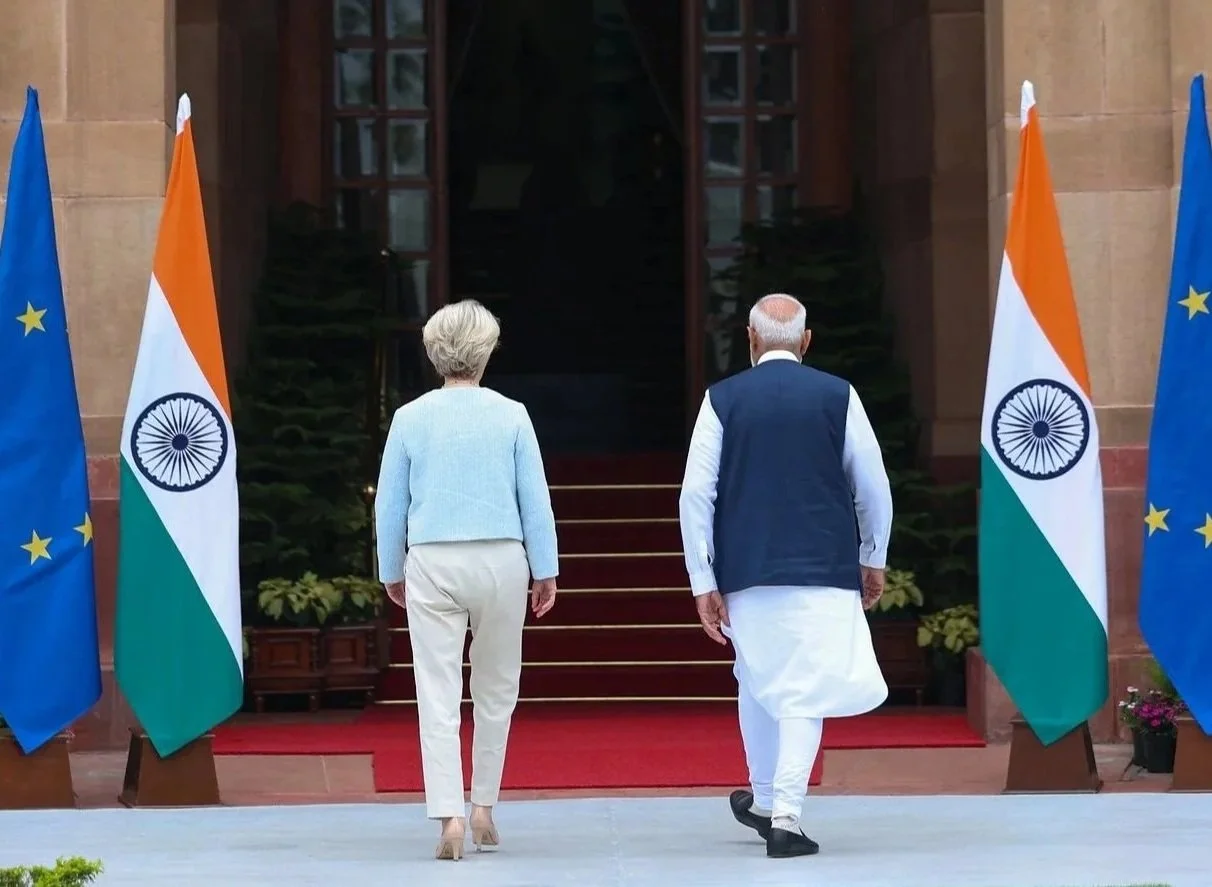
If the EU and India choose realism over rhetoric and build trust not only between governments but also among businesses, innovators, and people, the 2026 Summit could mark a genuine turning point — one where strategic clarity finally replaces political symbolism.
Read MoreWritten by Federica Cidale
While she broke a significant glass ceiling, her policy positions, from historical revisionism and expanded national security powers to restrictive immigration policies, reinforce existing conservative structures.
Read MoreWritten by Emanuele Ballestracci
Italy cannot rival the hard-power presence of France or the UK, nor does it aspire to. Instead, it has constructed a pathway based on economic cooperation, private-sector activism, and steady institutional ties, which over time create the trust needed to expand into political and security spheres.
Read MoreThis month, Zsuzsa and Richard are joined by Hunter Marston to reflect on the latest developments in EU–ASEAN relations: the latest ASEAN summit, Timor-Leste’s entry as a full member, and how the recent conclusion of the EU–Indonesia CEPA is helping transform the region.
Subscribe now and never miss an episode.
Read MoreWritten by Chhay Lim and Chandarith Neak
Without institutional mechanisms that both parties accept as legitimate and binding, border disputes remain vulnerable to escalation and external intervention whenever domestic political pressures or regional tensions rise.
Read MoreThis month’s features explore twin fragmentations reshaping the Indo-Pacific: the quiet construction of a north–south undersea security arc as South Korea joins Australia on the path to nuclear-powered submarines, and the near-collapse of COP30, which exposed a deepening crisis of trust at the heart of global climate governance.
Join our briefing today and stay ahead of the curve.
Read MoreWritten by Shin Kawashima
Japan and other US allies must strengthen ties with Southeast Asian countries to address US retrenchment, positioning themselves as credible alternatives for countries seeking to avoid over-reliance on China.
Read MoreWritten by Yatana Yamahata
Solidarity among Southeast Asians has strengthened pro-democracy movements across the region and, in doing so, fostered a sense of shared regional identity. ASEAN, however, does not mirror nor reinforce this solidarity. Instead, it remains constrained by its founding principle of non-interference.
Read More