Youth-led protest movements across South and Southeast Asia seek a political reset
Youth-led protest movements across South and Southeast Asia seek a political reset
WRITTEN BY ADHIRAAJ ANAND
25 November 2025
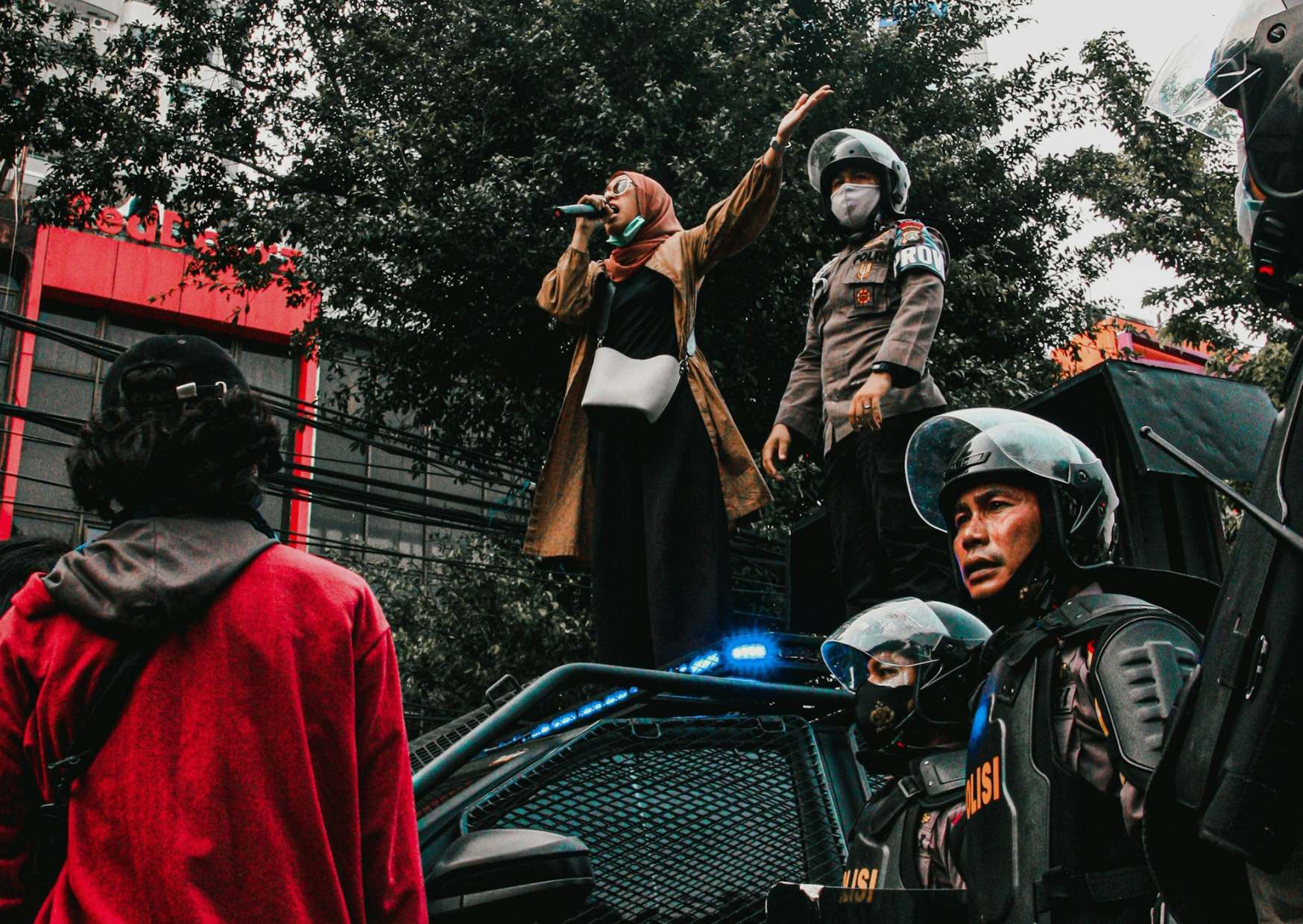
A wave of youth-led protest movements, termed “Gen Z protests” by some, has swept South and Southeast Asia. In 2025 alone, young people have taken to the streets in opposition to ruling elites in Indonesia, Timor-Leste, Nepal, and the Philippines, following anti-government movements in Bangladesh, Sri Lanka, and Thailand in recent years. While shaped by different national contexts, these movements broadly reflect a feeling — particularly among younger generations — that ruling elites are out of touch with their needs and concerns and are not truly accountable to them. In a region with hundreds of millions of young people, many see their living standards stagnating or even deteriorating, with limited job prospects, while ruling elites fail to address systemic corruption and even openly flaunt their wealth.
In Indonesia, youths have expressed discontent with the economic situation and corruption, favouritism, and lack of accountability among elites for several years, going back to the 2019 #ReformasiDikorupsi (“Reformation Corrupted”) protests. The hashtag #KaburAjaDulu (“Just Leave First”) trended in 2024 and 2025 among those seeking to migrate abroad for better economic opportunities. Moreover, President Prabowo Subianto has recently sought to allow military officials to serve in civilian positions. This has led many to believe that not only have the promises of the Reformasi (“Reformation”) that began in 1998 gone unfulfilled, but also that the country is regressing back to the decades of military rule that preceded it.
Deeper and more sustained transnational exchanges could foster new regional identities and solidarities between national protest movements, as well as increase their resilience and capacity for innovation.
Similarly, in Nepal in September 2025, amid a failing economy with few job prospects, many young people were angered by the children of political elites flaunting their wealth on social media. The subsequent ban on social media apps became the final straw for Nepal’s youth, who proceeded to take to the streets against the government. Similarly, in the Philippines and Timor-Leste in September 2025, youth mobilisation was driven by anger at the lavish lifestyles of politicians and their families. Netizens in the Philippines, expressing fury over corruption in flood control projects, also shamed so-called “nepo babies” online. In Bangladesh in 2024, students took to the streets after a bill was introduced by the ruling Awami League that would provide benefits to freedom fighters and their families. Many saw this bill, which came amid a worsening economic situation, as cynically benefitting the ruling party and its sympathisers.
Calls for a political reset
Politics as usual has left many protesters disillusioned. Some Indonesians have used the hashtag #ResetIndonesia online to call for reforms of political parties and the police force, and for a full withdrawal of the armed forces from civilian affairs. Filipinos marching in the streets this year have expressed discontent with both the Marcos and Duterte families that lead (and compete for) the country’s power structures. Bangladeshi students who protested against former Prime Minister Sheikh Hasina in 2024 made clear after her ousting that they were not interested in handing power over to any of the major political parties — the Awami League, Bangladesh Nationalist Party or Jamaat-e-Islami. They proceeded to vandalise statues of Sheikh Mujibur Rahman, the independence hero and father of Sheikh Hasina. In Sri Lanka, the 2022 Aragalaya (“struggle”) that ousted the Rajapaksa family from office paved the way for the victory of the National People’s Power coalition in the 2024 parliamentary elections, severely weakening mainstream party coalitions associated with dynastic elites.
These movements are seeking a fundamental reset of national politics. Driven by frustration over the disconnect between their daily struggles and the lifestyles of the elected ruling elite, younger generations are eschewing hierarchies in their political organisation and using social media to coordinate action, spread messages, and make political demands. While their ability to bring about fundamental political change is limited, these youth-led protests have nonetheless succeeded in removing incumbent rulers or forcing government concessions, showing that their voices and concerns cannot be ignored.
Youth’s innovations in political action
These youth-led movements tend to follow a horizontal and decentralised structure, with a lack of hierarchy and high degree of fluidity. Some activists, particularly in Indonesia and Thailand, cite Hong Kong’s 2019-20 pro-democracy protests as an inspiration, which were guided by the slogan ‘Be Water’. Based on a quote by actor Bruce Lee, this slogan embodies a philosophy that encourages protesters to follow a non-hierarchical form of organisation and remain highly adaptable in order to evade arrest and police repression.

Hong Kong Protest 2019-20. Image credit: Flickr/Studio Incendo.
Social media facilitates communication, organisation, and the rapid spread of messages, images, and videos that evoke emotions and rally people behind political causes and campaigns. In Indonesia, a video of a police vehicle striking and killing an ojol (“motorcycle taxi”) driver in August 2025 went viral, generating widespread anger and prompting the emergence of #SEAblings — a trending hashtag that soon evolved into a cross-border online solidarity movement to support ojol drivers and protesters in Indonesia.
Moreover, young people are drawing on a variety of cultural references, from anime to K-pop, to make political statements. The “Jolly Roger” flag from the anime One Piece — which was widely used by students and truck drivers in Indonesian protests in early 2025 — has since also appeared in protests in Nepal, the Philippines, and on a global scale. In previous years, other transnational expressions of solidarity have included the three-fingered salute, which is a symbol used by rebels fighting for freedom from the ruling regime in The Hunger Games series. The Milk Tea Alliance began as a hashtag used by netizens in Taiwan, Thailand, and Hong Kong — three places united by their own variants of milk tea — during the latter’s pro-democracy protests in 2020. Protest tactics also spread from Hong Kong to Indonesia, Thailand, and beyond, with graphics on how to protect oneself against police responses to protests circulating on social media. These online interactions not only highlight young people’s creativity and growing resilience but also foster a sense of shared struggle across borders.
New forms of digital protest and organisation have been a key factor in regional efforts to reset politics. In 2022, Sri Lankan activists used a variety of online tools to coordinate and express dissent, including review bombing — a new form of online protest in which protesters post coordinated negative reviews on Google Maps locations associated with political elites. Young activists in Nepal held town hall-style meetings on Discord to discuss post-protest questions on corruption, investigations into killings of protesters by police, and youth representation in government, and even elected their interim leader through the platform.
Challenges for youth-led movements
The lack of hierarchy and growing digital cooperation that define recent protest movements make it easier for many young people to get involved. However, protesters are not always able to coalesce around a shared political vision. In the absence of formal leadership, recognisable figures and opinion leaders often emerge as informal representatives in negotiations with authorities, which can expose internal fragmentation within movements. In Nepal, for instance, Sudan Gurung — who founded the organisation Hami Nepal — has emerged as a face of the country’s youth protest movement. His participation in government negotiations in October 2025 drew opposition from other Gen Z groups in Nepal, who questioned his legitimacy and had different demands of the government. Such divisions weaken youth movements’ internal coherence and political legitimacy, which partly explains why, even when youth protest movements succeed in dislodging incumbent leaders, more established political figures are typically nominated to manage political transitions, such as Muhammad Yunus in Bangladesh and Sushila Karki in Nepal.
Moreover, online campaigns — a prominent feature of recent youth-led protest movements — often emerge quickly and spontaneously during protest waves but can lose momentum as these waves subside and netizens’ attention shifts elsewhere. In such instances, they are limited to brief exchanges and moments of solidarity that do not always have a lasting impact.
Towards a transnational movement?
Protest movements across the region may draw inspiration from one another but often remain local or national in character and impact. While digital platforms enable the exchange of practical information and expressions of solidarity, in-person exchanges remain important for the development of deeper and lasting ties between different national protest movements.
People-to-people exchanges — through universities, NGOs, unions, and informal collectives that facilitate public discussions — help transform short-term transnational solidarity into sustained cross-border networks. The Milk Tea Alliance, which began as an online campaign, later grew into an offline movement and a platform for incubating similar initiatives. Its growth was promoted by existing regional networks, which are likely to continue playing an important role in shaping an enduring, truly transnational movement across the region.
Despite the challenges of achieving a genuine, lasting political reset, recent protest movements across South and Southeast Asia have mobilised large numbers of young people and demonstrated their ability to challenge entrenched power structures. Deeper and more sustained transnational exchanges could foster new regional identities and solidarities between national protest movements, as well as increase their resilience and capacity for innovation.
DISCLAIMER: All views expressed are those of the writers and do not necessarily represent that of the 9DASHLINE.com platform.
Author biography
Adhiraaj Anand is a doctoral researcher at the German Institute for Global and Area Studies (GIGA). Their work focuses on social movements and transnational activism in Asia. Image credit: Unsplash/Refhad.