Written by Hessy Elliott
China’s accelerating AI innovation deserves the world’s full attention, but it is unhelpful to reduce all the many developments into a simplistic narrative about China as a threat or a villain.
Read MoreWritten by Hessy Elliott
China’s accelerating AI innovation deserves the world’s full attention, but it is unhelpful to reduce all the many developments into a simplistic narrative about China as a threat or a villain.
Read MoreWritten by James Borton and Lucio Blanco Pitlo III
Once regarded as the “cathedrals” of the South China Sea, the coral in the Mischief and North Danger reefs, are stressed and bleached. All claimant nations are now being called upon to engage in science-cooperation before it’s too late to save them.
Read MoreWritten by Tereza Novotná
Brussels and Seoul share views on liberal values, global governance and the preservation of the rules-based international order. Since there is no major disagreement between them on these broader questions, what was the key take away from the EU-ROK summit?
Read MoreWritten by Niranjan Marjani
India’s border disputes with Nepal and China have previously been bilateral in nature. But in the current circumstances, these disputes have assumed a much more complex character owing to China's ambitions.
Read MoreWritten by Kannan R Nair
Despite two decades of the Look East Policy and a more assertive Act East policy under Narendra Modi, New Delhi has not truly explored the potential of promoting increased cooperation and economic ties with the Mekong subregion.
Read MoreWritten by Sari Arho Havrén
In terms of human rights and freedoms, Hong Kong’s future looks bleak, and as if the current National Security Law was not enough, Beijing has already signalled that it could draft more laws for Hong Kong in order to safeguard it’s national security in the future.
Read MoreWritten by Uday Bakhshi
The power struggle between the NLD and the Tatmadaw is a major source of political instability in Myanmar. At the crux of this is the 2008 military-drafted constitution, which allows the Tatmadaw to appoint 25 per cent of the members of the bicameral Assembly of the Union, effectively giving it veto powers.
Read MoreWritten by Zsuzsa Anna Ferenczy
In the words of European Council President Charles Michel, the EU has to recognize the two sides do not share the same values, political systems or approach to multilateralism. Significant tensions lie at the heart of their bilateral relations, which COVID-19 originating in Wuhan has amplified.
Read MoreWritten by Yoichiro Sato
The declaration of the East China Sea ADIZ, which purposefully enclosed the Senkaku Islands, was not only popular among the Chinese public, but also necessary for Xi Jinping as a demonstration of strength in the eyes of his CCP rivals. Might the South China Sea be next?
Read MoreWritten by Abhishek Mishra
The African continent increasingly occupies a central place in India’s strategic calculus. While India and Africa’s trade, investment, and capacity building initiatives are growing, it is the maritime-security partnership where ties are set to evolve.
Read MoreWritten by Alan Tidwell
The Morrison government sees a sharpening of the strategic competition between the US and China and signals a continued deepening of the American alliance. At the same time, the Update also points to other like-minded partners, such as Japan and Singapore, with whom Australia can work with.
Read MoreWritten by Shah Suraj Bharat
After Myanmar announced its COVID-19 Economic Relief Plan, analysts warned that Beijing would take advantage of these measures and push through infrastructure projects under the China-Myanmar Economic Corridor (CMEC), which falls under the Belt and Road Initiative (BRI).
Read MoreWritten by Gaurav Sen
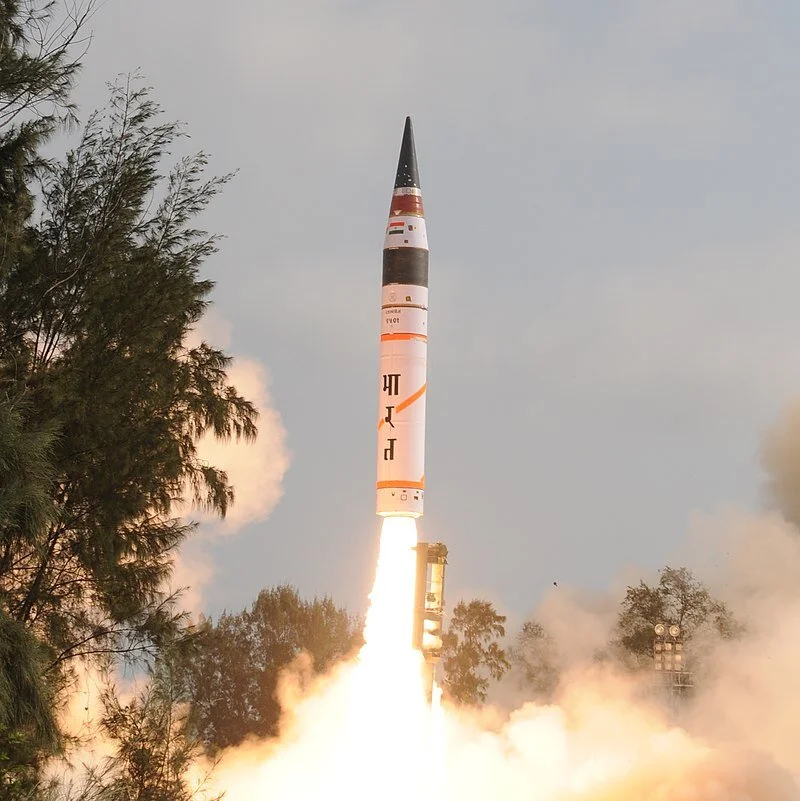
Nuclear weapons rather than serving as deterrence or moving the conflict below the threshold of conventional war, have instead only brought further instability to South Asia. If India and Pakistan do not practice restraint, then fear of war will feed into South Asia's economic milieu, as investors and tourists flee potential hostilities.
Read MoreWritten by Mateusz Chatys
Considering the scale and scope of Chinese actions in the South China Sea, as well as the previous arrangements with ASEAN regarding how to resolve maritime disputes, the 36th ASEAN summit did not bring strong opposition to Beijing’s recent conduct.
Read MoreWritten by Paras Ratna
Recent escalation with India highlights the fact that, for many, China has long abandoned the “peaceful rise” approach. In fact, China’s external relations can be seen to have come a full circle from Deng Xiaoping’s “hide your strength” to Xi Jinping’s “strive for achievement”
Read MoreWritten by Akriti Vasudeva
The ongoing standoff underscores the unraveling of the logic that has undergirded India-China ties since the late 1980s and early 1990s—i.e. if the two sides kept the border dispute divorced from the broader relationship, they could build stability and cooperation, which would in turn help resolve boundary issues.
Read MoreWritten by Suyash Desai
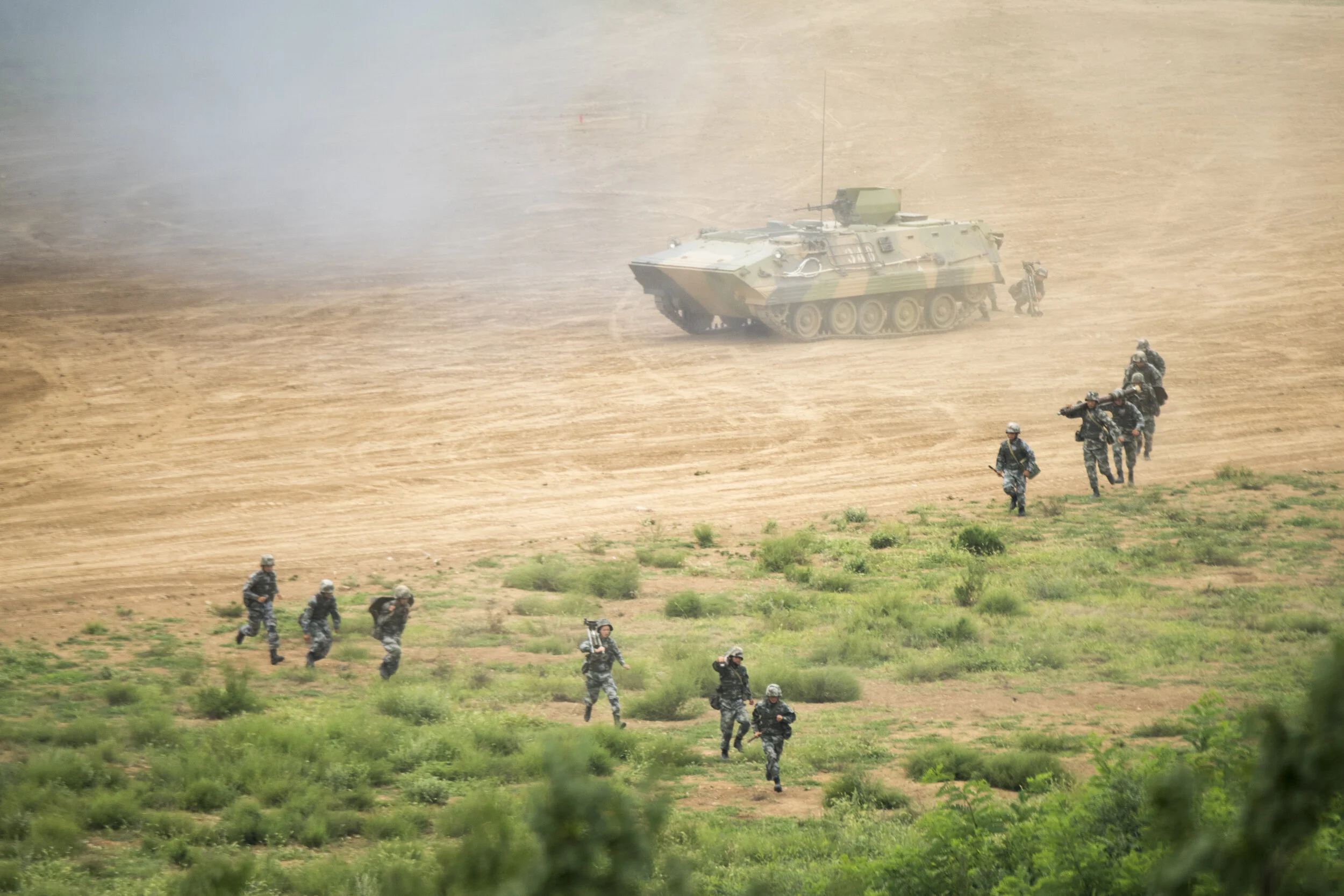
Since 2013, the tempo of the People’s Liberation Army’s single and joint services exercises in Tibet have increased. The PLA has also started performing high altitude night-time military exercises and focused war-gaming in the Qinghai-Tibet Plateau region.
Read MoreWritten by Uday Bakhshi
The political instability of the last few months has alienated Malaysia’s public. Meanwhile the governing Perikatan Nasional is increasingly viewed as illegitimate, and concerns over corruption at the heart of Malaysia’s government are once again rising.
Read More