Written by Manali Kumar and Chetan Rana
After a decade of sliding towards authoritarianism, a return to coalition politics promises a path to redemocratisation. Without a clear majority, the BJP can no longer bypass parliamentary scrutiny.
Read MoreWritten by Manali Kumar and Chetan Rana
After a decade of sliding towards authoritarianism, a return to coalition politics promises a path to redemocratisation. Without a clear majority, the BJP can no longer bypass parliamentary scrutiny.
Read MoreWritten by Soumya Bhowmick
Restructuring Sri Lanka’s debt, particularly with major creditors such as India and China, gives Colombo a certain amount of leverage in negotiations with the IMF and reflects shifting regional dynamics.
Read MoreWritten by Uday Vir Garg
However, when read along with its administrative counterparts, we start to see how legislation with the intent to absorb outsiders and consolidate liberal citizenship, ends up filtering insiders by irregularising their previously stable sense of belonging.
Read MoreWritten by Kunal Singh
In the absence of sound theoretical logic and empirical support for contrary possibilities, Indian MIRV-ed missiles should be seen as instruments of stability.
Read MoreWritten by Mae Chow and Shakthi De Silva
Ultimately, Bangladesh's ability to maintain constructive engagements with China and India will not only shape its own future trajectory but also contribute significantly to the stability and prosperity of the broader Indo-Pacific region.
Read MoreWritten by Lea Thome
The Maldives finds itself caught in a tug-of-war between India and China. However, Malé under Muizzu’s presidency has shown increasing openness towards China as it strives to navigate the balance between the two countries and maintain its own sovereignty.
Read MoreWritten by Soraya Kishtwari
As there is no clear legal framework whereby governments or international bodies are able to categorise and process migrants displaced by climate change, many struggle in legal limbo.
Written by Syed Ali Zia Jaffery
Lacking confidence and bandwidth, Pakistan’s new government is unlikely to prioritise improving ties with India. If anything, India will be way down the pecking order of its policy actions.
Read MoreWritten by Varuna Shankar
Japan provides the opportunity for Sri Lanka to reduce its dependence on China for economic reform, while Sri Lanka provides Japan an opening to penetrate deeper into the South Asian market.
Read MoreWritten by Dr Filippo Boni
Pakistan is scheduled to hold its twelfth general election on 8 February, amid a deteriorating security situation in parts of the country, allegations of an uneven playing field against the former Prime Minister Imran Khan and his party, and with China and the United States waiting to find out who will lead the next Pakistani government.
Read MoreWritten by Michael Kugelman
Ultimately, like any democratic leader, Muizzu will need to walk a tightrope between foreign policy imperatives and domestic political considerations. A balancing policy abroad will also require one at home.
Read MoreWritten by Dr Mohd Tahir
The post-Article 370 political landscape shifted political discourse within Kashmir from one of self-rule to development. While this shift is a matter of political expediency for local leaders in the context of the restrictive political environment, it has also opened a window of opportunity for many emerging young Kashmiri leaders.
Read MoreWritten by Eve Register
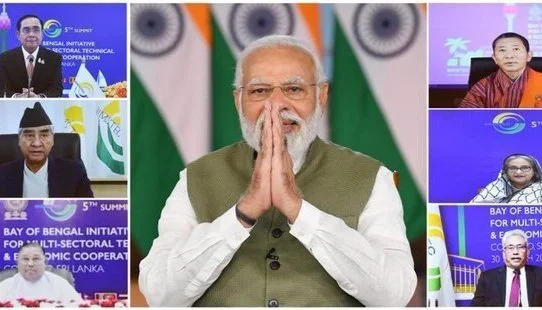
It will be important for BIMSTEC to learn from the mistakes of the BRI if it is to work as a viable alternative for countries in the Bay of Bengal region.
Read MoreBy Dr Claude Rakisits
All in all, the expulsion en masse of the Afghan refugees will make things worse, bilaterally, and quite possibly, regionally. Certainly, no one’s security will improve; if anything, it will further destabilise Afghanistan already tottering on the brink of collapse.
Read MoreWritten by Tobias Scholz
The recent enhancement of security dialogues and mechanisms will continue to look inward by building trust, resilience, and capacity among BIMSTEC partners.
Read MoreWritten by Dr Amira Jadoon and Iqraa Bukhari
A shift towards utilising female fighters for pragmatic reasons would not be without precedent, as evidenced in case studies of Boko Haram or Islamic State affiliates in Southeast Asia. Pakistan, in particular, presents a largely “untapped female operative market”.
Read MoreWritten by Anjali Hewapathage and Thilina Panduwawala
It may be true that Sri Lanka is on a path of economic recovery, but, despite the ambition and compliance to continue growth, it might prove challenging as risk factors play out both locally and globally.
Read MoreWritten by Vedant Saigal
In the aftermath of the Galwan Valley clashes in 2020, the Indian Navy used two MQ-9 SeaGuardian drones to keep an eye on Chinese activity in the Indian Ocean Region.
Read More