Written by Amelia Hadfield and Chris Logie
Driven by massive suburban shifts, including shifts driven by women voters and wider demographic changes, Georgia and Texas have together shifted towards Biden.
Read MoreWritten by Amelia Hadfield and Chris Logie
Driven by massive suburban shifts, including shifts driven by women voters and wider demographic changes, Georgia and Texas have together shifted towards Biden.
Read MoreWritten by Joseph Hammond
This summer the State Department approved a $23 billion plan for Japan to acquire 105 F-35 stealth fighters of both the conventional take-off (the F-35A), and the short take-off and vertical landing variant (the F-35B). As a result of this deal, Japan is now home to one of only two F-35 production final assembly and check-out facilities outside of Fort Worth, Texas.
Read MoreWritten by M. Sudhir Selvaraj
Most scholarship on communal violence in India focuses on Hindu-Muslim contentions, it is essential to note that Christians in India, who constitute 2.3 per cent of the population, are also targets of violence. Academics and activists share the consensus that violence against Christians is primarily caused by those who subscribe to the Hindutva ideology.
Read MoreWritten by Javed Iqbal Wani & L. David Lal
The Indian government’s attitude towards the people of the region has become clear over the past year. It has not taken enough steps towards ameliorating Kashmiri fears of Hindu nationalism and overreach by the Indian state has put them at the crossroads of an active confrontation between three nuclear powers in South Asia.
Read MoreWritten by Prashant Kandpal and Koushlender Singh Bundela
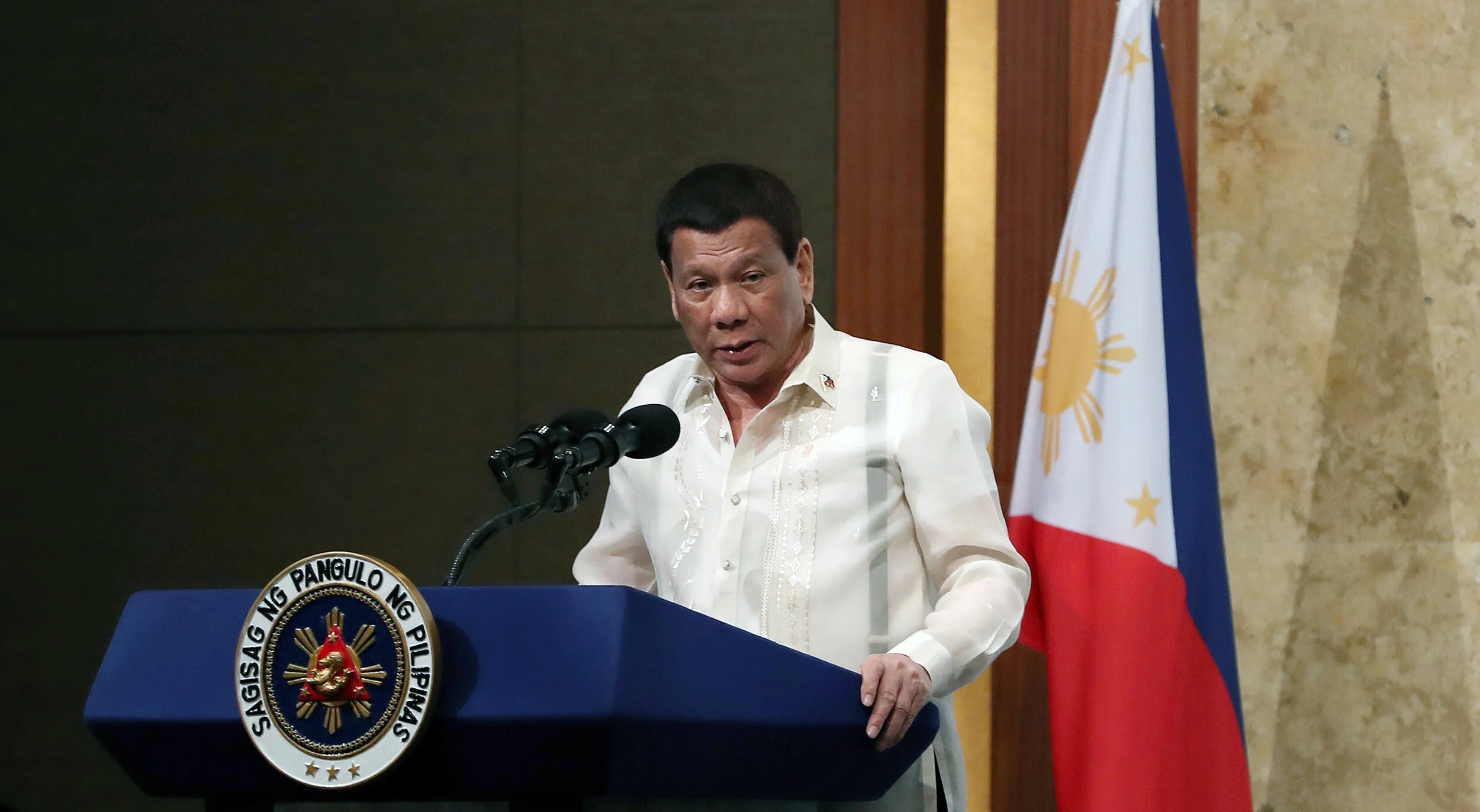
Recent attacks from extremist splinter groups, including the resurgence of Islamic State in the region has forced Duterte to put his weight behind a reformed terrorism bill. Those protesting against the new anti-terror bill fear that provisions within it will give Manila unsupervised power over the citizens of the country.
Read MoreWritten by Saurav Sarkar
The attackers were well-armed and equipped pointing towards careful preparation and a well-tested strategy. The tactics used by Islamic State in Iraq and Syria appear to have been deployed with lethal effectiveness by ISKP in Afghanistan.
Read MoreWritten by Saurav Sarkar
India has been cautious in talking to the Taliban for multiple reasons, owing to Pakistan’s significant influence over the Taliban, and New Delhi’s commitment to engage with the elected Afghan regime. Some have advocated that India establish communications with the Taliban to keep its options open if or rather when they return to power.
Read MoreWritten by Uday Bakhshi
The political instability of the last few months has alienated Malaysia’s public. Meanwhile the governing Perikatan Nasional is increasingly viewed as illegitimate, and concerns over corruption at the heart of Malaysia’s government are once again rising.
Read MoreWritten by Indrajit Roy
In the past 12 months, India’s parliament, the Lok Sabha, adopted a number of laws delivering on the electoral promises made by Narendra Modi’s Bharatiya Janata Party. But their approach to governing has worrying parallels.
Read MoreWritten by Megha Pardhi
India’s development cooperation initiatives reveal New Delhi’s priorities. Although the largest number of projects financed through lines of credit are in Africa, the total amount allocated is highest in India's neighbourhood of South Asia.
Read MoreWritten by Saurav Sarkar
In March this year AQIS changed the name of its Urdu language magazine Nawa-e-Afghan Jihad to Nawa-e-Ghazwa-e-Hind (NGH). This change may have been required in order to give the impression that India would be the priority theatre for AQIS after its apparently successful jihad against U.S. forces in Afghanistan alongside the Taliban.
Read MoreWritten by Dharish David and Lajjeetaa Manokaran
The World Bank estimates that at least 11 million people will slip back into poverty in East Asia and the Pacific, and another 16 million in South Asia due to the economic fallout from the COVID-19 pandemic.
Read MoreWritten by Abishur Prakash
Could governments start forcing technology companies to program AI with local beliefs, political attitudes and traditions? If so, for the first time, ethics may define business success, especially in Asia.
Read MoreWritten by Dharish David and Chew Si Xing Theresa
How have democracies responded to COVID-19? Some societies rapidly implemented stringent measures whilst others did not, and how do democratic nations compare with their autocratic counterparts response’s to the pandemic?
Read MoreWritten by M. Sudhir Selvaraj and Sharik Laliwala
The anti-Muslim bias of the law is quite consistent with the ruling BJP’s ideological moorings directly inspired by its parent organisation, the Rashtriya Swayamsevak Sangh (RSS).
Read MoreWritten by Sari Arho Havrén
When we look back to 2020, the Covid-19 outbreak may well be one of the triggers that led into the break-up of the European Union and China becoming the biggest economy in the world.
Read More
Written by Ian Inkster
East Asian nations share a large number of socio-cultural features, ranging from written language, life aspirations and the high importance both economically and socially of small businesses, to what I have referred to, as an underbelly of Confucian values.
Read MoreWritten by Paul Gardner
China’s political leaders will be hoping that when concerns about the coronavirus eventually start to recede, memories about the state’s failings early on in the outbreak will also fade.
Read More