In Forum USA250: The future of the liberal international order in the Indo-Pacific
IN FORUM USA250: THE FUTURE OF THE LIBERAL INTERNATIONAL ORDER IN THE INDO-PACIFIC
1 July 2026
The 250th anniversary of American independence comes at a moment when “a city upon a hill” faces two crises: the erosion of liberal democracy, and the unravelling of the liberal international order. Trump’s second administration has hastened this decline by withdrawing from 66 international organisations and carrying out unlawful military interventions in Venezuela and Iran. The liberal international order that Washington constructed since the end of the Second World War — and now struggles to uphold — is under mounting pressure.
This has had ripple effects throughout the Indo-Pacific. From the contested waters of the South China Sea and East China Sea to the strategic hedging of regional middle powers, the growing unease among US treaty allies, and the proliferation of minilateral arrangements, tensions across the Indo-Pacific reflect more than geopolitical friction. They represent a challenge to the norms, practices, and institutions that Washington has promoted in the region.
Marking this occasion, we invite several key experts to reflect on these ripple effects—and, in particular, on the future of the liberal international order in the Indo-Pacific. What kind of order, if any, is taking shape alongside, beyond, against, or in place of the US-led liberal international order?
NEW AGE OF STRATEGIC NATIONALISM
Dr Jagannath Panda, Head of the Stockholm Center for South Asian and Indo-Pacific Affairs (SCSA-IPA) at the Institute for Security and Development Policy (ISDP), Sweden. Senior Fellow at The Hague Centre for Strategic Studies (HCSS), The Netherlands.
The liberal international order is not disappearing; it is being transformed by the rise of a more protective, nationalist, and interest-driven conception of world politics. Across both democratic and non-democratic states, the language of sovereignty, strategic autonomy, economic security, and national resilience increasingly outweighs commitments to universal norms and collective governance. The result is an emerging order that is less liberal, less predictable, and more transactional.
This transformation is visible in both Washington and Beijing. The United States, traditionally the principal architect of the liberal international order, has become increasingly selective in its commitment to the very institutions and rules it once championed. China, meanwhile, continues to expand its diplomatic influence through pragmatic engagement, economic statecraft, and institutional activism. While both powers are likely to exhibit dominant and, at times, coercive tendencies, Beijing may enjoy a comparative advantage through its ability to combine strategic patience with flexible diplomacy.
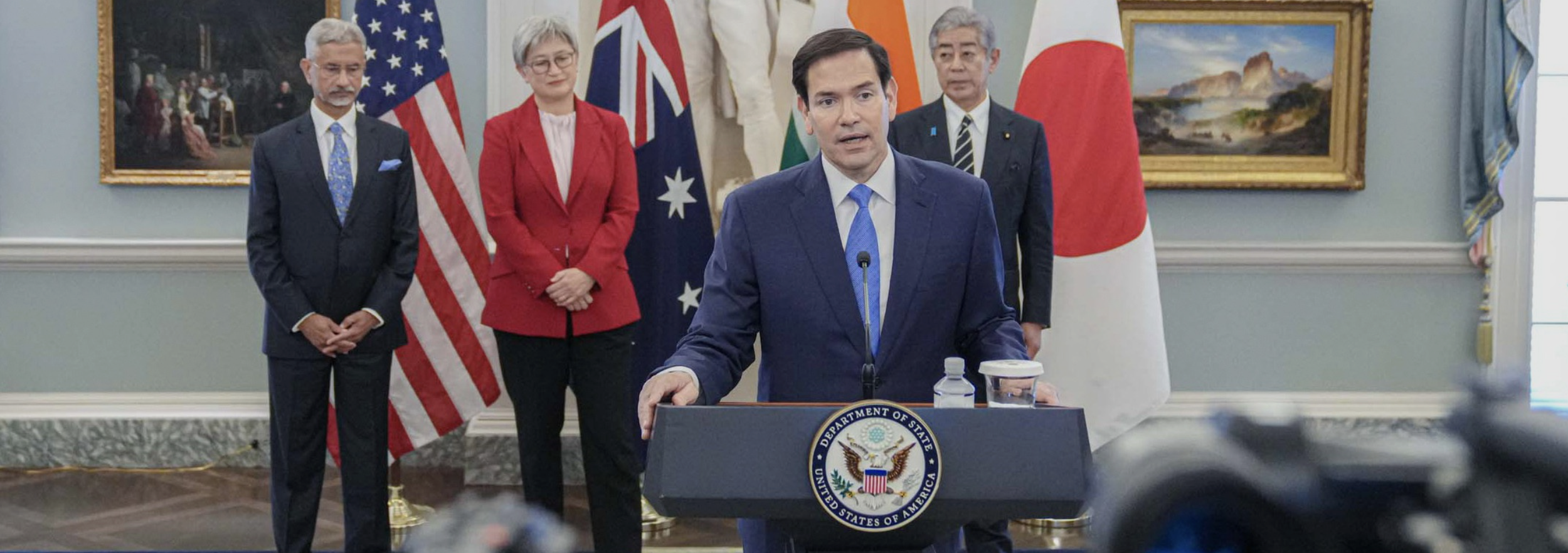
Indo-Pacific Quad Foreign Ministers. Image credit: Flickr/US Department of State.
The Indo-Pacific increasingly reflects this reality. Rather than strengthening universal institutions, states are turning towards minilateral arrangements and issue-based coalitions (such as AUKUS, Quad, Australia-India-France) designed to protect specific national interests. These platforms may enhance security and economic cooperation, but they are unlikely to replace a broader rules-based order. Consequently, an international system characterised by selective adherence to rules, the unequal application of justice, and the erosion of legal norms may become the new normal.
Yet this trend will also generate growing demands for reform. Calls to reform and restructure global institutions, particularly the United Nations and the UN Security Council, are likely to intensify. In this debate, the Global South will gain greater political momentum, seeking not merely representation within the existing order but a meaningful role in shaping its future.
A FRAGMENTED INDO-PACIFIC ORDER IN AN ERA OF US UNCERTAINTY
Dr Kei Koga, Associate Professor and Head of Division, (Public Policy and Global Affairs Programme, School of Social Sciences), Nanyang Technological University, Singapore.
The Indo-Pacific is now arguably confronting a consequential problem: the weakening of US reliability as the normative anchor of regional order. The Trump administration’s 2025 National Security Strategy and Secretary of Defense Pete Hegseth’s 2026 Shangri-La Dialogue speech signal that the United States no longer treats the liberal, rules-based international order as the core organising principle of US foreign policy. Instead, US strategy is increasingly framed around national interest, transactional partnerships, and hard power.
This does not mean that previous US administrations acted purely on principle. US foreign policy has always combined interests and ideals, often inconsistently. Yet the language of the liberal international order mattered: it reassured allies and partners that alignment with the United States served not only US interests but also broader principles such as democracy, open economies, international law, multilateralism, and institutional cooperation.
That reassurance has now weakened. While some may argue that the United States will eventually return to traditional diplomacy, successive shifts from Trump to Biden and back to Trump indicate that US foreign policy has become increasingly uncertain, less credible, and subject to sharp swings. For Indo-Pacific states, the issue is thus no longer simply what the US does now, but how much its commitments may change in the future.
This expectation of US inconsistency is likely to propel regional states to pursue long-term alternatives without abruptly distancing themselves from the United States. Hedging strategies will become more pronounced as states seek to protect their interests and stability without relying too heavily on any single great power. As such, allies and partners will continue to cooperate with the US where interests align, while strengthening self-reliance, diversifying partnerships, and investing in minilateral and regional institutions, some of which may not be grounded in liberal values. The emerging Indo-Pacific order would therefore likely be neither post-American nor China-led, but more plural and fragmented.
REGIONAL INSTITUTIONAL ARCHITECTURE IN FLUX
Dr Kristi Govella, Associate Professor of Japanese Politics and International Relations (Nissan Institute of Japanese Studies) University of Oxford, UK. Senior Adviser and Japan Chair, Center for Strategic and International Studies, USA.
The regional institutional architecture of the Indo-Pacific has always been political. It has evolved from Asia to Asia-Pacific to Indo-Pacific alongside geopolitical shifts, and regional membership has been a persistent topic of debate. The regional order today is more fragmented but also more densely layered than ever before, with newer minilateral and bilateral initiatives existing alongside older structures such as US-led bilateral security alliances, ASEAN, APEC, the ASEAN Regional Forum, ASEAN Plus Three, and the East Asia Summit.
To a limited extent, there is coherence between old and new. US-led minilaterals are nested within the US system of security alliances, and the ASEAN family of institutions remains grounded in a common set of operational norms. There is also a degree of division-of-labour logic across these institutions, which tend to have different functional agendas, by design or by default. However, the informal, overlapping institutions that have characterised the Indo-Pacific for the past several decades are no substitute for the rules-based international order — and the latter’s deterioration will likely make the region’s institutional ecosystem even more prone to fluctuation as governments search for new cooperative mechanisms. The newest generation of groupings in particular is powered much more by political will than institutional design — and when political will ebbs, an institution will find itself at risk of dormancy, even if it does not disappear.
For these reasons, the current regional institutional architecture is an unstable equilibrium, not an end state. Regional governments therefore have a great deal of agency in shaping what comes next. Under the second Trump administration, the US government has thus far expressed limited interest in institution-building, and its vision of the region may be shifting — which is a challenge but also an opportunity for those with the capacity to act. The current institutional menu is full of options, so the task will likely be less about establishing new structures and more about solidifying and promoting the institutions that will become the foundation of the region’s future. The groupings that survive this ‘institutional Darwinism’ will be those that can best adapt and demonstrate their value in an increasing uncertain region.
THE EU’S LIMITED ROLE IN A FRAYING INDO-PACIFIC ORDER
Dr Alfred Gerstl, President of the Central European Institute of Asian Studies (CEIAS), Slovakia. Associate Professor at Palacký University Olomouc, Czechia.
The liberal international order in the Indo-Pacific is under severe strain. Smaller actors are especially vulnerable, as is ASEAN, which relies on a predictable, rules-based order. The EU, which views the Indo-Pacific as a “natural partner”, can make significant, albeit limited, contributions to strengthening international law and multilateral cooperation in the region. In this context, ASEAN is the EU’s obvious multilateral counterpart.
The EU is well regarded, particularly in Southeast Asia, as a credible supporter of a rules-based order — yet it lacks both the capabilities and the political will to act as a security provider in the Indo-Pacific.
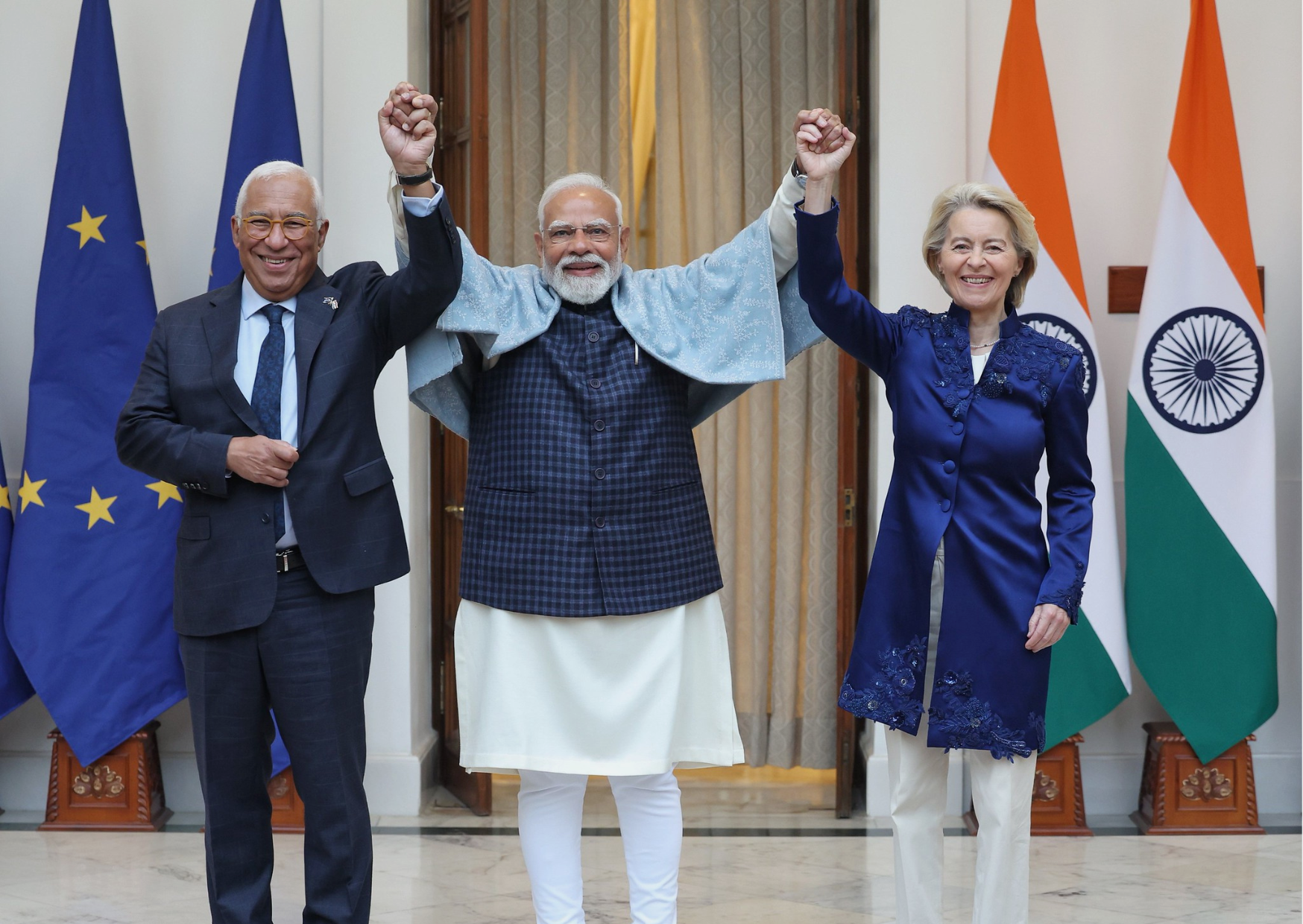
Prime Minister Shri Narendra Modi met President of the European Council, H.E. Mr. Antonio Costa & President of the European Commission, H.E. Ms. Ursula von der Leyen at Hyderabad House. Image credit: Flickr/MEAphotogallery.
The EU can, however, better leverage its normative and economic power to seize opportunities created by shifting geopolitical dynamics. President Trump’s ‘reciprocal tariffs’ have hit the export-oriented Indo-Pacific economies hard and undermined economic collaboration. For the EU — an economic powerhouse and a global promoter of free trade — this presents a strategic opening to fill a crucial void and advance a rules-based economic order through bilateral and regional free trade and investment agreements. The political agreement on an EU–India free trade deal in January 2026 should serve as a first step, followed by agreements with individual Southeast Asian countries and with ASEAN as a bloc.
Negotiating such agreements, increasing trade and investment, and deepening infrastructure and connectivity cooperation with Indo-Pacific partners through the EU’s Global Gateway Initiative would help dispel existing doubts about the EU’s commitment to the region. While the EU will not become a security provider in the region, increased engagement could position it as a leading provider of economic security.
MIDDLE POWERS IN A WORLD OF ‘BULLYING’ GREAT POWERS
Dr Lai-Ha Chan, Senior Lecturer in Political Science, University of Technology Sydney, Australia.
Donald Trump’s return to the White House has presented the liberal international order with a dual challenge. First, the US, like China, exercises geoeconomic power to bend other states to its will. Second, given Trump’s transactional foreign policy, the US is less willing to underwrite the security of its allies and partners. Middle powers are therefore concerned not only about US–China great-power rivalry but also about the unreliability of US security commitments and the possibility of a G-2 condominium. In response, and notably in the Indo-Pacific, these states have pursued fluid middle-power diplomacy to exert their agency.
Mark Carney’s Davos address in January 2026 appeared to mark a pivotal moment: a close US ally and neighbour announced that the liberal international order had ruptured because its principal architect — the United States — was actively undermining it. Liberal-democratic middle powers has begun to “act together” in the ‘post-rupture world’ to reduce dependence on China and the US. While both Japan’s Sanae Takaichi and Italy’s Giorgia Meloni are often seen as ‘ideological affiliates’ of Trump, at their January and June 2026 meetings they projected an ‘un-Trumpist’ narrative and pledged to build a stronger rules-based international order. Australia and Japan reaffirmed their ‘quasi-alliance’ through a landmark USD 7 billion warship deal in April 2026 and further elevated their Special Strategic Partnership during Takaichi’s visit to Australia the following month. Japan has been mending fences with South Korea over longstanding historical tensions, and both countries have explored closer cooperation in support of regional stability. Together we have witnessed a value-based partnership between democratic middle powers.
At the same time, middle powers have also pragmatically recalibrated interest-based partnerships with autocracies. After enduring China’s economic coercion, Australia has nonetheless sought to stabilise and deepen its economic ties with Beijing. Carney not only visited Australia, India, and Japan but also reset Canada’s relations with China in January 2026. India, likewise, pursues multi-alignment, bolstering economic ties with the UK, New Zealand, and the EU, while maintaining close relations with Russia.
Even as middle powers diversify their economic partnerships to mitigate Chinese and US economic coercion, whether they have the required agency to defend a rules-based liberal international order in times of war remains uncertain. Middle powers’ bid for security through minilateral cooperation may prove a pipe dream if they cannot overcome collective-action problems in the absence of a hegemon.
This is the first instalment in a two-part series on the future of liberal democracy and the liberal international order in the Indo-Pacific. In the second instalment, our contributors examine whether the decline of the United States as a champion of liberal democracy creates space for new democratic models in the region—or strengthens authoritarian influence.
Read Part 2 here
DISCLAIMER: All views expressed are those of the writers and do not necessarily represent that of the 9DASHLINE.com platform.
Image credit: Flickr/Jon Sailer.