In Forum USA250: The future of liberal democracy in the Indo-Pacific

IN FORUM USA250: THE FUTURE OF LIBERAL DEMOCRACY IN THE
INDO-PACIFIC
8 July 2026
As the US turns 250, its claim to being both the “world’s oldest democracy” and guarantor of the liberal international order is faltering: V-Dem’s latest report downgraded the country from a liberal democracy to an electoral democracy. At home, democratic norms are under attack, from the denial of the 2020 election results to the 6 January attack on the US Capitol. Abroad, the global credibility of liberal democracy has declined over the past decade as right-wing movements have gained ground.
The Indo-Pacific encompasses a diverse range of political systems, from authoritarian and hybrid regimes to flawed and consolidated democracies. The democratic decline of the United States — long the leading champion of liberal democracy — has left independent media, democracy activists, and human rights defenders across the region, who have relied on US support, increasingly exposed. At the same time, this shift has arguably eased pressure on regional governments to uphold the institutional checks and balances that Washington once set as the standard.
Marking this occasion, we invite several key experts to reflect on the future of liberal democracy in the Indo-Pacific. Does the decline of the United States as a champion of liberal democracy create space for other democracies to step in — or does it strengthen autocratic influence in the region? And might it open space for new approaches to democratic governance to emerge from within the region itself?
NEITHER LIBERAL, NOR INTERNATIONAL, NOR ORDERLY
Dr Indrajit Roy, University of York (Department of Politics and International Relations), UK.
Does the waning of US hegemony jeopardise democracy in the Indo-Pacific? Much of the current commentary would suggest it does. However, such a correlation between the decline of US hegemony and the erosion of liberal democracy in the Indo-Pacific is unwarranted, as historical experience and contemporary practice in South Asia and its neighbourhood demonstrate.
There are three main reasons for this.
First, the US has been a liberal democracy in the proper sense of the term for a mere fifth of the 250 years of its existence. Even as it orchestrated the liberal international order in the aftermath of the Second World War, racial segregation and limited suffrage remained in force. Meanwhile, states in South and Southeast Asia were overthrowing their colonial overlords and establishing themselves as democracies amid economic inequalities, social diversity, and political uncertainty: India instituted universal suffrage in 1950 and Indonesia did the same in 1955, while the US only extended suffrage to all citizens after 1965. Just as the rise of the US as a superpower did little to promote democracy in the Indo-Pacific, so too its decline will not particularly endanger democracy in the region.
Second, the US has not exactly been a champion of liberal democracy overseas. Its support for the 1965 coup in Indonesia that overthrew a democratic government and subsequent massacre of civilians, the 1971 genocide by the Pakistani Army against its own citizens in East Pakistan, and napalm bombs it deployed against Vietnamese peasants between 1968 and 1973 were all undertaken in the name of liberal democracy and upholding the liberal international order.
Third, if anything, proximity to the US appears detrimental to liberal democracy; at the very least, it has not been shown to safeguard it. This has certainly been the case in India where the erosion of democratic values and practices since 2014 have been well documented despite closer ties with the US and its allies. Similarly, the weakness of Pakistani democracy can be traced back to its military dictatorship’s alignment with the US during the 1960s and even more so during the 1980s when the troika of “Allah-Army-America” ruled the roost. In both cases, autocratic dictators and autocratising politicians leveraged their proximity to the US as a legitimating mechanism.
Liberal democracy is not the gift of the US to the world. Ironically, for that very reason, the decline of the US as a liberal democracy does not mechanistically threaten democracy elsewhere, including in the Indo-Pacific. Far from jeopardising it, the waning of US hegemony may well enable democratic forces to challenge their autocratic and autocratising governments without inviting charges of being American stooges. That may likely strengthen, not weaken, democracy.
REIMAGINING DEMOCRACY, WITH OR WITHOUT WASHINGTON
Dr Nicole Curato, Professor of Democratic Governance, University of Birmingham, UK.
As the United States retreats from its role as guarantor of the liberal international order, democracy advocates are asking what comes next. Some argue that autocratic governments are gaining confidence as the influence of democracy promotion declines. Others argue that middle powers must step up to defend democratic norms and institutions.
But there is another possibility. Across the Indo-Pacific, communities have long developed democratic practices that fall outside the liberal democratic paradigm the United States once championed.
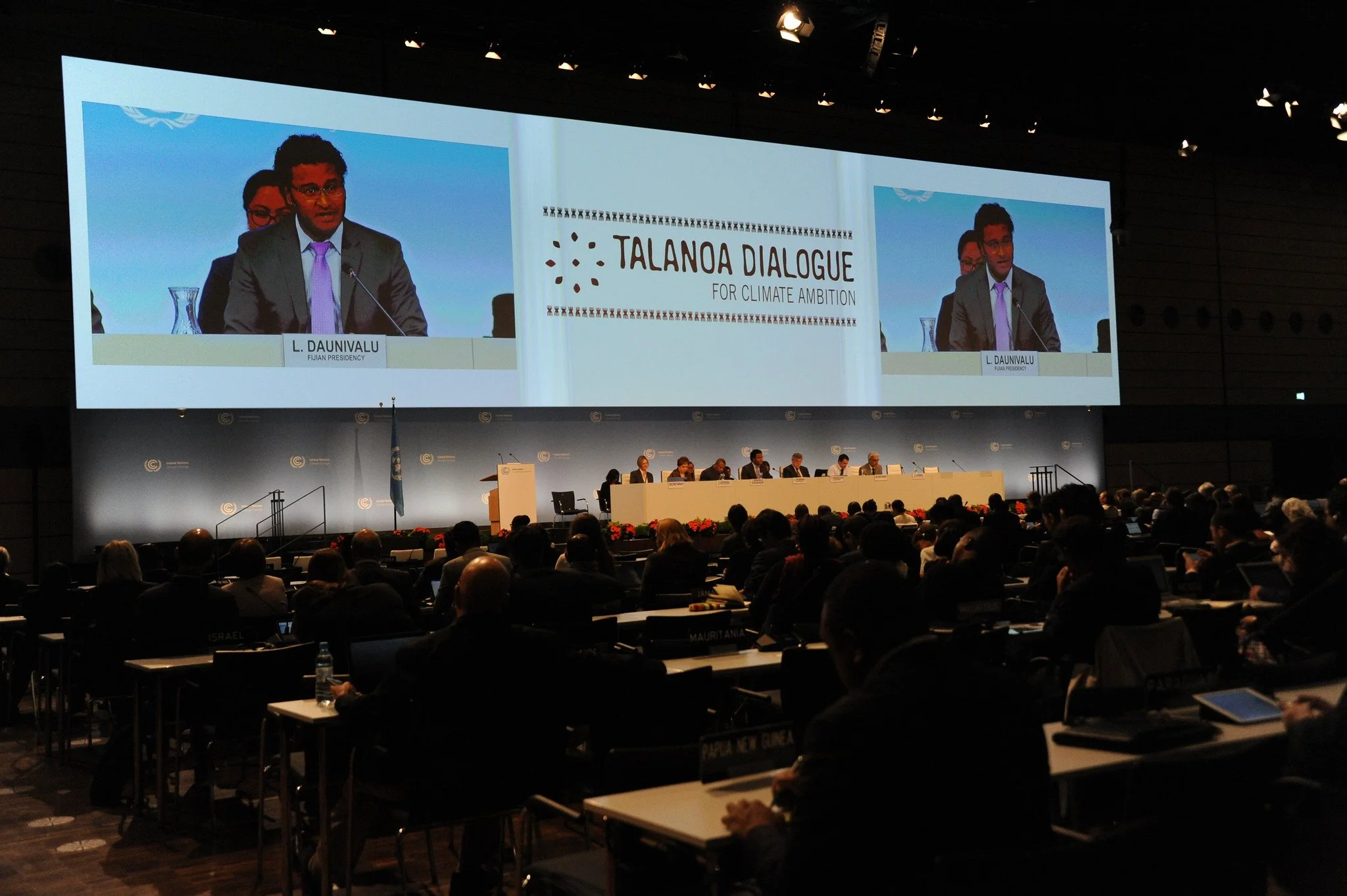
Talanoa Dialogue. Bonn Climate Change Conference, April 2018. Image credit: Flickr/UNclimatechange.
In Australia, First Nations peoples have long demanded self-determination grounded in relationships to land and community rather than in the individual, rights-bearing citizen on which Western liberalism rests. Across the Pacific, Talanoa — an Indigenous practice of conversation built on equality, aimed at building consensus — has shaped deliberations in village councils and even international diplomacy. Meanwhile, in the Philippines, a former US colony, the constitution enshrines a right to participatory democracy that contrasts with an American constitutional tradition historically wary of direct popular participation. In Japan, municipal authorities and civic associations have pioneered deliberative “mini-publics,” in which groups of randomly selected citizens review local government programmes.
These examples, among many others, suggest that the future of liberal democracy in the Indo-Pacific cannot be understood solely through the rise or decline of the United States. Democratic innovation rooted in the region’s own histories and practices has long been reordering the democratic imagination — with or without Washington.
DEMOCRACY WAS NEVER WASHINGTON’S TO SAVE
Dr Khoo Ying Hooi, Associate Professor, Universiti Malaya, Malaysia. Transpacific and Asian Dialogue Fellow, Penn Project on the Future of US-China Relations.
The decline of the United States as a ‘liberal democratic champion’ does not simply create a vacuum for others to fill. Democracy has never depended only on external endorsement. Local civil society groups, journalists, lawyers, students, trade unions, and community organisers have sustained it, continuing to demand accountability even when institutions are weak, captured, or afraid.
The context is difficult. Global freedom has declined for two decades, and civic space is closed, repressed, or obstructed across much of the world. In regions such as Southeast Asia, democratic contestation is shaped by restrictive laws, digital surveillance, disinformation, military influence, elite impunity, and the strategic pressure of US-China rivalry. These pressures do not produce a single regional trajectory; they interact with very different political regimes and local histories.
The decline of US democracy matters but should not be overstated. US support has provided funding, visibility, and occasional protection, yet it has also been selective, securitised, and tied to strategic interests. When Washington struggles to defend democratic norms at home, authoritarian and illiberal leaders gain a ready language: democracy is hypocrisy, instability, or interference.
The deeper danger is not only stronger autocratic influence, but the normalisation of fear, self-censorship, and diminished expectations. For instance, in Hong Kong, publisher Jimmy Lai’s 20-year sentence in 2026 was enough to make journalists and academics self-censor “just in case,” without individual charges. In Indonesia, a 2025 survey found 80 per cent of journalists self-censoring, where most censorship now comes from editors and media owners themselves. Democratic decline is measured not just by captured institutions or lost elections, but by what citizens, journalists, and civic actors stop believing is possible. Liberal democracy’s future will depend less on who replaces Washington than on whether civil society remains protected, connected, and politically consequential.
DEMOCRACY, UNEVENLY UPHELD
Dr Yoichiro Sato, Professor, Ritsumeikan Asia Pacific University, Japan.
The early post-Cold War euphoria of democratic transitions had reversed by the mid-2010s. East and Southeast Asia have seen coups in Myanmar and Thailand, as well as democratic backsliding in Hong Kong, Cambodia, and Indonesia. This decline has unfolded alongside China’s deepening influence in the region, pushing the United States and Japan to counter Beijing’s growing reach.
Nascent democracies in the region thus stand at critical junctures. Internally, the expansion of the middle class, driven by sustained economic growth, has stalled, as economic slumps loom across the region. Externally, a bifurcating geopolitical rivalry has left little room for democracy promotion on its own terms.
US policy has oscillated between the Democratic Party’s symbolically liberal sanctions against the region’s military and authoritarian regimes and the Republican Party’s tendency to deprioritise these regimes’ domestic affairs. The Trump administration’s transactional diplomacy pays little attention to the issue of democracy in East and Southeast Asian countries, focusing instead on their bilateral trade balances with the United States. Neither approach has stopped Asia’s authoritarian states from leaning further into China’s embrace, and this inconsistency has arguably damaged the credibility of US commitment to either stance.
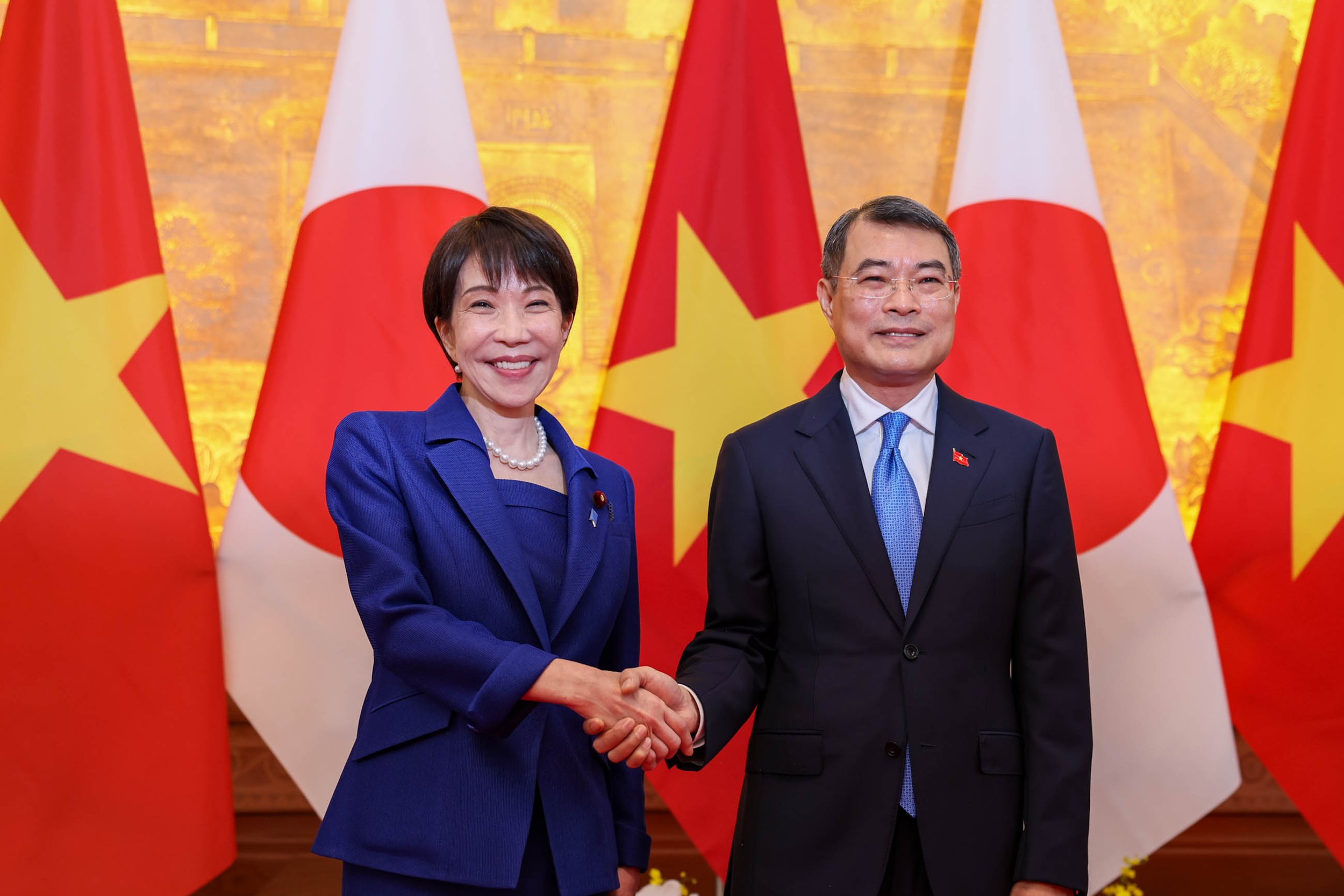
Japan Prime Minister Takaichi with Vietnam Prime Minister Lê Minh Hưng during their bilateral meeting in Hanoi, 2 May 2026. Image credit: Wikimedia Commons.
Japan, in contrast, has pursued a consistent, realist approach, maintaining dialogue and aid channels with Southeast Asian countries regardless of regime type, on the understanding that withdrawal would only benefit China: a stance that has afforded Japan limited yet important influence in the region. This includes legal capacity assistance to Myanmar through graduate school scholarships, and a parliamentary exchange programme with Cambodia’s young political leaders from both opposition and ruling parties. Such engagement has continued irrespective of political circumstance, from Myanmar’s 2021 coup to Cambodia’s 2023 one-sided election, though it may build the institutional capacity democratisation would eventually require.
Neither Washington’s inconsistency nor Tokyo’s realism offers a quick fix to Asia’s ailing democracies. The future of democratisation in Asia rests less on either government’s policy than on patient grassroots efforts within the region itself — leaving democracy, for now, unevenly upheld.
DEMOCRATIC ANCHOR, PRAGMATIC REACH
Céline Pajon, Head of Japan and Indo-Pacific Research, (Center for Asian Studies), French Institute of International Relations, France.
Despite facing their own democratic challenges, including political fragmentation, rising populism, and electoral uncertainty, European countries retain valuable experience in democratic resilience. Europe also continues to bring a normative dimension to its foreign policy, consistently promoting human rights, democratic governance, and the rule of law in its engagement with Indo-Pacific partners.
As the United States adopts a more unilateral and transactional approach, new opportunities emerge for Europe and like-minded partners — Japan, South Korea, Australia, and New Zealand — to cooperate in support of democratic principles and multilateral governance. Building such a coalition, however, requires a pragmatic approach. Important partners, including India, have shown illiberal tendencies, and several Asian democracies remain imperfect or in transition. Making strict adherence to democratic standards a precondition for cooperation risks alienating potential partners and driving them towards alternative models perceived as less restrictive.
Democratic values should therefore remain central to Europe’s identity, but the priority should be to promote democratic forms of international cooperation rather than to require ideological alignment. In practice, this means fostering partnerships among equals, strengthening multilateralism, and countering the spread of asymmetric, transactional relationships in which stronger powers impose their preferences on weaker states. The interregional cooperation set up by the EU-ASEAN Strategic Partnership, or the connectivity initiative of the Global Gateway are illustrative of that effort.
Such cooperation must also be rooted in the national interests of participating countries and deliver tangible benefits, such as jobs, stronger purchase power, and quality infrastructures. At a time of growing populism, citizens increasingly expect international engagement to contribute directly to economic growth, security, and social well-being. Democratic cooperation cannot rely on shared values alone; its legitimacy will depend on its ability to deliver concrete and measurable results.
This is the second instalment in a two-part series on the future of liberal democracy and the liberal international order in the Indo-Pacific. In the first instalment, our contributors examined whether the liberal international order can endure amid shifting geopolitical dynamics and declining US leadership.
Read Part 1 here
DISCLAIMER: All views expressed are those of the writers and do not necessarily represent that of the 9DASHLINE.com platform.
Main image credit: Unsplash/Daniel Kraus.