The invisibility of Northeast India's borderland communities in Japan-India cooperation

The invisibility of Northeast India’s borderland communities in Japan-India cooperation
WRITTEN BY SATOSHI OTA
7 July 2026
For more than a decade, Japan and India have presented themselves as natural strategic partners. Their cooperation has deepened through shared concerns about maritime security, regional connectivity, and the balance of power in Asia. Japan’s vision of a “Free and Open Indo-Pacific” and India’s “Act East Policy” appear to fit together almost perfectly: both are forward-looking, both emphasise connectivity, and both reflect a shared commitment to maintaining a rules-based maritime order against unilateral change. Yet beneath this alignment lies a far more complicated reality. The northeastern borderlands of India — especially the communities living along the India-Myanmar frontier — are often treated as a route to be secured rather than as societies to be understood. The result is a familiar pattern in international politics: grand strategy advances, while local people are left to adapt to decisions made far above their heads.
Intersecting strategic agendas in the past and present
In 2016, then-Japanese Prime Minister Shinzo Abe introduced the “Free and Open Indo-Pacific” (FOIP) framework, a strategic vision whose origins can be traced to his 2007 speech, “Confluence of the Two Seas”, delivered at the Indian Parliament. This framework positioned India as an indispensable partner in safeguarding a rules-based maritime order. Concurrently, New Delhi shifted from its 1990s “Look East Policy” to a proactive “Act East Policy” under Narendra Modi in 2014, expanding security cooperation and regional connectivity initiatives with Southeast Asia and reflecting a more multidimensional approach to the region.
India’s Northeast sits at the focal point of these grand strategies, serving as a critical land gateway to Southeast Asia. More concretely, these objectives have been operationalised through transport infrastructure initiatives advanced under the India-Japan Act East Forum, most notably the Japan International Cooperation Agency (JICA)-funded Northeast Road Network Connectivity Improvement Project. Such initiatives prioritise the upgrading of key cross-border transport corridors, including the Aizawl-Tuipang Road in Mizoram and the Shillong-Dawki Road in Meghalaya. However, as Tokyo and New Delhi fund cross-border infrastructure to counter China’s Belt and Road Initiative, this macro-level alignment risks treating local indigenous populations as invisible collateral on a global chessboard.
If the Indo-Japanese partnership is to fully reflect the principles associated with a Free and Open Indo-Pacific, development efforts should extend beyond strategic and economic considerations to encompass meaningful engagement with the historically marginalised communities of Northeast India.
Japan’s attachment to Northeast India is rooted in the Imphal Campaign of 1944, in which the Imperial Japanese Army advanced through the rugged Naga Hills to capture the strategic Imphal basin and sever the Allied “Hump” airlift that sustained Chinese Nationalist forces from bases in Assam — only to meet military catastrophe. The campaign also forged an unlikely alliance: Japanese forces fought alongside the Indian National Army led by Subhas Chandra Bose. This cooperation reflected a temporary convergence between the Tojo Cabinet’s wartime vision of the Greater East Asia Co-Prosperity Sphere and Bose's pragmatic calculation that Japan offered the most viable path to Indian independence. While post-war Japan saw a proliferation of memoirs written by survivors, these accounts shared a glaring omission: the voices and suffering of the local indigenous populations who inhabited the battlefields were rarely acknowledged.
A fragile mosaic fractured by neglect and identity politics
The strategic enthusiasm shared by Tokyo and New Delhi often overlooks the complex historical realities of Northeast India. Since independence, the region’s ethnic diversity and contested relationship with the post-colonial state have generated recurrent political tensions, most notably through the Naga national movement, whose long struggle for self-determination remains unresolved.
The persistence of such instability has discouraged sustained investment and contributed to the region’s relative isolation from India’s broader economic transformation. For instance, government data in 2025 indicate that the Northeast has attracted less than 1 per cent of India’s total FDI inflows from October 2019 to July 2025.
The fractures, however, run not only vertically — between the Northeast and New Delhi — but also horizontally, cutting deeply across ethnic lines within the region itself. Crucially, the ethnic boundaries do not align with state or international borders: Naga and Kuki populations span multiple northeastern states — including Manipur, Nagaland, Assam, and Arunachal Pradesh — and extend into Myanmar’s northwestern territories. The volatility lies not just in the geographic spread itself, but in the demographic pressures already fracturing the states these communities inhabit. In Manipur, the Meitei — predominantly Hindu and the demographic majority — are concentrated in the Imphal Valley, which covers just 10 per cent of the state’s land area, while Nagas and Kukis, overwhelmingly Christian, inhabit the surrounding hills that make up the remaining 90 per cent. In neighbouring Tripura, migration from Bangladesh has similarly unsettled the demographic balance. The result is a region where demographic imbalance within states and porous ethnic boundaries across them reinforce each other, ensuring that local friction rarely stays local.
The paradox of border closures within an open Indo-Pacific
Nothing exemplifies the disconnect between geopolitical rhetoric and the lived reality of the Northeast more sharply than the current crisis surrounding the India–Myanmar border. Historically, India–Myanmar trade was constrained by Myanmar’s long period of military rule and isolationist economic policies, as well as India’s post-independence emphasis on import substitution and self-reliance. Yet long before modern states drew arbitrary lines, this borderland was a fluid space: shaped by neighbouring kingdoms rather than governed through fixed territorial sovereignty, and sustained by the vibrant, informal movement of peoples and goods that formed the economic and cultural lifeblood of communities that modern statecraft would later sever.
The turning point arrived in the 1990s when India launched economic liberalisation and pursued its Look East Policy. In 1994, New Delhi and Yangon signed a Border Trade Agreement, establishing an official trade route connecting Moreh in Manipur with Tamu in Myanmar. Imphal’s markets were soon flooded with goods travelling through Myanmar — inexpensive Chinese and Thai electronics, apparel, and household products filled the stalls, embraced by local consumers for their affordability. This border fluidity also fostered a fascinating cultural phenomenon: long before the global Korean Wave swept through mainland India, the youth of the Northeast were consuming pirated South Korean dramas smuggled across the border, creating a distinct, cosmopolitan youth culture.
However, the unregulated nature of this frontier also presented security vulnerabilities, including drug trafficking from the Golden Triangle and arms smuggling by insurgent factions. In response, the Indian government introduced a permit system, later formalised in 2018 into the Free Movement Regime (FMR) to balance national security with the preservation of indigenous tribal kinship ties that transcend the international border, permitting visa-free travel within 16 kilometres of the border.
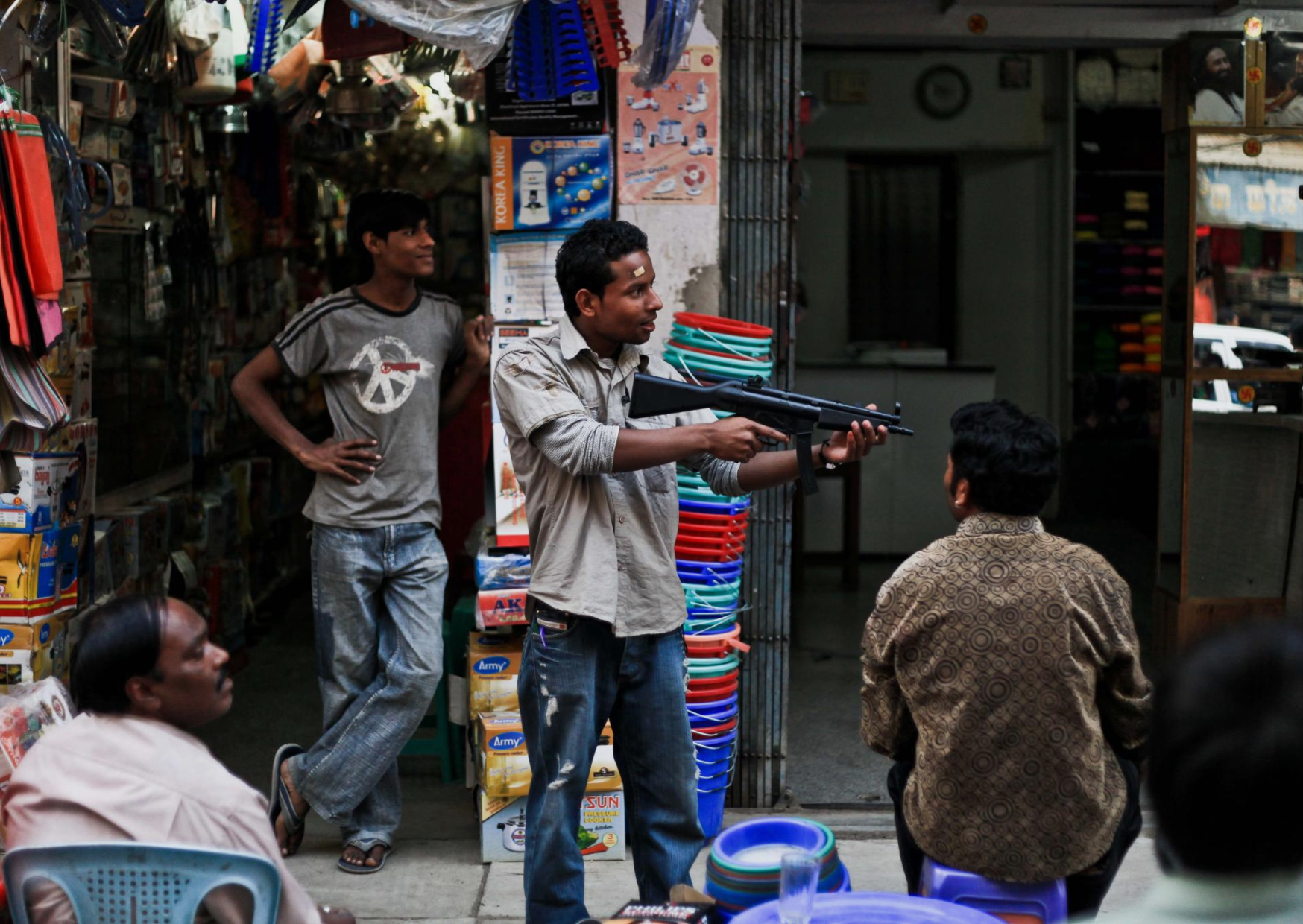
Violence in Manipur. Image credit: Flickr/Akshay Mahajan.
The entire system came under unprecedented strain following two major crises. Myanmar’s 2021 military coup brought an influx of refugees and displaced persons into India’s northeastern states, heightening official concerns over border management and security. These concerns intensified after large-scale ethnic violence erupted in Manipur in May 2023 between the Meitei and Kuki communities, prompting the Manipur government to advocate stricter border controls and a review of the FMR. In February 2024, New Delhi announced its decision to suspend the FMR and fence the entire India–Myanmar border, citing national security and demographic considerations.
As Tokyo and New Delhi pursue ambitious initiatives to expand regional connectivity through joint infrastructure projects, a fundamental paradox has emerged: while connectivity is increasingly promoted to facilitate trade, strategic cooperation, and regional integration, local border communities have simultaneously become subject to heightened border controls and restrictions on cross-border mobility. Consequently, initiatives intended to foster connectivity may inadvertently undermine the very social, cultural, and economic linkages that have historically sustained borderland communities. Indeed, according to Japan's Ministry of Foreign Affairs, the development of Northeast India is envisaged as a means of strengthening connectivity between the region and Bangladesh, forming part of Japan's broader economic security strategy. This connectivity is expected to foster the development of industrial value chains that would, following the completion of infrastructure projects, also generate economic benefits for Japanese industries. The same tendency is evident in the implementation of India’s Act East Policy. Although strategic highway projects have been prioritised as instruments of regional integration, the rural roads that underpin everyday mobility and local economic activity have often been neglected. As a result, the developmental gains promised by enhanced connectivity may remain unevenly distributed among local populations. These top-down developmental initiatives often fail to incorporate local communities into decision-making processes.
If the Indo-Japanese partnership is to fully reflect the principles associated with a Free and Open Indo-Pacific, development efforts should extend beyond strategic and economic considerations to encompass meaningful engagement with the historically marginalised communities of Northeast India. This could include incorporating local communities and indigenous organisations into decision-making processes concerning infrastructure projects and ensuring that policies aimed at enhancing regional connectivity do not unnecessarily restrict longstanding cross-border social and cultural interactions. In doing so, regional development may contribute not only to connectivity and growth but also to social inclusion and sustainable peace.
DISCLAIMER: All views expressed are those of the writer and do not necessarily represent those of the 9DASHLINE.com platform.
Author biography
Satoshi Ota is a Professor in the School of Global Studies at Tama University. He specialises in academic and ethnographic research focused on Northeast India. His work explores cross-cultural dynamics and globalisation within the region. Image credit: Pexels/Anusree GS.