Economic security moves India-Japan relations into a new strategic phase
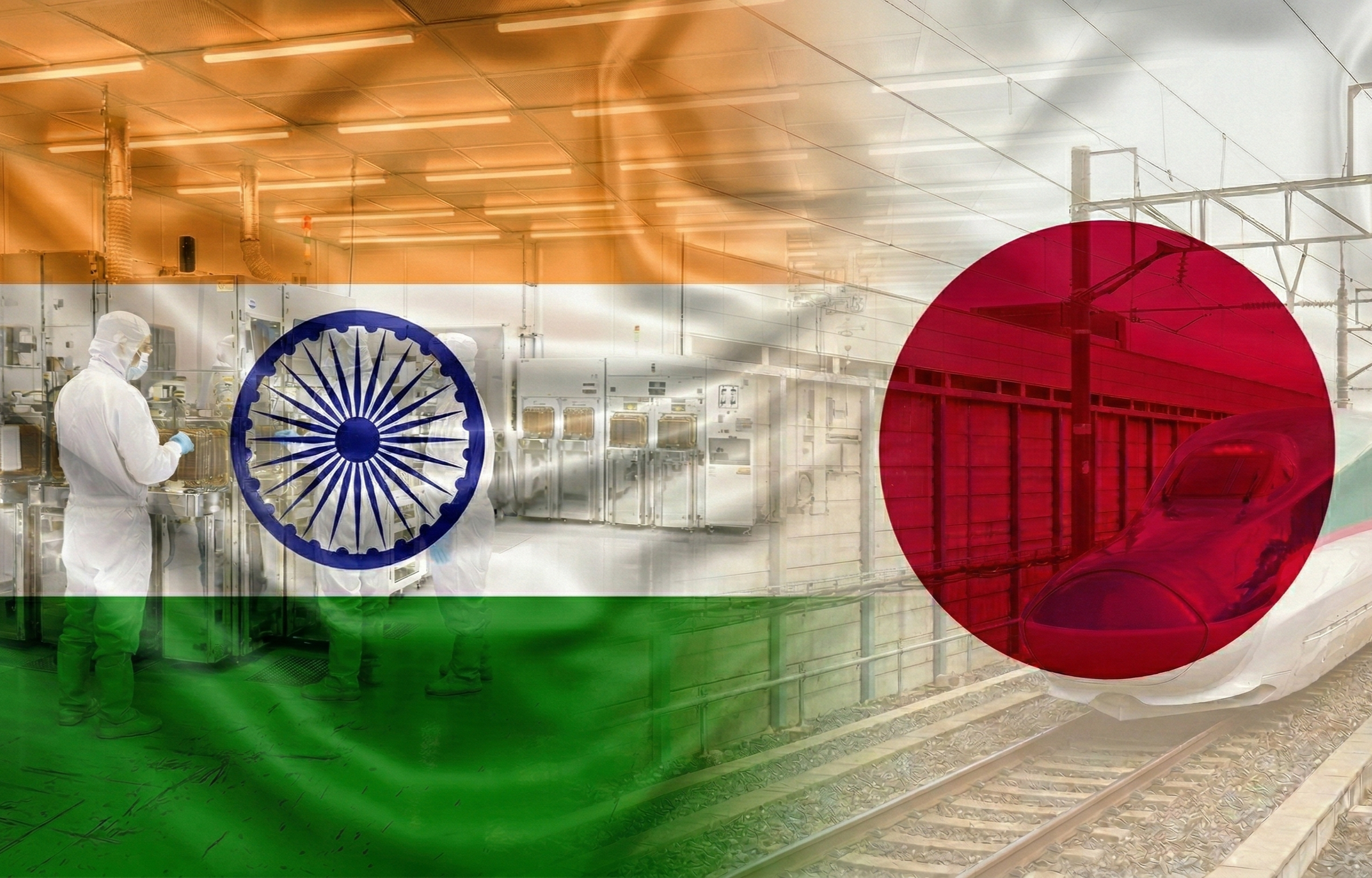
Economic security moves India-Japan relations into a new strategic phase
WRITTEN BY SIMRAN WALIA
26 February 2026
The recent visit of Japan’s Foreign Minister Toshimitsu Motegi to India for the 18th India-Japan Strategic Dialogue in January 2026 marks a decisive shift in India-Japan bilateral relations towards a deeper and more pragmatic alignment centred on economic security. Building on the India-Japan Joint Vision launched during Prime Minister Narendra Modi’s visit to Japan in August 2025, the dialogue represented the first opportunity to translate the vision for deepened technological and economic security cooperation into concrete policy mechanisms and institutional frameworks. While ties between the two countries have long been rooted in shared democratic values, people-to-people ties, and strategic convergence in the Indo-Pacific, major global challenges — such as technological competition, supply chain disruptions, and geopolitical uncertainty — have prompted both governments to prioritise technological cooperation as a key instrument of resilience-driven economic security.
Not in a strategic vacuum: the case for economic security
Japan’s economic security has evolved largely in response to external vulnerabilities. Its post-war growth model depended heavily on globalised supply chains, particularly in energy, rare earths, semiconductors, and advanced manufacturing inputs due to structural resource constraints, an export-oriented strategy, and industrial specialisation. However, rising geopolitical competition and supply chain disruptions have exposed the risks of overconcentration, particularly Japan’s reliance on a narrow set of suppliers for critical minerals. Automotive chip shortages that forced production cuts at firms such as Toyota exposed these vulnerabilities, leading Tokyo to pursue the onshoring of advanced semiconductor production and shifting from efficiency-driven global sourcing towards resilience-driven industrial policy. Although Japan maintains leadership in high-tech materials such as specialty chemicals, it continues to depend on global supply chains for critical minerals — including cobalt and nickel — which are essential inputs for electric vehicle (EV) battery production.
Institutional mechanisms for economic security cooperation require clear roadmaps, regulatory predictability, and policy coordination to attract increased Japanese participation in India’s high-technology sectors.
India’s turn towards economic security has followed a different path from Japan’s. From independence in 1947 until 1991, India prioritised nation-building, market access, and other development objectives over geoeconomic competition or security-centric strategy. However, more recent initiatives such as ‘Make in India’ and ‘Atmanirbhar Bharat’ (Self-reliant India) have reframed economic policy around employment generation, technological self-reliance, and strategic autonomy. Introduced in response to structural economic weakness and evolving geopolitical dynamics, these initiatives signalled a shift towards combining growth with resilience. Strategic autonomy became increasingly central from the mid-2000s and was further institutionalised after 2014 under Modi. Growing concerns over supply chain dependence and economic leverage reinforced urgency of diversifying partnerships, particularly in the aftermath of the COVID-19 pandemic.
While Japan’s shift emerged from exposure to external vulnerabilities and India’s from developmental and strategic issues, both have increasingly converged on embedding resilience within economic security. Rather than treating supply chains as market-driven outcomes, India and Japan now view them as strategic assets, aiming to reduce over-reliance on single sources while maintaining openness to trusted partners. However, the two countries adopt distinct approaches: while Japan’s economic security strategy reflects the priorities of an export-driven economy seeking to protect its technological edge, India approaches it as a rising power focused on capacity-building and industrial scale-up.
Put into action: operationalising the Japan-India joint vision on economic security
The 18th India–Japan Strategic Dialogue advanced bilateral cooperation from alignment towards implementation, operationalising the partnership through new dialogues, agreements, and public-private interfaces. Economic security was at the forefront of discussions, which focused on ensuring resilience in the areas of critical minerals, advanced manufacturing, and logistics. Operationalising the Joint Vision rests on complementary strengths: Japan brings experience in supply chain diversification, while India offers a large-scale manufacturing base with competitive labour costs and expanding industrial infrastructure. Deeper engagement with Japan provides India with access to capital, cutting-edge technology, and high standards of production. For Japan, India is a rapidly growing partner capable of supporting its long-term economic security objectives.
The turn toward economic security builds on a long-standing foundation of economic and technological cooperation. Japanese investments in India have played a crucial role in sectors of transportation, connectivity, and urban infrastructure. For example, the Mumbai-Ahmedabad Bullet Train — funded largely by Japan International Cooperation Agency (JICA) — will feature Japan’s advanced Shinkansen and latest E-10 high-speed trains, likely to be operational in early 2030.
The Joint Vision extends beyond physical infrastructure to the development of a strategic industrial ecosystem. The two leaders agreed to launch a Japan-India Private Sector Dialogue on Economic Security to unite business communities from both countries in strengthening resilient supply chains — particularly in the areas of semiconductors, critical minerals, and pharmaceuticals. Additionally, the Japan-India AI Strategic Dialogue will serve as a formal mechanism to cooperate on artificial intelligence (AI) research, innovation, and governance. These initiatives are designed to build on the partnership’s complementary strengths: Japan’s expertise in precision manufacturing, robotics, and industrial research aligns with India’s capabilities in software, digital platforms, and its large pool of skilled human capital. For example, collaboration in AI can integrate India’s data and talent advantages with Japan’s hardware and applied research capabilities, creating immense potential for co-development and innovation.
Another outcome of the strategic dialogue was the agreement to convene a Joint Working Group on Mineral Resources, focusing on collaboration in rare earths and other critical minerals — essential materials for EV motors and robotics. This initiative embeds resource security within the broader framework of India-Japan strategic cooperation, given its importance for advanced industries and defence technologies. Cooperation on resource security enables Japan to secure reliable inputs for its automotive and high-tech industries, while also strengthening India’s domestic processing capacity and supporting technological upgrading in critical minerals.
Beyond cooperation in specific industries, both countries share an interest in promoting open, secure, and inclusive technological ecosystems in the Indo-Pacific. By working together on standards, governance frameworks, and the responsible use of emerging technologies, India and Japan can contribute to shaping global norms that reflect democratic values and transparency.
From strategic convergence to sustainable implementation
India-Japan cooperation is largely anchored in frameworks such as the Quadrilateral Security Dialogue (Quad), which offer mutual strategic benefits in balancing security risks and reducing dependence on China. While economic security cooperation signals deepening strategic convergence, structural and geopolitical constraints limit sustainable implementation, with implementation delays and regulatory frictions constraining economic gains. Bilateral trade remains modest compared to Japan’s trade with China and ASEAN, and is structurally imbalanced relative to the size of both economies, reflecting asymmetric industrial capacities, limited supply-chain integration, and India’s concentration in lower-value exports. For example, the Delhi-Mumbai Industrial Corridor — designed to create manufacturing hubs with Japanese participation — has made progress but continues to face bureaucratic approvals and coordination challenges across Indian states, slowing the pace and scale of Japanese manufacturing relocation to India.
Differences between Japan’s US-allied posture and India’s strategic autonomy constrain deeper alignment, as closer cooperation risks drawing India more directly into great-power rivalry and potentially reducing its diplomatic flexibility. This asymmetry could create friction as bilateral cooperation deepens. Moreover, China sees the deepening of India-Japan ties, particularly within the Quad framework, as part of a broader containment strategy.
Despite these constraints, India and Japan frame their cooperation as stabilising rather than confrontational. The growing emphasis on economic security and technology cooperation reinforces their strategic convergence in the Indo-Pacific — where both India and Japan view a stable, rules-based regional order as essential to their long-term interests — and enhances their capacity to contribute to regional stability without escalating rivalry. In this sense, economic security cooperation could function as a stabilising complement to diplomatic and security initiatives such as the Quad.
Looking ahead, the real test lies in the successful implementation of these recent initiatives. Institutional mechanisms for economic security cooperation require clear roadmaps, regulatory predictability, and policy coordination to attract increased Japanese participation in India’s high-technology sectors. Joint research initiatives, academic exchanges, and skill-development programmes will also be important to build the human capital necessary to sustain long-term technological collaboration. Closer coordination at multilateral forums could further amplify the impact of bilateral efforts.
This deepening partnership — grounded in shared trust, values, and strategic interests — positions India and Japan to navigate an increasingly complex security environment. By aligning their economic security priorities, they are laying the groundwork for a deeper and more resilient relationship that strengthens bilateral ties while contributing to a stable Indo-Pacific order.
DISCLAIMER: All views expressed are those of the writer and do not necessarily represent those of the 9DASHLINE.com platform.
Author biography
Simran Walia is a Research Analyst at Manohar Parrikar Institute of Defence Studies and Analyses (MP-IDSA), New Delhi. She is pursuing a PhD in Japanese Studies at the Centre for East Asian Studies, Jawaharlal Nehru University (JNU), New Delhi. She has recently published her book titled ‘Balancing the Rising Tides: Japan’s Indo-Pacific Trajectory’ (Knowledge World, 2025). Image credit: Google Gemini.