Why climate disaster risk belongs in defence agreements
WHY CLIMATE DISASTER RISK BELONGS IN DEFENCE AGREEMENTS
WRITTEN BY AMBIKA VISHWANATH AND PRIYANKA BHIDE
15 September 2026
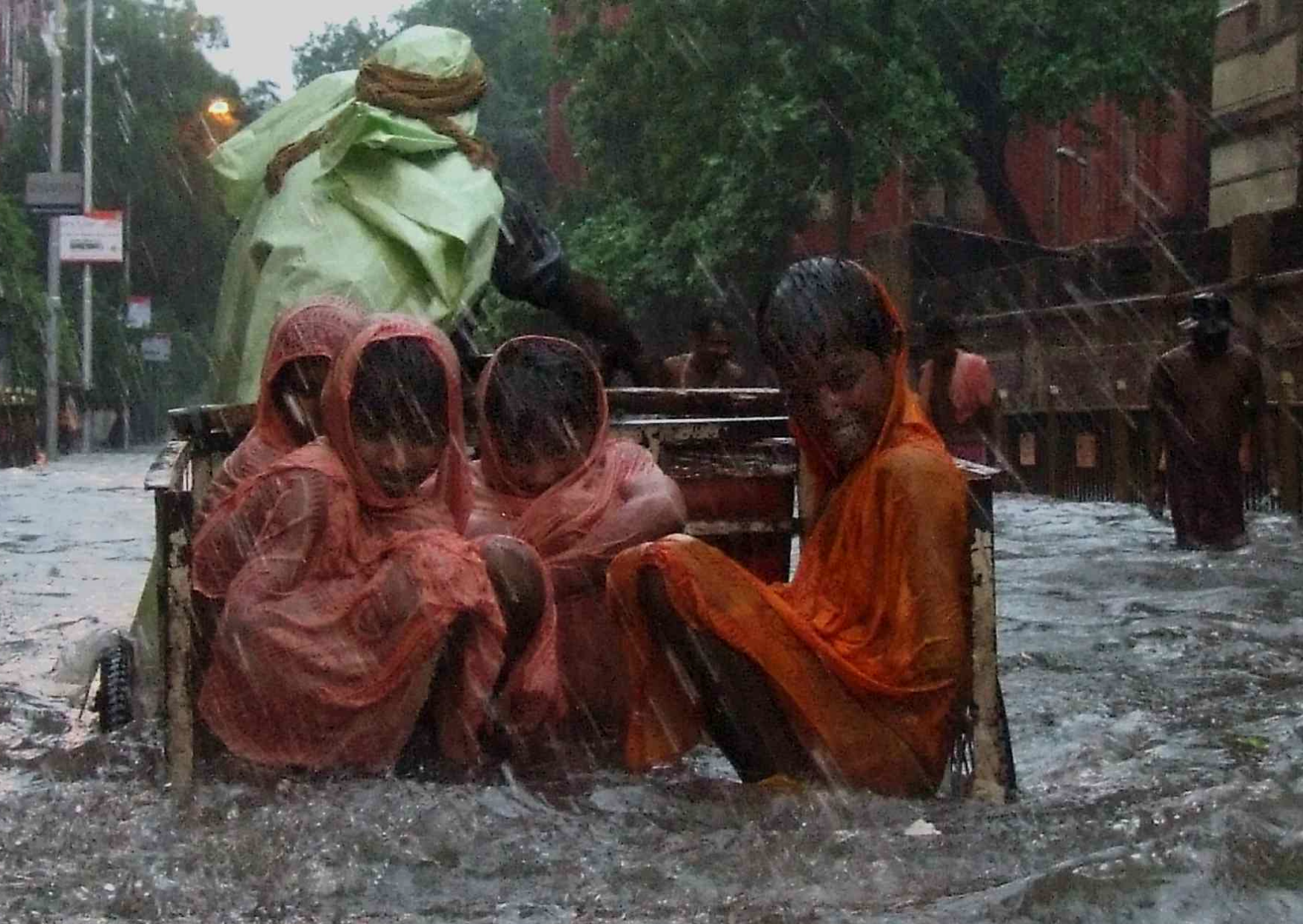
The flash flood that hit the Nepal–Tibet border on 26 August 2026, in which over 1,400 people have been confirmed dead and several thousand more remain missing, is a grim reminder of the increasing risks from climate-linked disasters. The disaster struck as the result of a glacier and rock collapse, overflowing the Bhotekoshi and Trishuli rivers and wiping out hydropower stations, markets, highway checkpoints and entire villages. Alongside Nepali and Chinese citizens, the victims include foreign tourists and pilgrims, among them Indian pilgrims en route to Kailash Mansarovar. The mega scale of the disaster has shocked the world, but such events are occurring with increasing frequency in the Himalayan region and are only likely to become more common in the future.
No stranger to high-impact risks and natural hazards across the fragile mountain range, Nepal has built a National Disaster Risk Reduction and Management Authority (NDRRMA) that combines highly professional civil and military assets. Within hours of the flood, Nepal activated the NDRRMA, and India and China, along with other global partners, mobilised resources to support rescue and relief efforts. As the August 2026 floods demonstrate, militaries are increasingly called upon in times of crisis, highlighting the need to integrate climate risks as a matter of course in strategic frameworks and defence dialogues and agreements. Militaries can mobilise quickly across borders and bring resources — airlift, engineering units, field hospitals — that civilian disaster agencies often lack.
While it is helpful to have a country dispatch resources once a disaster has hit and assistance is requested, these ad hoc responses are often slow to mobilise. Including climate-related monitoring, research, preparedness and response within defence agreements could improve cross-border coordination and data sharing, enabling faster response and preparation for future disasters. It would also build greater trust and integration between countries, deepening engagement on these critical security risks and allowing personnel exchanges and the pre-positioning of assets in ecologically vulnerable areas.
Precedent in formal defence agreements
There is some precedent for embedding climate risk in formal defence agreements. In 2021, NATO adopted a Climate Change and Security Action Plan recognising the impact of climate hazards on security. Collaborating on natural disasters is not new for the alliance: since 1998, the Euro-Atlantic Disaster Response Coordination Centre (EADRCC) has served as its principal mechanism for responding to civil emergencies, including both natural and man-made disasters. The EADRCC works with member states not only to provide timely help, but also to enhance disaster management capacities and improve coordination among allies and partners. In 2020, the EU issued its own Climate Change and Defence Roadmap, recognising climate change as a “threat multiplier” and calling for it to be an important consideration in defence research and planning.
The growing number and diversity of disasters in the Indo-Pacific region call for a more methodical approach between countries that share borders.
Recent multilateral efforts within the Indo-Pacific, while still nascent, have begun to formalise Humanitarian Assistance and Disaster Relief (HADR) cooperation as part of the region’s defence and security architecture. In 2022, the Quad partners — Australia, India, Japan, and the US — signed Guidelines for a Quad Partnership on Humanitarian Assistance and Disaster Relief, which provide a framework for coordinating HADR operations and enhancing capacity and interoperability. The Indo-Pacific Logistics Network, launched in 2025, allows Quad militaries to pool logistics assets specifically to support faster civilian disaster response. A standing arrangement of this kind would have been valuable during the August floods at the Nepal–Tibet border.
However, a gap remains in how two or more countries jointly plan for and respond to disasters at shared or regional frontiers. Under the Quad, the four partners have offered humanitarian assistance, especially to smaller Pacific Island states and elsewhere in Southeast Asia, but operations still tend to run through bilateral mechanisms where these exist. Such mechanisms must be strengthened along shared borders between two countries, but disasters involving several countries often require coordination at a regional scale. Bilateral defence deals could be leveraged in the former case; the latter, where more countries are involved, calls for coordination under a single banner, underpinned by a standing agreement.
Opportunities for India
Promoting collective action on natural disasters in the Indian Ocean region is integral to India’s vision of Security and Growth for All in the Region (SAGAR), expanded in 2025 to Mutual and Holistic Advancement for Security and Growth Across Regions (MAHASAGAR). India gained prominence as a first responder in the aftermath of the 2004 tsunami, when the Indian Navy launched rapid relief operations across the region. Successive governments have since reinforced the framing of India as a “first responder” and “net security provider” in the Indian Ocean region, with the Indian Navy, supported by other agencies, responding to disasters in the littoral states. India was the first country to send relief to Mozambique after Cyclone Idai in 2019, and it launched Operation Brahma after the March 2025 earthquake in Myanmar, deploying National Disaster Response Force (NDRF) rescue teams, relief supplies, and army medical units. When Cyclone Ditwah hit Sri Lanka later that year, India launched Operation Sagar Bandhu, with the Army and NDRF working alongside other global partners. The Indian Navy has also chaired the Indian Ocean Naval Symposium’s HADR working group to coordinate disaster response among regional navies, and established the Information Fusion Centre in Gurugram, India.
For India, climate could become an integral part of defence cooperation with partners active in the Indo-Pacific, including Germany, Australia, and Japan, with whom India cooperates on other critical non-traditional security issues. With Australia, India already has a Mutual Logistics Support Arrangement that includes regional humanitarian disaster response as an area for logistical and military cooperation. There is also a growing understanding between the two countries for better cooperation on the green transition and climate and energy. Bridging these dialogues would allow for co-investment in climate-resilient engineering, green defence, interoperability, and an improved understanding of mutual threat perceptions.
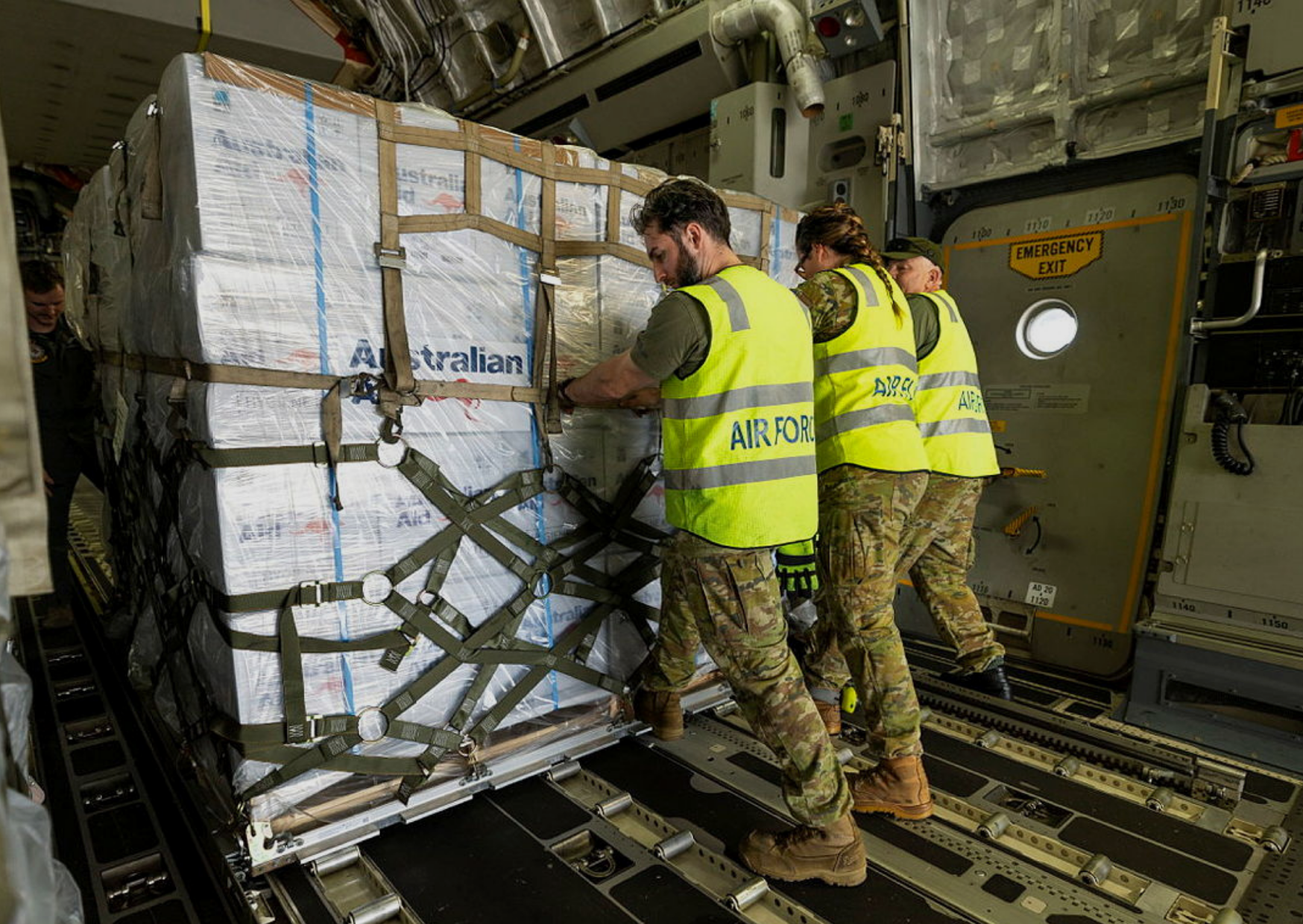
A Royal Australian Air Force C-17A Globemaster III transports humanitarian assistance and disaster relief supplies, equipment and personnel in support of the recent floods at Nepal. Image credit: CPL Dana Millington/Royal Australian Air Force.
The same logic extends to Germany, with which India holds an annual High Defence Committee dialogue. Germany brings substantial experience from NATO frameworks that it could apply with India and, potentially, with other Indo-Pacific partners. India and Japan already list “disaster relief” and “large-scale disaster” operations as grounds for reciprocal logistics under the India–Japan Acquisition and Cross-Servicing Agreement; more focused implementing tools specific to the Indo-Pacific region could be developed within that framework. Military assets are highly vulnerable to climate and environmental risks, and both India and Japan, facing coastal and maritime threats, have an opportunity to pool expertise and build agreements to share weather data and coordinate responses to events at sea and on land.
Looking forward
The growing number and diversity of disasters in the Indo-Pacific region call for a more methodical approach between countries that share borders. In the Himalayan case, a standing protocol among the countries sharing the Himalayas — for joint monitoring of glacial lake outburst floods and sharing early warning data — would be invaluable. It could also be a workable way to build cooperation even amid the trust deficit between India and China.
A meaningful climate risk provision in a bilateral or regional defence pact could include several key elements. Climate risk assessments would form part of defence planning, identifying high-risk areas across borders and establishing protocols for early warning systems and data sharing. Pre-clearance for military disaster relief assets in high-risk areas would enable immediate action, while joint training and logistics pooling along high-risk corridors would sustain the interoperability effective coordination requires — including dedicated HADR teams embedded in existing large-scale defence exercises.
The scale of devastation at the Nepal–Tibet border has been horrific, offering a stark illustration of what is at stake. The region’s very capable militaries all fielded rescue assets within a day of the flash flood, albeit in an ad hoc fashion. Ad hoc coordination can be overwhelming and complicated for smaller host nations, and a standing bilateral or multilateral framework could have expedited the response. Writing such disaster response protocols into defence agreements is the logical next step.
DISCLAIMER: All views expressed are those of the writers and do not necessarily represent those of the 9DASHLINE.com platform.
Author biographies
Ambika Vishwanath is the co-founder of Kubernein Initiative and Principal Research Fellow at La Trobe Centre for Global Security. She has over two decades of experience on the intersection between traditional security and challenges around water and climate security.
Priyanka Bhide is the co-founder of Kubernein Initiative, an independent geopolitical advisory firm based in India. She has over a decade’s experience working with government, private and non-profit sectors in South Asia and North America on a wide range of issues under the broad areas of gender mainstreaming and environmental sustainability. Image credits: Image credit: Flickr@India water Portal/Supriya Biswas.