Preferential Tariffs but Unmet Promises: Pakistan’s GSP+ Status
Preferential tariffs but unmet promises: Pakistan’s GSP+ status
WRITTEN BY EVE REGISTER
11 June 2026
Pakistan was granted access to the EU’s Generalised Scheme of Preferences Plus (GSP+) on 1 January 2014, having first received limited GSP benefits in the aftermath of 9/11 in exchange for security cooperation with the EU. The GSP+ programme offers developing countries preferential tariffs and privileged access to EU markets in exchange for compliance with 27 international conventions, primarily on human and labour rights. Pakistan’s exports to the EU have since doubled, with roughly 66 per cent exempt from European import duties. Yet human rights progress has not advanced in parallel.
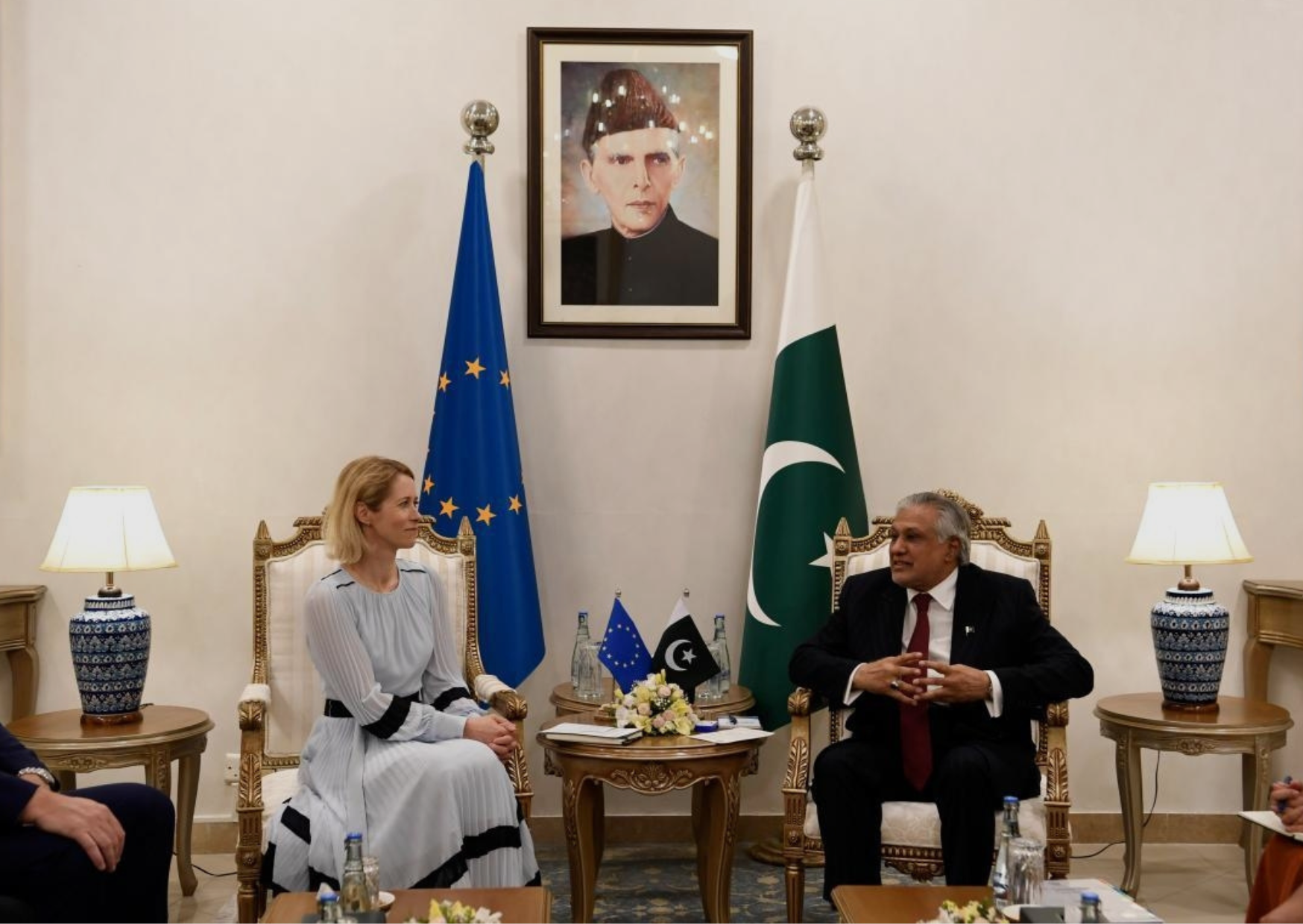
Despite persistent human rights violations, the EU has yet to revoke or temporarily suspend Pakistan’s GSP+ status. In December 2025, during the 15th EU-Pakistan Joint Commission meeting, the EU "welcomed progress" that Pakistan had made towards adhering to the 27 GSP+ provisions. It commended reforms to the death penalty, torture legislation, and the creation of a Commission on Minorities. Although the European Parliament has been calling for a reassessment of Pakistan’s GSP+ status since 2021, European Commission representatives concluded that they were satisfied with Pakistan’s progress. This highlights a divide within the EU over whether Pakistan’s strategic importance takes precedence over maintaining the integrity of the GSP+ framework.
In theory, the European Commission’s upholding of Pakistan’s status is driven by the expectation that Islamabad adheres to human rights reform, alongside the belief that economic prosperity from increased trade fosters greater social progress.
In reality, however, the EU considers Pakistan a strategic partner embedded within a turbulent region, whose cooperation could help the EU manage a range of security threats, particularly in counter-terrorism and counter-narcotics trafficking. This strategy has led to the selective enforcement of GSP+ conditions in Pakistan’s case, which threatens to undermine the purpose of the scheme and the deals made with other GSP+ beneficiaries.
Reporting on human rights conditions in Pakistan
While Pakistan has ratified several reforms and established new entities to improve human rights, it is the implementation of reform that is central to the GSP+ deal. Most reports, however, indicate that human rights conditions have deteriorated rather than improved in the country since obtaining GSP+ status. The EU’s reluctance to apply further pressure by leveraging Pakistan’s GSP+ status suggests an ulterior motive — preserving its security partnership with Islamabad.
The protection of human rights has long been a founding principle of the EU. While the GSP+ programme represents an opportunity to advance this goal, human rights will remain subordinated to other priorities as long as the Commission leverages the programme to extract strategic advantage.
In November 2023, the European External Action Service (EEAS) reported on GSP beneficiaries’ “compliance with international standards”. Pakistan was only mentioned in conjunction with other countries, apart from one mention that it adopted a law against torture and custodial death in 2022. However, further analysis of this law reveals that Pakistan’s Federal Investigation Agency website lacked a complaint mechanism for violations — unlike those available for all other federal offences — indicating surface-level commitment. Furthermore, no entity to investigate custodial torture had been established. The 2022 law’s provision penalising “malafide complaints” also violates the United Nations Convention Against Torture and has discouraged victims from coming forward. The fact that the EU’s sole cited example of Pakistan’s progress is itself flawed indicates the EU’s difficulty in justifying Pakistan’s GSP+ status to the public. However, the EU appears compelled to present such evidence to avoid the perception that it is trading human rights commitments for strategic interests.
The NGO Human Rights Without Frontiers (HRWF) also investigates the state of human rights in Pakistan, yet its independent reporting paints a much bleaker picture than the EU’s findings. Its monthly reports document Pakistan’s violations of the 27 GSP+ conventions. The NGO’s director, Willy Fautré, called the 2023 EEAS report a “big joke”, explaining that “year after year we have not seen any progress in the reports of human rights in Pakistan”.
Human rights obligations in practice
In 2024, a record number of blasphemy cases were reported in Pakistan, reflecting a lack of genuine commitment to GSP+ conventions. Enforced disappearances and extrajudicial killings continue to rise, while local advocates calling for dialogue with the state have been imprisoned. The Pakistani government has yet to address this crisis.
A 2025 HRWF report documents the death of a Christian pastor, who spent 13 years in prison on unfounded blasphemy charges and was tortured in custody to coerce a confession. Pakistan’s handling of this case violated the UN’s International Covenant on Civil and Political Rights, a GSP+ convention stating that “Everyone shall have the right to freedom of expression” and “thought, conscience and religion”. In January 2026, two human rights lawyers were sentenced to 17 years in prison after defending victims of sexual violence, unsubstantiated blasphemy charges, and enforced disappearances — the very issues Pakistan tells the EU it is working to address. Their sentencing was likely meant to warn other lawyers not to take on human rights cases, a message that goes against every value the GSP+ programme is intended to uphold.
Despite these cases blatantly violating GSP+ provisions, it is independent researchers rather than the EU who have brought them to light. The EU appears to prefer to portray Pakistan as a committed GSP+ member rather than admit its failures, or its prioritisation of Pakistan’s strategic importance over GSP+ values. In doing so, it safeguards its international image as a normative actor.
The tension between strategic priorities and human rights commitments within the EU
The European Parliament has called for Pakistan’s GSP+ status to be revoked over its human rights violations, while the European Commission has ignored these calls. The Parliament’s members are democratically elected, and the Commission is expected to consider their will and remain politically accountable to them. Yet on Pakistan’s GSP+ status, a clear divergence persists.
Two shifts in 2021 could help explain the Parliament’s push. It called for a re-evaluation of Pakistan’s status in April 2021, just months after Brexit. Until then, the United Kingdom had held one of the largest delegations in the Parliament (73 of 751 members) and had historically “been instrumental in advocating Pakistan’s interests in the EU”. Perhaps without British perspectives to consider, the Parliament felt freer to scrutinise Pakistan. Furthermore, Pakistan’s cooperation with US and EU counter-terrorism efforts had been a significant factor in receiving GSP+ benefits. Its value as a regional partner diminished considerably when the US-led NATO coalition withdrew from Afghanistan in 2021, increasing the incentive to scrutinise Pakistan’s human rights abuses.
The Commission’s priorities lie elsewhere. While the Parliament is an elected body facing scrutiny from the EU electorate and the media over issues including human rights, the Commission focuses more on the EU’s long-term strategy and international relations. In November 2020, the then-Vice President of the European Commission Josep Borrell stated “it is more important than ever for the EU to deepen its ties with a country like Pakistan”.
The Commission is particularly concerned that the growing US-China rivalry could push Pakistan further into China’s orbit if EU-Pakistan relations deteriorate. Pakistan is a nation in the rare position of possessing close ties with both the West and China. Yet the China-Pakistan Economic Corridor and billions of dollars in Chinese investment suggest the West cannot easily match Chinese incentives. The Commission likely fears that revoking Pakistan’s GSP+ status could present an opportunity for China to deepen ties with Pakistan and entrench its influence in South Asia.
To the Commission, these concerns evidently outweigh Pakistan’s human rights progress. Particularly with the prospect of a Chinese invasion of Taiwan by 2027 and a potential conflict between China and Western nations seeking to protect Taiwan’s semiconductor industry, the EU is increasingly inclined to contain the expansion of Chinese influence.
For now, the EU has prioritised its partnership with Pakistan over adherence to GSP+ provisions. However, the GSP+ programme’s credibility hinges on beneficiaries believing that their preferential access will be withdrawn if they fail to meet human rights requirements. Ignoring Pakistan’s convention violations sends a message to other beneficiaries that human rights conditions are not serious demands, and that those able to position themselves as strategic partners of the EU may likewise bypass GSP+ requirements.
The protection of human rights has long been a founding principle of the EU. While the GSP+ programme represents an opportunity to advance this goal, human rights will remain subordinated to other priorities as long as the Commission leverages the programme to extract strategic advantage.
DISCLAIMER: All views expressed are those of the writers and do not necessarily represent those of the 9DASHLINE.com platform.
Author biography
Eve Register is a research fellow at the Asia-Pacific Foundation and part of NATO DEEP’s Global Threats Advisory Group. Image credit: European Commission Audiovisual Portal.