From strategic upgrading to sovereign AI: East Asia under renewed pressure
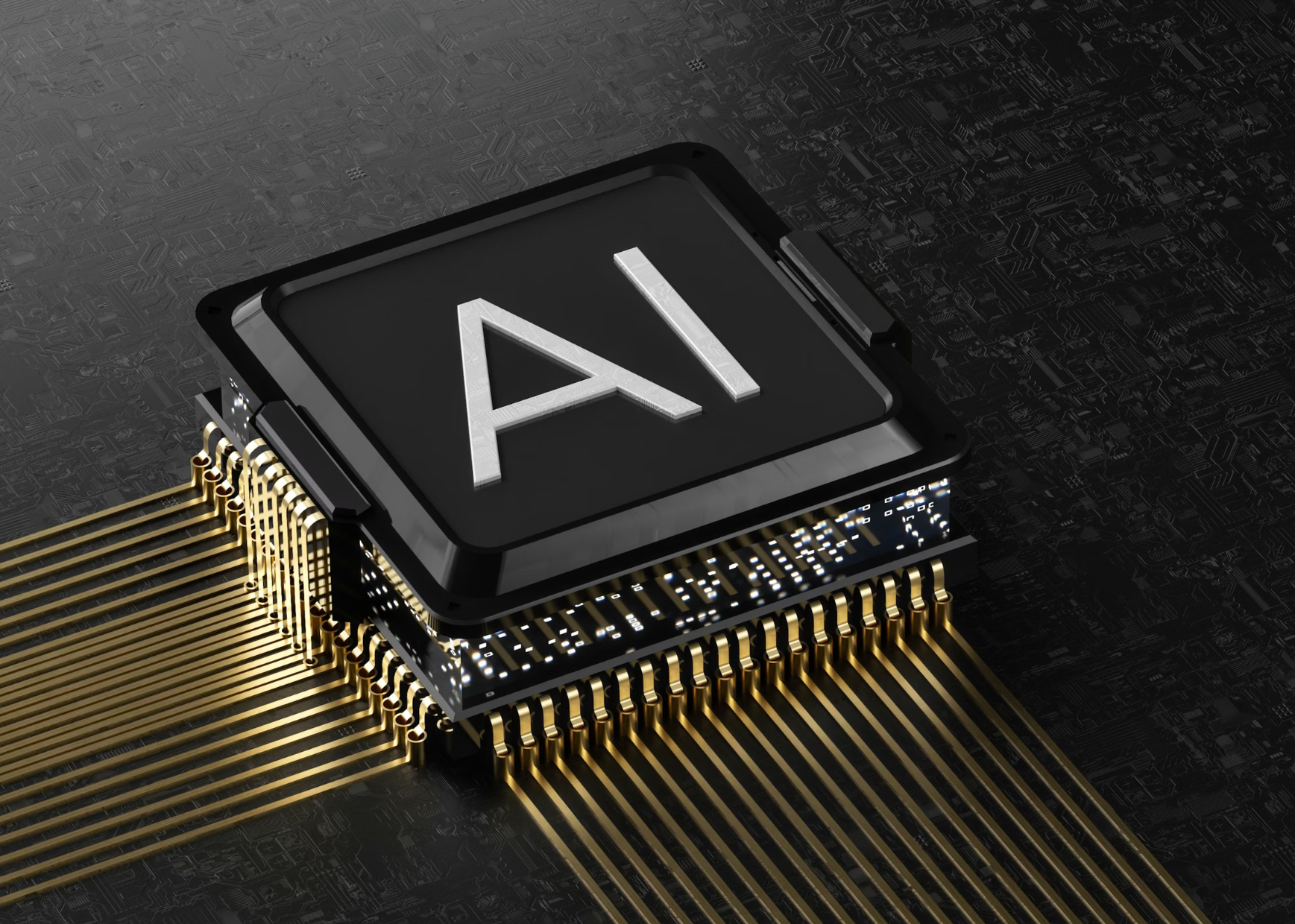
From strategic upgrading to sovereign AI: East Asia under renewed pressure
WRITTEN BY VIKTOR BUZNA
13 March 2026
In recent years, artificial intelligence (AI) has emerged as a frontier of economic competition and national security. Global AI spending is projected to exceed USD 2 trillion by 2026, reflecting the rapidly expanding scale of investment in artificial intelligence technologies. Japan, South Korea, and Taiwan were among the first to recognise AI’s transformative potential — for productivity, military capabilities, and technological leadership — and have since positioned it at the centre of their national strategies.
However, turning strategy into execution has proven far more difficult. East Asia’s assembly-line production of AI strategies is now running into serious obstacles, with all three facing growing challenges in building sovereign, socially embedded AI ecosystems. Still, these East Asian countries are unlikely to fade quietly: they have proven before that periods of geopolitical tension can be turned into engines of renewal rather than decline.
Upgrading under vulnerability
Systemic vulnerability is a condition that an increasing number of states now face. As great powers become more assertive, armed conflicts stretch from Europe to the Middle East, and the global economy fragments along geopolitical lines, governments are forced to reassess how they define and prioritise both external and internal threats. Today’s fragmented geopolitical landscape is comparable to the hostile and uncertain conditions that shaped the development of East Asian countries in the twentieth century.
During the 1970s and 1980s, Japan, South Korea, and Taiwan — among other regional small states — transformed external insecurity and internal constraints into drivers of institutional innovation and long‑term growth. External pressure stemmed from existential security threats, such as China’s growing ambitions and assertive regional posture, as well as the internal challenges these created: rising military spending, scarce natural resources, and the difficulty of maintaining social cohesion. In response, these governments pursued coherent, growth‑oriented strategies centred on “upgrading”. This approach involved a shift from low‑value, labour‑intensive activities toward higher value‑added production through productivity gains, industrial deepening, and sustained investment in technological and human capital.
Just as steel, petrochemicals, and semiconductors once underpinned national resilience, computing power and AI ecosystems define economic and strategic autonomy today.
Over the past decades, this strategy has positioned Japan, South Korea, and Taiwan as leading technological powers. Japan has maintained technological leadership in advanced manufacturing, robotics, and precision engineering; its robotics market was valued at USD 2,970.5 million in 2024 and projected to reach USD 3,456.4 million by 2025. South Korea has become a semiconductor powerhouse: its chip exports surged by 22.2 per cent in 2025, reaching an all-time high of USD 173.4 billion, driven largely by growing demand for AI technologies. Taiwan has consolidated its strategic economic role by producing over 60 per cent of the world’s semiconductors and more than 90 per cent of advanced chips, making it indispensable to global supply chains.
Race for AI dominance
The AI strategies adopted by Japan, South Korea, and Taiwan reflect classic features of the developmental state: close state–industry coordination, sustained investment in human capital, and continuous movement toward higher value‑added activities. In the twenty‑first century, sovereign AI has become the functional equivalent of earlier industrial deepening strategies.
Japan launched its Society 5.0 initiative as early as 2016. This was followed by its first national AI strategy in 2019 and later updated in 2022 with the aim of shaping both global AI regulation and innovation. In 2024, Tokyo approved a USD 65 billion stimulus package focused on data infrastructure, including data centres, supercomputers, and semiconductor manufacturing.
South Korea announced its first AI strategy in 2019 and updated it in 2022 and 2024. A Presidential AI Council now oversees coordination, while a USD 22.6 billion support package combines public investment, loans, tax incentives, and risk‑sharing mechanisms to mobilise private capital. A core element is the construction of a state‑owned National AI Computing Center, anchoring South Korea’s ambitions in sovereign digital infrastructure. Its ambitions also extend to data governance, with the Personal Information Protection Act (PIPA) — a GDPR-like regulatory framework — currently under implementation.
Taiwan emphasises the tight integration of AI development with its globally dominant semiconductor sector. In 2024, the island announced its “AI sovereignty” strategy, allocating USD 3 billion over three years to expand data centres and computing capacity. Taiwan’s objective of evolving from a hardware powerhouse into a major global hub for AI innovation is driven by support for AI startups, international partnerships, and talent development.
Strategic upgrade turns decline
However, implementing AI strategies have proven considerably more challenging. According to the IMD World Digital Competitiveness Ranking 2025, South Korea, and Taiwan have diverged, revealing differences in institutional adaptability, regulatory balance, and future readiness.
South Korea experienced a notable decline in digital competitiveness in 2025. While infrastructure and innovation capacity remain strong, weaknesses emerged in future readiness and the regulatory environment. The adoption of the highly risk-averse PIPA regulatory framework aimed to balance innovation with trust, but has also increased compliance costs and regulatory uncertainty. Institutional fragmentation and persistent digital divides further limit the broad societal uptake of advanced technologies.
Taiwan, often portrayed as a digital success story, faces a different set of constraints. Political disputes and budgetary delays have slowed the implementation of key AI initiatives. More critically, energy and resource limitations pose growing risks. The shutdown of the island’s last nuclear power plant in 2025 increased dependence on imported fossil fuels and renewables that have yet to scale sufficiently. AI and high-performance computing are driving up energy demand, raising power costs and constraining supply in ways that threaten competitiveness.
In Japan, progress toward an AI‑based society has been slowed by persistent legacy governance structures. Parts of the public administration continue to rely on paper‑based procedures and outdated workflows, constraining data integration and AI‑driven automation. In the private sector, AI adoption remains cautious: only around one quarter of firms actively use AI, while many lack concrete plans for implementation. Structural factors, such as the continued prevalence of cash‑based transactions and limited investment capacity among small and medium‑sized enterprises, further dampen digital transformation.
Outside the comfort zone
Taken together, these challenges do not point to a lack of strategic vision. Rather, they reflect a prolonged absence of systemic vulnerability. For much of the late twentieth century and the 2000s, Japan, South Korea, and Taiwan operated in a relatively permissive environment. They benefitted from China’s economic rise, enjoyed regional stability, and maintained deep economic ties with China while the US provided the region’s core security umbrella. Growth was strong, social cohesion held, and postponing difficult reforms carried few immediate costs.
That comfort zone is now disappearing. Intensifying geopolitical rivalry, technological decoupling, and energy insecurity are reintroducing the pressures that once forced decisive state action. As systemic vulnerability returns, Japan, South Korea, and Taiwan are likely to treat AI less as a technocratic upgrade and more as critical national infrastructure. The nature of this vulnerability, however, differs across the three countries.
Long-standing structural challenges have pushed policymakers in Japan to frame AI, along with other emerging technologies, as a tool for large-scale automation and social sustainability. An ageing population, slow productivity growth, and the persistence of legacy administrative systems are among the most pressing challenges for the Japanense government, prompting efforts to implement AI not only in maintaining technological leadership but also in sustaining economic dynamism and public services in a rapidly ageing society. The urgency of these challenges is also reflected in recent political decisions: shortly after taking office as Japan’s first female prime minister, Sanae Takaichi approved the country’s first national AI basic plan, signalling that the large-scale deployment of artificial intelligence has become a central pillar of Tokyo’s strategy to address structural economic and societal pressures.
South Korea faces different risks. Its export-driven economy remains heavily dependent on semiconductor production, leaving it particularly exposed to technological decoupling between the US and China. Seoul’s AI strategy therefore increasingly emphasises sovereign computing capacity, national data infrastructure, and closer coordination between the state and the local technology conglomerates in order to preserve autonomy in an increasingly fragmented global digital economy.
Taiwan confronts perhaps the most acute form of systemic vulnerability: its geopolitical exposure to both the US and China, combined with growing pressure on global semiconductor supply chains and domestic energy constraints, has elevated AI from an industrial policy priority to a matter of strategic resilience. Ensuring sufficient computing capacity, secure data infrastructure, and a stable energy supply has therefore become central to Taipei’s ambition to translate its semiconductor dominance into broader leadership and become an AI island.
What is increasingly framed as “sovereign AI” in the strategies of the three countries is not merely about technological ambition, but about securing advanced computing capacity, protected data infrastructure, a resilient energy supply, and an indigenous ecosystem capable of reducing strategic dependencies. It also requires governance frameworks that enable domestic firms to innovate without being suffocated by fragmentation or regulatory overreach. In this sense, AI is the twenty-first century equivalent of earlier industrial deepening strategies. Just as steel, petrochemicals, and semiconductors once underpinned national resilience, computing power and AI ecosystems define economic and strategic autonomy today. Building these capabilities is not optional: it is central to sustaining competitiveness, securing supply chains, and maintaining geopolitical relevance.
Japan, South Korea, and Taiwan have recognised this shift early. Yet recognition alone does not guarantee success. If history offers a lesson, it is that external pressure — rather than strategic foresight alone — has often been the catalyst for institutional renewal in East Asia. A more volatile global environment may once again provide the discipline needed to move from strategy papers to execution.
DISCLAIMER: All views expressed are those of the writer and do not necessarily represent those of the 9DASHLINE.com platform.
Author biography
Viktor Buzna is a senior research fellow at the Hungarian Institute of International Affairs and a PhD candidate at the Institute of China and Asia-Pacific Studies, National Sun Yat-sen University. Image credit: Unsplash/Igor Omilaev.