The illusion of reform: Hun Manet’s Cambodia, three years on
the illusion of reform: hun manet’s cambodia, three years on
WRITTEN BY VANLY SENG
17 March 2026
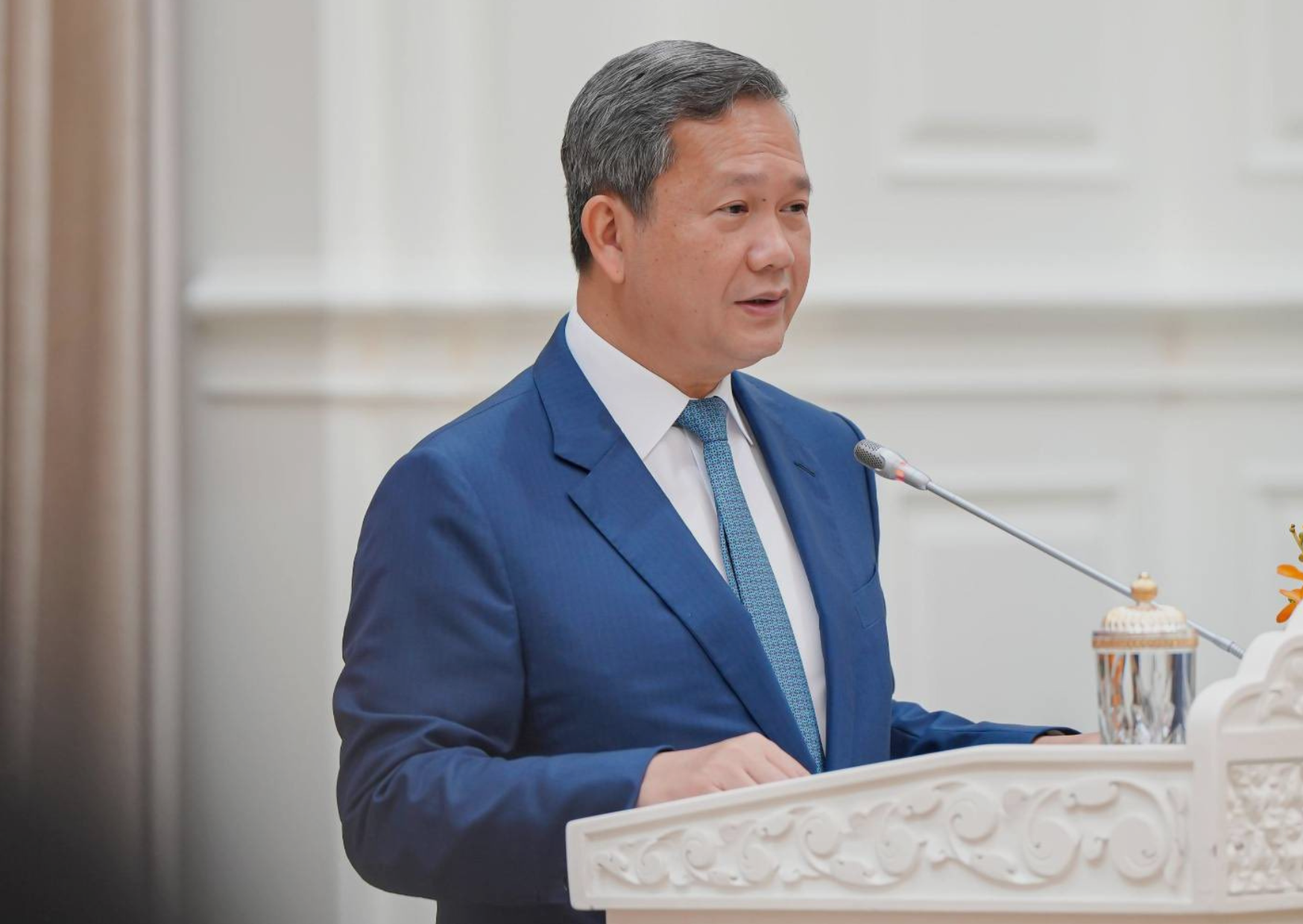
When Cambodia’s Hun Manet assumed the reins of power in August 2023, his primary ambition was to transform the nation into a high-income country by 2050. To achieve this, he introduced the Pentagonal Strategy, which defined his pitch through three pillars: driving economic growth, reducing poverty, and undertaking overdue institutional reforms. While international observers initially hoped for a departure from the iron-fisted rule of his father, former Prime Minister Hun Sen, the reality after three years suggests the transition is less a break from the past and more an elaborate generational reset.
Critically, this reset has preserved Cambodia’s mass-patronage system — a governance structure in which the ruling party maintains loyalty and stability by distributing state resources, licenses, and legal protections to a network of elites and supporters in exchange for their continued political and financial support. The current administration has deepened a pattern of ‘lawfare’ — the use of legal systems for political ends — while allowing a lucrative scam industry to thrive within patronage networks. Together, these mechanisms have entrenched and reinforced the rule of the Cambodian People’s Party (CPP) for four decades.
An era of continuity and patronage
Despite Manet’s polished rhetoric of modernising institutions and strengthening the country’s justice system, Cambodia’s political landscape remains defined by a deep-seated reliance on personalised power and elite patronage. This facade of modernisation has not displaced the underlying reality of a governance model where loyalty to the ruling party is rewarded with economic concessions and legal impunity.
The regime’s stability rests on a symbiotic relationship between the CPP and the Oknha class — consisting of high-net-worth business people and the political elite who serve as the primary funders of CPP infrastructure. These elites often project a facade of philanthropy, while benefitting significantly from legal immunity and the direct issuance of state contracts. Previous attempts at reform have largely failed because any genuine decoupling of the state from these private interests would threaten the regime’s own financial and political survival. By maintaining a system of authoritarian constitutionalism — where laws are selectively applied to insulate the ruling elite from accountability — Manet has effectively confirmed that the judiciary remains a tool of political control.
Reform has failed not through a lack of effort, but through a lack of will, as dismantling the system of authoritarian constitutionalism would directly undermine the CPP’s hold on power.
Furthermore, Manet has not challenged the oversized role his father still commands. Since the dynastic transfer in 2023, Cambodia has operated a dual-track leadership structure. While the younger Hun speaks of modernisation to international partners, his father, Hun Sen, retains decisive control over long-term strategy as President of the Senate and the CPP. This alternative axis of power sees Hun Sen continue to lead in governmental policymaking and the hosting of foreign dignitaries. This was particularly clear in Hun Sen’s personal advancement of the start date for the billion-dollar Funan Techo Canal project to coincide with his birthday. The project has faced significant international scrutiny regarding its environmental impact and potential strategic utility for foreign military interests, yet Hun Sen’s de facto authority over strategic decisions ensured its acceleration.
The transition from Hun Sen to Hun Manet was not a break from the past, but rather a strategic generational reset secured through a systematic expansion of state bureaucracy. The number of senior government posts — such as secretaries and undersecretaries of state — ballooned by 122 per cent to over 1,400 positions as of 2024. This administrative expansion has served as a vehicle for the state treasury to secure elite loyalty and maintain the internal balance of the ruling coalition, as it provides enough high-ranking titles, salaries, and associated spoils of power to satisfy both the old guard loyalists of the Hun Sen era and the rising generation of officials.
By bringing these elites into the formal state fold, the administration ensures their personal and financial interests are inextricably linked to the survival of the governing party, thereby preventing internal fragmentation or defection. Because the regime’s survival depends on this symbiotic relationship, any genuine effort to streamline the state would undermine the foundation of the current administration’s power.
A master of ‘lawfare’
The judicial landscape under Hun Manet exemplifies a mastery of lawfare, where the transition of power has not signalled a return to the rule of law but rather a more calculated refinement of political control. Under Manet’s rule, there has been no cessation of the weaponisation of legal language to dismantle political opposition, rooted in the structural lack of judicial independence and inherent conflict of interest within oversight bodies.
These institutional challenges are reflected in the 2014 Law on the Organization and Functioning of the Supreme Council of Magistracy (SCM). Under this law, the Minister of Justice — who is a political appointee — holds a pivotal role in the SCM, the very body constitutionally mandated to oversee judicial appointments and discipline. The President of the Constitutional Council further reinforces this government control by ensuring that the final arbiter of the constitutionality of laws remains a political extension of the executive. In 2025, this consolidation was cemented with the election of senior CPP figure Hy Sophea to the role, ensuring that the Council continues to function as a patronage network rather than an independent check on power. By overseeing the body that can disqualify opposition parties or validate restrictive legislation, the President of the Council ensures that lawfare remains a legally viable tool for maintaining the CPP’s decades-long dominance.
The entry process for new judges reinforces this preference for conformity over the rule of law. Candidates are subjected to rigorous ideological vetting to ensure that incoming jurists prioritise party loyalty over the rule of law, enabling the weaponisation of the judiciary. Observers note that shifting power to military-influenced training academies is cultivating a generation of jurists predisposed to obey orders. They also point to the government’s weaponisation of legal language to dismantle political opposition, including the formerly prominent Candlelight Party and Cambodia National Rescue Party.
The government has likewise weaponised the judiciary against civil activism. In July 2024, the Phnom Penh Capital Court sentenced ten activists from the Mother Nature group to between six and eight years in prison for ‘plotting’ and ‘insulting the king’. The group was targeted for its environmental advocacy, which exposed the intersection of state corruption and ecological damage. Following the Supreme Court’s rejection of their appeal on 2 March 2026, five activists remain imprisoned while the remaining five reside abroad or are in hiding. Human rights groups warn this crackdown stifles environmental advocacy nationwide and Freedom House assigns Cambodia a judicial independence score of zero out of four as of 2025.
The criminalised political economy
The arrest of award-winning journalists, like Mech Dara and, more recently, Hem Vanna, highlights the dangers of exposing the truth about Cambodia’s institutional challenges and criminalised political economy. Dara, who was detained for the second time in early 2026 while investigating the online scam industry, has been a key figure in revealing these failings.
Cambodia’s online scam industry generates up to USD 12.5 billion annually — or 40 per cent of GDP. This sector relies on a trafficking-cybercrime nexus where scam compounds — run on the forced labour of trafficked individuals — are frequently located on land owned by influential Oknha, directly integrating criminal revenue into the regime’s mass-patronage network. The judiciary acts as an enforcer, using incitement and plotting charges to silence those who protest against these irregularities.
As Cambodia enters 2026, the administration faces significant economic headwinds. The IMF projects growth to decelerate by 4 per cent in 2026, driven by export volatility and high private debt. The scam industry in particular has threatened tourism and foreign investment, yet the lack of a genuine effort to eliminate it is likely due to the industry’s role as a major financial pillar for the regime's supporters. Truly dismantling it would require the administration to sacrifice the very funds that keep the political elite loyal.
An economic need for reform
Taken together, the persistence of the patronage system, judicial weaponisation, and the criminalised economy expose the hollowness of Manet’s commitment to reform. The economic necessity for change is underscored by the fact that the very industries sustaining the regime’s elite — most notably the unchecked scam sector — are now actively deterring the high-quality foreign direct investment and tourism required to reach high-income status. If Manet is truly committed to driving economic growth, this would require removing political oversight from the SCM to provide investors with a predictable legal environment and decoupling the Oknha class from the state architecture to end the distortive effect of elite monopolies.
In the absence of these structural changes, lofty promises of a modernised economy will prove baseless. Reform has failed not through a lack of effort, but through a lack of will, as dismantling the system of authoritarian constitutionalism would directly undermine the CPP’s hold on power. Until the law is applied equally to all, the country’s system will continue to serve the interests of the Hun family at the expense of ordinary citizens, ultimately capping Cambodia’s economic potential at the ceiling of its own corruption.
DISCLAIMER: All views expressed are those of the writer and do not necessarily represent those of the 9DASHLINE.com platform.
Author biography
Vanly Seng is a Phnom Penh-based analyst and advisor for the Khmer Movement for Democracy, dedicated to addressing the intersection of transnational cybercrime and governance in Southeast Asia. Image credit: Presidential Communications Office/Wikimedia Commons.