Caught off guard? The strategic implications of the Iran war for India
caught off guard?
the strategic implications of the iran war for india
WRITTEN BY CHIARA BOLDRINI
9 April 2026
When the US and Israel launched strikes on Iran on 28 February 2026, India initially appeared largely shielded from subsequent consequences. New Delhi only had limited oil imports from Tehran, its ambitions to establish a trade route to Afghanistan and Central Asia through the Chabahar Port had never fully materialised, and, on a broader level, its material stakes in Iran were limited. However, within a week, that calculus proved wrong.
A series of economic and political setbacks have exposed a paralysis in India’s approach to multi-alignment and strategic autonomy, as it is compelled to balance its partnerships with the US and Israel against its stakes in the stability of Iran and the broader region. India now faces overlapping economic dislocations — affecting energy supply prices, stock market volatility and implications for remittances and trade — while being diplomatically immobilised in a moment when its partners expect it to act. Further compounding these pressures, five state elections loom in the first half of 2026.
Economic shockwave at home
On the economic front, India is facing severe revenue losses in the aviation sector. Indian airlines have already been in trouble since April 2025, when Pakistan banned Indian carriers from its airspace since, forcing companies such as Air India and IndiGo to adopt costly diversions. The Gulf corridor had accordingly been the workaround to this issue. However, airspace restrictions across Iran, Qatar, the UAE, Kuwait, and Israel have forced mass flight cancellations — hundreds alone in the war’s first week — with costs from rerouting and extra fuel running to at least a twofold increase. The airline IndiGo faces a particular structural problem: its six Boeing long-haul aircraft hold European registration and must comply with advisories from the European Union Aviation Safety Agency, barring flights over a list of affected states that now covers virtually the entire alternative routing available to Indian carriers.
India’s carefully cultivated claim to speak on behalf of the Global South is being progressively undermined by its repeated failure to engage substantively with crises that bear directly on the normative principles it has historically espoused.
Moreover, setbacks in the energy sector have also been immediately visible, especially to ordinary Indian citizens. India is the world’s second-largest importer of Liquefied Petroleum Gas and sources over 90 per cent of its supplies from the Middle East, nearly all of it transiting the Strait of Hormuz, which has been effectively closed since the beginning of the war. The disruption to shipment flows has manifested rapidly across India’s domestic economy, leading to critical shortfalls of cooking fuel in commercial food services and interruptions to gas-dependent industrial operations. In response, the government has introduced emergency rationing measures to manage the allocation of constrained supplies.
Diplomatic paralysis exposed
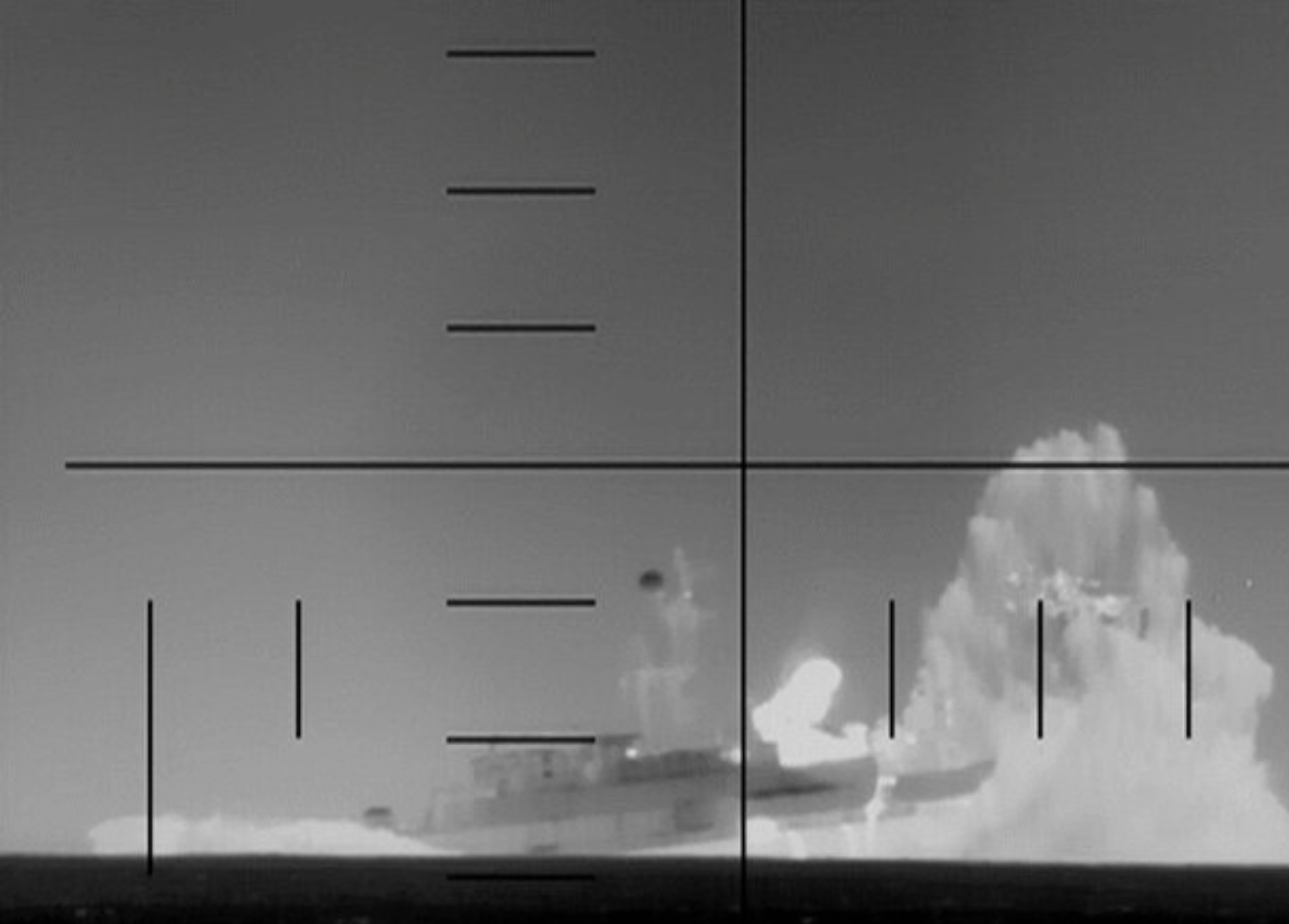
While the economic implications would be damaging enough on their own, a single incident has worsened the crisis, spilling into the diplomatic and political realm: the sinking of the Iranian frigate IRIS Dena by a US Navy submarine south of Sri Lanka on 4 March, killing 87 sailors. The IRIS Dena had been a guest of India’s navy, docked in Visakhapatnam just days earlier as part of the International Fleet Review and Exercise MILAN 2026, attended by 74 nations. The exercise was a showcase of India’s aspirations to be a net security provider in the Indian Ocean.
However, the Iranian ship was sunk in international waters while returning home, and the Indian government did not make any statement on the matter. The opposition leader, Rahul Gandhi, made a direct statement, criticising Prime Minister Modi’s inaction. India’s Foreign Secretary subsequently visited the Iranian embassy to sign a book of condolences for Iran’s supreme leader, which appeared more as a gesture of damage limitation rather than of solidarity.
This silence reflects a structural problem. India’s relationships in the region have become so intricately layered that New Delhi cannot move in any direction without risking damage to one of them. Prime Minister Modi visited Jerusalem on 26 February, two days before the strikes, and elevated ties with Israel to a Special Strategic Partnership. India also imports the majority of its energy from Gulf states and depends on them to employ approximately nine million migrant workers who remit over USD 50 billion annually. Meanwhile, India maintains Chabahar as a symbolic foothold in Iran, while holding a strategic partnership with Washington. This dual alignment complicates India’s diplomatic posture, as it has to balance between two rival states.
Despite a fracture in US-India relations due to the hostility of Trump’s tariffs, relations are being gradually reset, and New Delhi is likely to continue its cautious approach through strategic hedging. Hence, with all of these “fronts” simultaneously demanding loyalty, New Delhi finds itself in an impasse. Taking any side bears a cost: while Iran remains a strategic partner and gateway to Afghanistan and Central Asia, India cannot afford to antagonise the US under an unpredictable Trump administration, which remains its largest export market.
This is not the first time that India has stood between two or more conflicting parties. Its neutrality in the Russia-Ukraine war has established a template in this respect, as New Delhi has been able to absorb international criticism, while protecting its economic relationships and maintaining a deliberate ambiguity in its public messaging. Its silence on the US military operation in Venezuela reinforced this stance. The Iran war thus comes as a third instance in which India’s behaviour resembles less pragmatism than a deliberate doctrine. As both China and Russia have also noted, India is the only founding BRICS member that has not condemned the strikes on Iran.
An opportunity within the crisis?
While India might have been caught off guard, the crisis is not without opportunity. For instance, its naval presence under Operation Sankalp positions India as a credible Indian Ocean security provider, with the option of pivoting to humanitarian assistance and disaster relief operations that could demonstrate its relevance to Gulf partners and diaspora communities alike. On the energy dimension, the setbacks might accelerate a long-overdue diversification, while in aviation, exploratory discussions had already been underway about using Chinese airspace for the northbound route as a temporary solution. On the diplomatic front, India’s “quiet diplomacy” approach remains an underrated asset, despite the political dilemma that its silence has created, especially after the sinking of IRIS Dena.
The Foreign Secretary’s visit to the Iranian embassy, albeit modest, preserved a channel of communication with Tehran, while India’s long-standing relationships with Gulf monarchies give it leverage to seek energy exemptions that few other countries can. The conflict could also provide an opportunity for India to emerge as an indispensable interlocutor, as the only consequential power with credible relationships on every side of the conflict.
Whether India can reach that position depends on its ability to translate multi-alignment from a passive posture into an active one. At present, the architecture of India’s relationships has become less a source of freedom and more a source of constraint. The rhetoric of strategic autonomy, which was conceived by the Indian elite as a means of protecting national interests, has become a reason for inaction. The current crisis shows that the costs of this inaction are concrete and accumulating, with the aviation sector sustaining financial losses and commercial establishments at risk of closing.
Simultaneously, the welfare of approximately nine million Indian nationals residing in the Gulf states remains a source of domestic concern. India’s carefully cultivated claim to speak on behalf of the Global South is being progressively undermined by its repeated failure to engage substantively with crises that bear directly on the normative principles it has historically espoused.
While the crisis in Iran has not created any of India’s contradictions, it has made them visible — and costly — for both citizens and the government. The question for New Delhi is thus whether the model of foreign policy it has constructed over the past decade is still serving its interests, or whether this crisis is the moment that demands its revision.
DISCLAIMER: All views expressed are those of the writers and do not necessarily represent those of the 9DASHLINE.com platform.
Author biography
Chiara Boldrini holds a PhD in Political and Social Sciences from the University of Bologna. She works on foreign policy and security, with a focus on India’s emerging role in the current international order. Previously, she has been a Fulbright Visiting Researcher at Boston College and Visiting Fellow at the Council for Strategic and Defense Research in New Delhi. Image credit: United States Department of War/Wikimedia Commons.