Model allyship with Washington: more burden than boon for South Korea
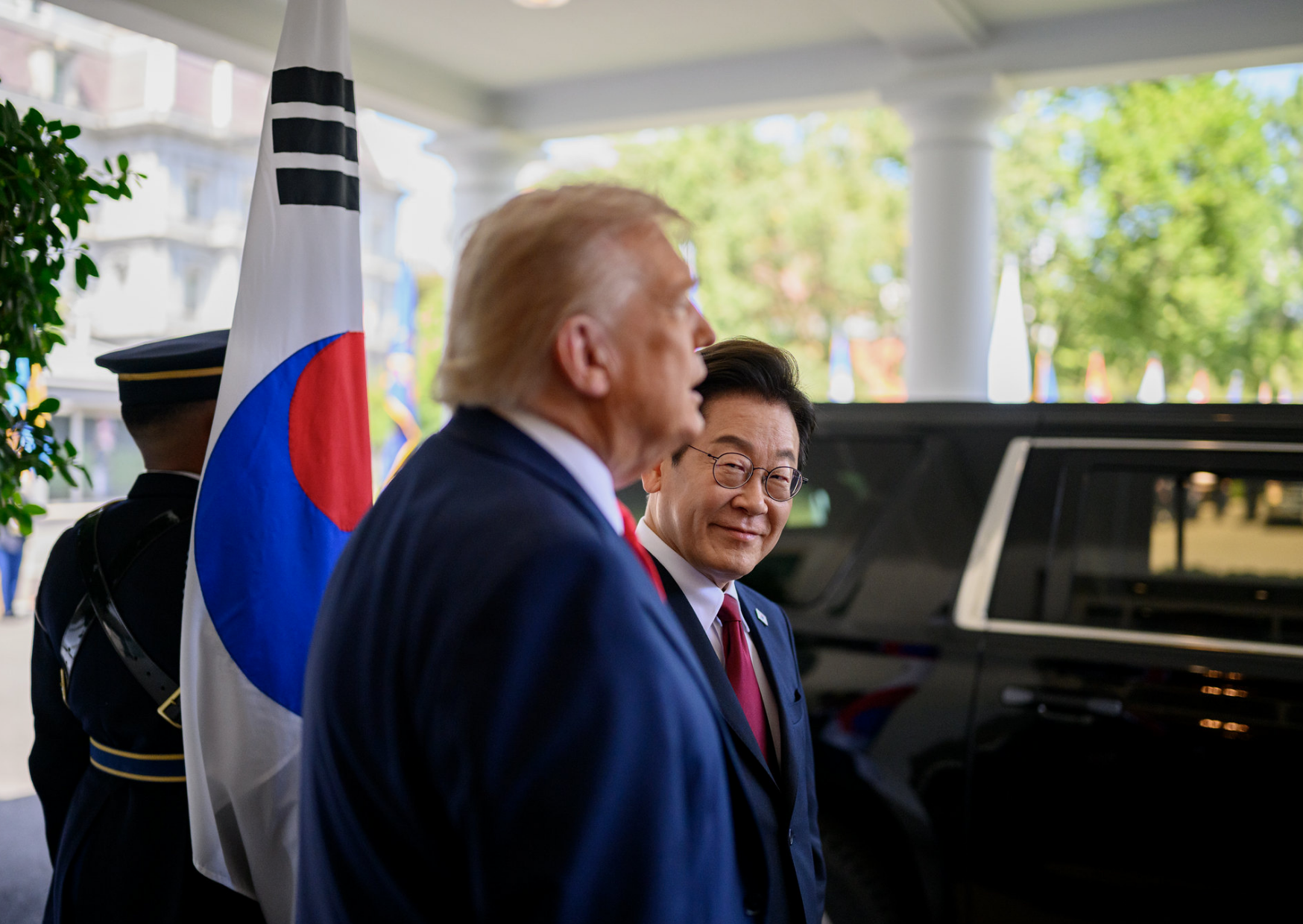
Model allyship with washington: more burden than boon for south korea
WRITTEN BY HUNTER SLINGBAUM
4 November 2026
In August 2026, US President Donald Trump abruptly ordered a significant scaling back of the annual US-ROK military exercise Ulchi Freedom Shield, in part citing South Korea’s resistance to providing greater support for the US war in Iran. Though sudden, this decision followed a long-standing pattern in Washington-Seoul relations. For Seoul, satisfying Washington’s demands rarely yields a return.
In January 2026, Elbridge Colby, US Under Secretary of War for Policy, called South Korea a “model ally”, echoing praise from a few months earlier, when Seoul agreed to increase defence spending to 3.5 per cent of its GDP. Yet that same day, Trump threatened an immediate tariff hike from 15 to 25 per cent on South Korean exports for Seoul’s failure to ratify a trade deal quickly enough.
This was not an isolated incident. In March, the US moved key parts of its Terminal High Altitude Area Defense (THAAD) missile-defence system from South Korea to the Middle East to aid its war efforts in Iran — much to the dismay of South Korean President Lee Jae Myung, who nonetheless sought to reassure the public.
The lesson here is clear: the goodwill earned by being a “model ally” is weak currency with the Trump administration. Though the current administration’s mercurial tendencies have made this pattern especially visible, the model ally approach has long fallen short of satiating transactional US administrations. South Korea must now decide where to step up for its ally and where to push back.
Historical precedents
Seoul has been here before. In the 1960s and 1970s, South Korea bore immense costs to sustain its alliance with the US. During the Vietnam War, over 320,000 South Korean troops served alongside American soldiers, the largest military contribution by any US ally to a foreign war since World War II. President Lyndon B. Johnson touted South Korea’s contributions in Vietnam as one of the chief achievements that “placed Korea in the forefront of the free nations of Asia and earned the respect and admiration of free men everywhere”. Though Washington had a complicated relationship with South Korea’s authoritarian leader, then-President Park Chung Hee, Seoul’s overwhelming military support, widespread positive public opinion of the US, and commitment to further develop its own capitalist systems arguably placed it well into the model ally camp.
South Korea may have resisted Trump’s calls to extend military support to Iran, but new demands will come, and its leaders must remain clear-eyed as they chart a path to defensive independence. The country faces a choice: stretch the bounds of its own national interest to maintain its model ally status, or set firm red lines with its capricious security guarantor.
The war in Vietnam — and South Korea’s own battlefield deployment — was still underway in 1970 when then-President Richard Nixon moved to withdraw 20,000 US troops from Korea, nearly a third of the US forces stationed there. President Park allegedly expressed displeasure at Nixon’s decision in private but was unable to hold onto those 20,000 soldiers, though he later used South Korea’s Vietnam deployment to delay further withdrawals. South Korea’s model allyship also did nothing to prevent then-President Jimmy Carter’s public threats of full withdrawal in 1977, though those threats did not ultimately materialise.
Successive administrations’ attempts to pull back from commitments to Seoul, despite its costly support for a central US war effort, show that Washington does not reward model allyship alone. Where model allyship provides ongoing leverage — as with Park’s threat to withdraw troops from Vietnam — it may partly mitigate the costs of relying on a powerful ally with divergent interests. But leverage can only do so much, and once it expires, gambling on goodwill is a costly bet.
Mixed perceptions and pressures
To be sure, neither the South Korean public nor the Lee administration have blindly embraced Washington’s “model ally” label. Public opinion of the US has soured sharply over the past year, with recent polling showing that less than half of South Koreans view it favourably — the first time it has dropped below 50 per cent in over two decades — and only a slim majority still view it as a reliable partner. President Lee has also resisted playing the perfect ally, specifically in response to Trump’s persistent demands for support on Iran. In September, Lee said in no uncertain terms that “there will be no deployment of troops or dispatch of military assets to be involved in or intervene in this war [in Iran]”. This is an ally seeking to establish red lines with, rather than demonstrating endless obedience to, an increasingly demanding partner.
But these selective acts of resistance do not change the immense pressures influencing South Korean decision-making on the alliance. Chief among them is the North Korean threat, most critically its nuclear capability, which the US counters through extended deterrence and its physical presence on the peninsula. Despite Trump’s claim that North Korea has been “unthreatening and respectful” throughout his term, in March 2026, Kim Jong Un formally designated South Korea as North Korea’s “primary hostile state”. Shortly after Trump scaled back the joint Ulchi Freedom Shield exercises, North Korea launched 10 ballistic missiles over the sea, demonstrating that Kim is prepared to capitalise on any sign of fracture in the US-ROK relationship. South Korea can withstand the North’s conventional threat, but as long as it faces a nuclear-capable adversary without a deterrent of its own, its leadership may feel compelled to choose between excessive concessions to Washington and rapid nuclearisation.
Public perception can also contribute to the allure of complacency and the status quo, as South Koreans still view the US as their most important ally even amid souring opinion. And despite numerous tariff battles and shifting defence commitments and materiel, South Koreans may still see model ally status as protective armour against the administration’s worst whims, compared to the treatment other allies receive. Beyond Trump’s repeated critiques of and threats to entirely leave NATO, individual NATO members have faced more targeted pressure. Trump has marked Canada as the potential 51st state, and Canadian Prime Minister Mark Carney has confirmed his country’s preparations for both military and economic contingencies against the US. Trump also made extensive threats over Greenland, ultimately pressuring Denmark into granting the US significantly expanded military access in September 2026.
To South Koreans, their own challenges may seem minuscule in comparison, fuelling the belief that model ally status still carries some value in Washington. But there is little to support this faith. Cooperative pro-US allies like Denmark face existential threats without provocation, while other US allies in the region — like Japan and the Philippines — receive similarly non-existential threats and sustained cooperation, despite failing to raise their defence spending to meet US demands. These trends suggest that model allyship matters far less to South Korea’s security than circumstance — a fickle protector that can vanish at a moment’s notice.
Modelling complex allyship
The very behaviour that earned South Korea its prized title — the swift increase in defence spending — was ultimately beneficial for Seoul, independent of any attempt to win favour with the US. The choice to continue increasing the defence budget is part of a broader effort to transfer wartime operational control (OPCON) from United States Forces Korea (USFK) to South Korean command — a move that President Lee has emphasised is synonymous with sovereignty. But even on this area of alignment, both the USFK commander Gen Xavier Brunson and South Korean defence ministry officials have warned that the goalposts on the OPCON transfer effort are being moved too quickly to be successful. This highlights the core problem for Seoul: Washington will likely keep pushing for shifts in defensive commitments that at times run counter to South Korean interests, whether in their speed, execution, or scope.
South Korea may have resisted Trump’s calls to extend military support to Iran, but new demands will come, and its leaders must remain clear-eyed as they chart a path to defensive independence. The country faces a choice: stretch the bounds of its own national interest to maintain its model ally status, or set firm red lines with its capricious security guarantor. Seoul can and should continue to pursue areas of alignment with the US, but in a way that considers its own interests and sets limits on how far it will go, rather than prioritising appeasing US leadership. As Seoul navigates difficult decisions to come, it ought to remember one lesson from the past — model allyship is not a shield.
Washington should learn from this lesson too. If model allyship brings no reward, US allies will have little incentive to bend their national interests to earn the title. And while punitive measures can coerce allies to a point, enacting them without care or consideration for a precise end state compromises both the partnership and the stability it exists to protect. In the Korean case, burden-shifting and South Korean defensive autonomy can certainly serve the interests of both. But prioritising fealty over strategy, and rushed political timetables over sustainable change, risks provoking North Korea, incentivising South Korean nuclearisation, and otherwise undermining alliance relations and core US interests in the Indo-Pacific.
DISCLAIMER: All views expressed are those of the writer and do not necessarily represent those of the 9DASHLINE.com platform.
Author biography
Hunter Slingbaum is a Research Associate with the Reimagining US Grand Strategy Program at the Stimson Center. Their research primarily focuses on US foreign and defence policy in the Indo-Pacific, largely centring on air power and general military logistics, effectiveness, and strategy. Image credit: Flickr/The White House.