In Brief with Angelo M’BA and Samuel Parmer
7 August 2026
MEET OUR ASSOCIATE EDITORS
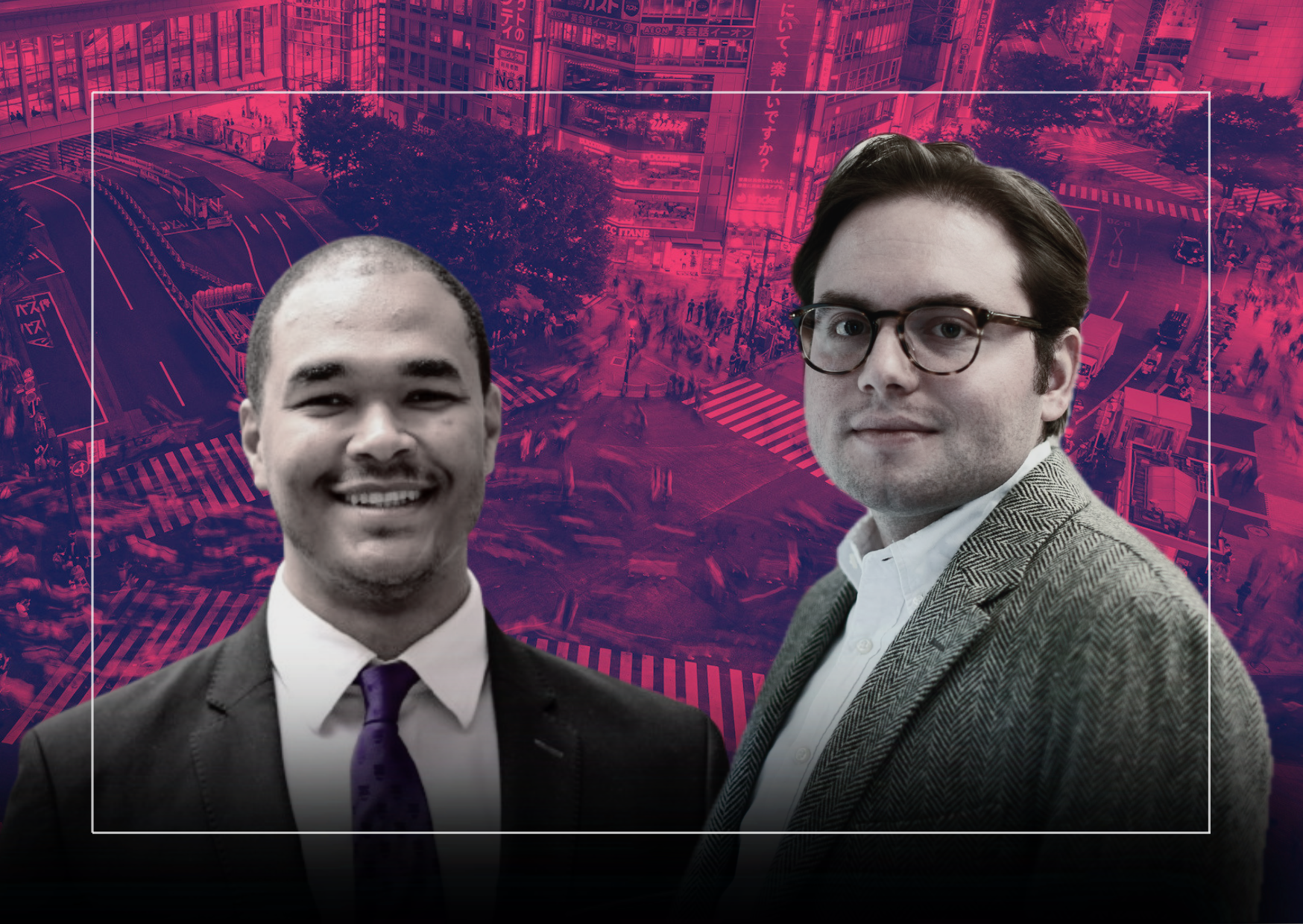
As 9DASHLINE continues to expand its coverage across the Indo-Pacific, our editorial team recently welcomed two Associate Editors — Angelo M’BA and Samuel Parmer. Our Editor-in-Chief, Dr Yatana Yamahata, recently sat down with them to discuss their interests, the key trends shaping the Indo-Pacific, and where they think its coverage should be heading.
YY: Walk us through your background — how did you come to specialise in the Indo-Pacific, and what drew you to our work at 9DASHLINE?
AM: My interest in the Indo-Pacific is the result of the intertwinement of my undergraduate and postgraduate specialisations in US foreign policy and Chinese foreign policy, respectively. Through these two windows, I gradually became acquainted with the diversity, nuance, and granularity of the (geo)political puzzle that makes the Indo-Pacific such a fascinating region. My desire to engage in the debates surrounding the region led me to join 9DASHLINE as an Associate Editor in 2025.
SP: My interest in the Indo-Pacific began with my internship at the US embassy in Beijing in 2018. As a graduate student at the Hopkins-Nanjing Center and one of the first foreign students back in China after the pandemic, I had the opportunity to grow that interest and expand my knowledge of how US–China dynamics affect the wider region. Professionally, I’ve spent the last few years focused on US multilateral engagement and the connection between US domestic politics and foreign policy, but always with an eye toward the Indo-Pacific.
I’m excited to dive back into expert conversations on Indo-Pacific issues at 9DASHLINE. I’ve always loved editorial work — helping thoughtful people hone their message and finding interesting angles on big topics — and I look forward to doing more of that work with our excellent team and contributors.
YY: US and China, then, are the throughline for both of you into the Indo-Pacific — two actors that shape much of the conversation about it. Building on that: What is an “underreported” trend or “underrepresented” perspective in the region that you think deserves more coverage than it currently gets?
SP: I think the impact of domestic politics on foreign policy and international politics is often either underreported or oversimplified. That’s something I’ve seen a lot with regard to US and Chinese politics and policy in my professional and academic life, and I think it’s especially true for other Indo-Pacific countries that get less granular attention in the English-language media. I’d love to see more thoughtful reporting on this from insightful local voices across the region.
AM: It’s a vast geopolitical region — or mega-region, as some coin it — and is discussed by many an analyst. Still, I reckon that less attention is brought to the external actors, such as the EU, trying to integrate the space, and the potential consequences their involvement could have on pre-existing security and diplomatic architectures.
YY: As associate editors, staying ahead of how the Indo-Pacific is evolving comes with the territory. What do you see as the defining challenges, crossroads, and changes our readers should be watching over the next few years?
AM: Perhaps cliché, but the shifting involvement and militarisation of key actors, namely the United States, China, Japan, South Korea, India, and Australia, may unsettle what have been tense but relatively stable relations. How a US withdrawal or a remilitarising Japan would impact regional dynamics is still to be seen, but the consequences would surely be lasting.
SP: Relatedly, it’s fascinating to see how ASEAN is staying committed to more open trade models at a time when much of the world is emphasising sovereignty, protectionism, and economic security. I’d love to see more coverage of the bloc’s new digital free trade agreement, members’ trade negotiations with the EU, and how that contrasts with regional and local efforts to securitise trade. Whether and why those efforts succeed or fail in the next couple of years will be telling for the region.
YY: Commissioning is also part of your role on the editorial team. Who would be your dream commission, living or historical, and what would you ask them to write?
SP: I’d love to see a piece from U Thant comparing the problems facing the UN today to those it faced under his leadership. UN funding crises, the rise of new voices in global governance, rapidly changing technology, and intensifying rivalry between the world’s two most powerful states would all be familiar problems. I’d be fascinated to see where U Thant would find similarities and differences, and what he would make of claims that the US and China are in a new Cold War.
AM: A contribution from Lee Kuan Yew, who had a viscerally blunt yet crisp understanding of regional geopolitics, would have been a terrific read. It seems that the space is often understood through generic truisms, such as ‘The West is declining, the East is rising’, with little nuance and depth.
Picking his brain on topics ranging from US–China relations and their consequences for middle powers to what to make of the tenth anniversary of the 2016 Permanent Court of Arbitration’s award would be an experience that would surely challenge my own biases and shortcuts.
YY: Finally, if you could live and work anywhere in the Indo-Pacific for a year, where would you go — and what issues would you spend time covering?
AM: I would most likely choose to live in an ASEAN country — perhaps Vietnam or the Philippines. Their unique position, caught between two giants and renewing efforts to engage with third partners, makes them particularly interesting vantage points from which to interpret regional security and diplomatic developments.
SP: I’d like to spend a year in Shanghai covering China’s evolving efforts to take a larger role in global governance and conflict management. The city hosts both the newly launched World Artificial Intelligence Cooperation Organisation (WAICO) and, of course, the Shanghai Cooperation Organisation (SCO). I’ll be very curious to see whether the WAICO becomes an effective arena for multilateral governance or a venue for photo ops and lofty statements. It will also be interesting to watch how the SCO does and does not change as China becomes more involved in conflict mediation inside and outside the region.
— END —