Quad maritime surveillance – A game changer?
Quad maritime surveillance — A game changer?
WRITTEN BY ANUTTAMA BANERJI AND NAYANIMA BASU
10 July 2026
The Quad Foreign Ministers’ Meeting held in New Delhi on 26 May 2026 opened a new chapter for the group: its pivotal moment was the announcement, by the Quad member states — Australia, India, Japan, and the United States — of the Indo-Pacific Maritime Surveillance Cooperation (IPMSC) initiative, launched even as the 2022 Quad Indo-Pacific Maritime Domain Awareness (IPMDA) initiative continues to be operationalised. Together, these developments signal the Quad’s willingness to shape the operational battle space in the contested Indian Ocean Region (IOR) and beyond — building habits of cooperation while tacitly reaffirming its commitment to counterbalance China.
IPMSC targets non-traditional threats such as Illegal, Unreported and Unregulated Fishing (IUUF), but its operational implications matter just as much. It commits Quad members to coordinating maritime surveillance — starting in the IOR — backed by expert exchanges and tabletop exercises. Working alongside IPMDA, it will use the latest technology to help partners share real-time information and build what the joint statement calls “an enhanced picture of vessels in support of a free and open Indo-Pacific region.”
Shaping the operational battlespace
In strategic parlance, the initiative influences and shapes the operational battlespace and improves operational readiness — the first step within the broader continuum of deterrence. By operationalising IPMDA alongside IPMSC, the Quad has engaged in an act of strategic signalling: Chinese presence in the region will be surveyed and monitored.
This kind of quiet signalling is not new for the Quad. The grouping’s identity as a “force for good” began with its Humanitarian Assistance and Disaster Relief (HADR) initiative — itself a form of influence and shaping operations — and it has since built its members’ shared understanding of the operational environment. Its strength lies precisely in not naming China openly: this ambiguity gives member states room to engage Beijing even as they build deterrence against it. Though it has previously been criticised for lacking teeth against Chinese aggression, IPMSC answers that criticism without ever naming China directly.
Contingency planning
The IPMSC initiative also prepares the Quad to manage future contingencies, particularly as the IOR becomes increasingly militarised. The ongoing United States-Israel-Iran conflict has already necessitated greater information and intelligence sharing, especially after the sinking of the IRIS Dena in the region.
IPMSC’s integration with IPMDA is significant: it enables Quad navies to navigate and survey their Areas of Interest (AOIs) more effectively while “learning” the operational environment. It also supports a more robust Common Operating Picture (COP) — a standardised, real-time picture of events at sea, an essential prerequisite for complete, holistic domain awareness.
While the IPMSC marks a pivotal shift in US foreign policy strategy, particularly its military posture in the Pacific Ocean, this initiative, coupled with the strategic redesignation of USPACOM, underscores a clear intent to substantially bolster the US military’s presence in the region.
India is already purchasing Sea Vision software from the United States to build its own COP; deployed within the Information Fusion Centre-Indian Ocean Region (IFC-IOR), it should let International Liaison Officers (ILOs) access a more comprehensive COP, positioning them as conduits for genuine information exchange and operational coordination. IPMSC could also drive cooperation with small states in the IOR such as Sri Lanka and the Maldives to partner with India and the Quad, reinforcing a “free and open Indo-Pacific” governed by the rule of law, and helping India counter accusations that it is the Quad’s ‘weak link’.
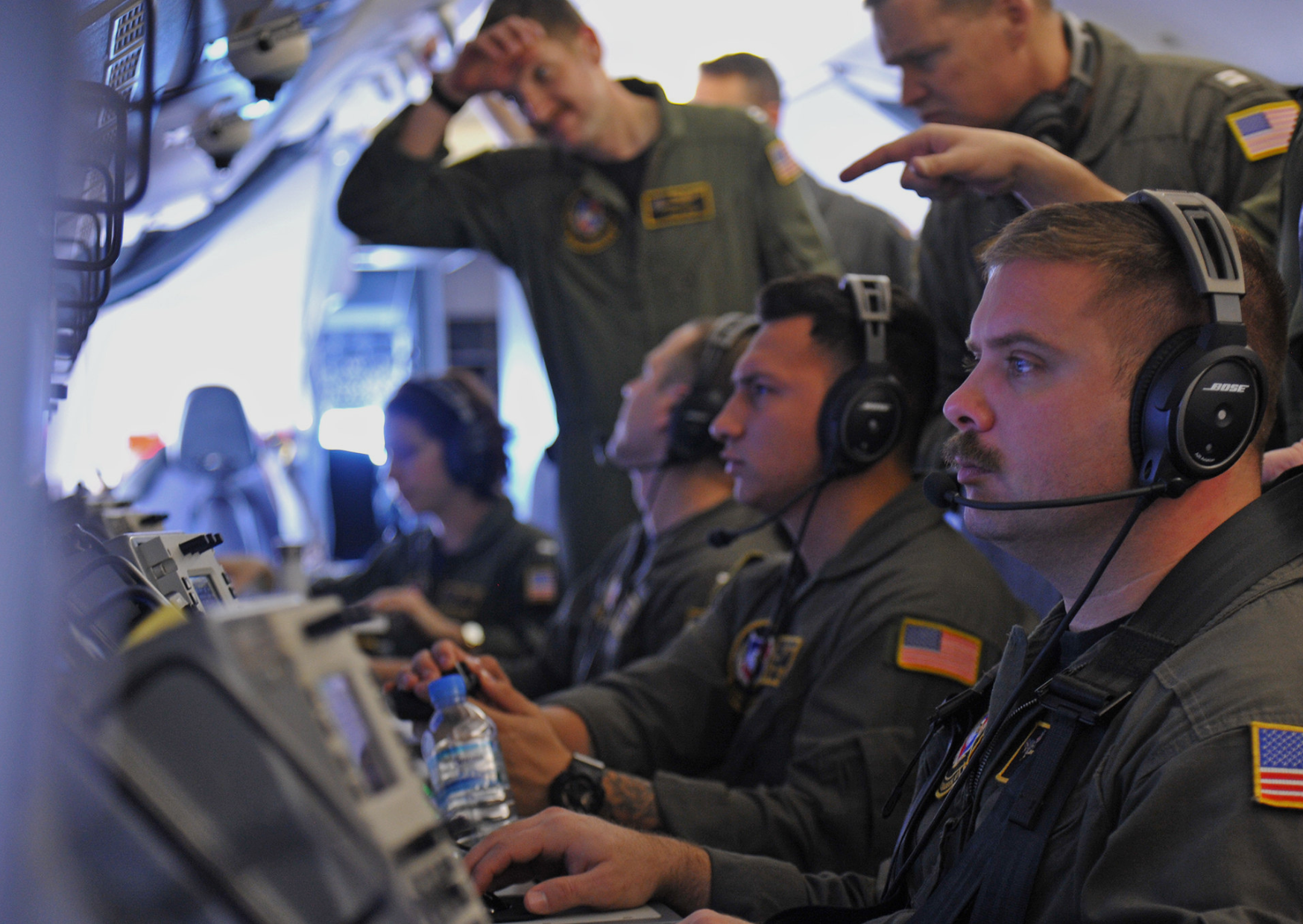
Since IPMSC involves the investment and deployment of aerial and maritime assets from Quad member states, it may see Quad navies potentially operating together to advance technical, procedural, human, and information interoperability. India and Australia, for instance, both operate the P-8 Poseidon in the Indo-Pacific and could use the aircraft jointly for ISR operations. Structural constraints will remain, however, making this more likely a collective effort involving other partners, such as France.
From an Indian perspective, operationalising IPMSC also benefits India’s interests, allowing it to focus on its immediate maritime neighbourhood and build greater situational awareness at a time when the IOR is becoming a site of strategic competition. Yet despite India’s extensive deployments across the Indo-Pacific — demonstrating its presence and operational readiness across — existing capacity constraints may affect Indian capabilities, though the combined deployment of forces from the region could help offset this. Similarly, India’s ambivalence about how much interoperability it desires with the other Quad navies will help determine the extent of the initiative’s success within the IOR.
Restructuring the “Indo-Pacific”
Interestingly, IPMSC was announced just days before the Trump administration redesignated the US Indo-Pacific Command (INDOPACOM) to US Pacific Command (PACOM) — a move many questioned as signalling a shift in Washington’s regional focus. It was, after all, during Trump’s first term that the US originally renamed PACOM to INDOPACOM, formally acknowledging India’s role as the Indo-Pacific’s western anchor while specifically targeting China.
The renaming should be viewed in conjunction with the launch of IPMSC and IPMDA: together, they suggest a sharper Indian focus on the IOR, its primary AOI, and an enabling of India to apply the operational principle of “selection and maintenance of aim” as it slowly builds its maritime defences and works toward operational superiority in the region.
The shift in nomenclature will not spell the end of the “Indo-Pacific” construct for regional states. The term was not coined by the US, but by former Japanese Prime Minister Shinzo Abe, who had originally introduced the concept in a landmark speech to the Indian Parliament in 2007. The recent updating of Japan’s Free and Open Indo-Pacific (FOIP) and its enduring convergence with the India’s Mutual and Holistic Advancement for Security and Growth Across Regions (MAHASAGAR) and the India-led Indo-Pacific Oceans’ Initiative (IPOI), reaffirms that the “Indo-Pacific” was never a US-given concept to begin with.
However, this does not mean a complete US withdrawal from the “Indo-Pacific” either, but merely a declaration of intent as to where US priorities fundamentally lie: the “Pacific,” an area where the US has had greater operational experience over decades. To this effect, the US is unlikely to eschew the term “Indo-Pacific” altogether, but its usage may become more context-specific going forward.
This may be a step in the right direction, as the US and India will come to more clearly prioritise their respective areas of operations within the broader Indo-Pacific. For instance, it may see India and the US pushing together for the creation of a unified “Indian Ocean Command.” India has traditionally reported to three combatant commands — the PACOM, AFRICOM and the CENTCOM — which has delayed decision-making for Indian forces. However, the creation of a new, unified Indian Ocean Command may enable India to prepare for future contingencies in the Indian Ocean, giving it a focused mandate as opposed to a more diffused one.
Looking ahead
If there is one lesson India can take from the Iran conflict, it is that it needs to prepare for long contingencies. Future crises are unlikely to be short and swift; they will more likely be prolonged and escalatory. Even in a purely logistics-support role, India will need to reckon with the collateral costs of involvement in such a contingency.
The presence of multiple actors with converging maritime interests could also make the IOR an increasingly contested space. Overlapping interests within the same AOI may breed confrontation, as partners grow wary of one another’s intentions, capabilities, and capacities — particularly as individual ties with China evolve.
For India, a “goldilocks dilemma” — i.e., something must be “just right,” neither too much nor too little — will endure in the IOR, as India will not want an enduring external presence there in the long term. India will try to find the right balance among partners, because its efforts at building maritime partnerships with different states could limit its own presence in the IOR. For example, if a partner provides India with strategic space in the larger swaths of the Pacific, that partner will expect India to offer it reciprocal access in the IOR.
While the IPMSC marks a pivotal shift in US foreign policy strategy, particularly its military posture in the Pacific Ocean, this initiative, coupled with the strategic redesignation of USPACOM, underscores a clear intent to substantially bolster the US military’s presence in the region. In doing so, the United States is placing strategic trust and reliance on a cadre of close allies — Australia, Japan, and major defence partner India — among other nations. The IPMSC aims not only to enhance collective maritime security but also to strengthen the operational capabilities of these partners. Set against this broader shift, the renaming of the combatant command is no more than a footnote.
What stands out most is the emphasis on expanding the capacity, capability and strategic role of the Indian Navy specifically. This marks a meaningful shift in operational priorities: one aimed at securing the IOR and fostering collaborative defence efforts among allies and partners as the US works to address emerging maritime challenges and threats.
DISCLAIMER: All views expressed are those of the writer and do not necessarily represent those of the 9DASHLINE.com platform.
Author biography
Anuttama Banerji is an Associate Fellow at the Centre for Aerospace Power and Strategic Studies, New Delhi. She is also an Honorary Adjunct Fellow at the National Maritime Foundation, New Delhi. She was a South Asia Visiting Fellow at the Stimson Center, USA in 2023. She graduated with a Master’s in International Relations from the London School of Economics in 2018. Her research focuses on water and maritime security as well as South Asian geopolitics.
Nayanima Basu is a journalist writing on international relations and strategic affairs and Author of 'The Fall Of Kabul: Despatches From Chaos'. She is also an Adjunct Fellow at Gateway House: Indian Council on Global Relations, a Mumbai-based international affairs think tank. Image credit: Flickr/US Pacific Fleet.