For Pakistan’s army, with greater power comes greater impunity
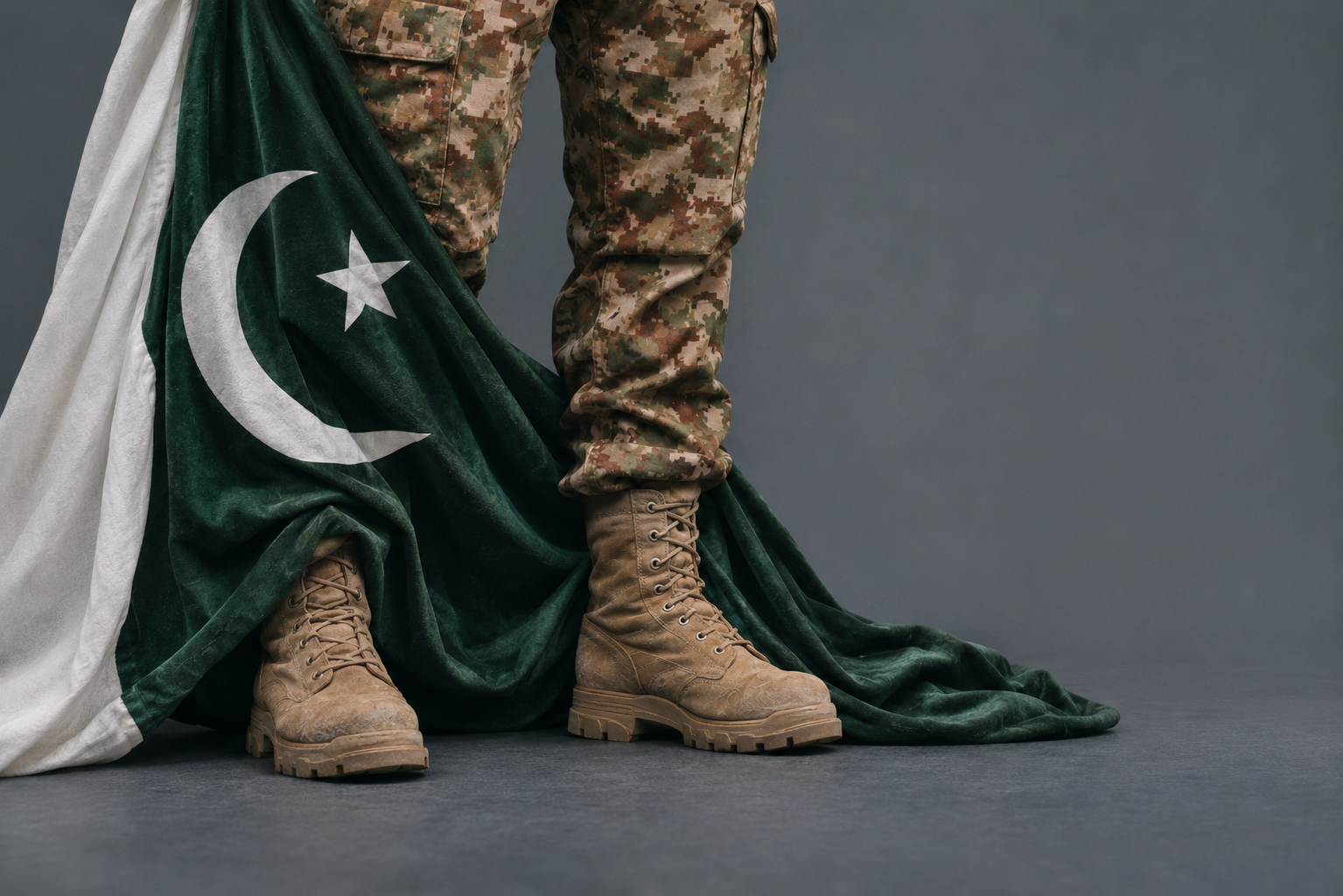
For Pakistan’s Army, With Greater Power Comes Greater Impunity
WRITTEN BY MARCUS ANDREOPOULOS
26 November 2026
In the space of just nine months, Pakistan’s ruling Pakistan Muslim League–Nawaz (PML-N) government has overseen one of the most sweeping expansions of military power in the country’s recent history. Last November, Pakistan’s parliament approved the 27th Amendment to the constitution, establishing the new office of chief of defence forces (CDF). This new post, occupied by Field Marshal Asim Munir, has significant influence over the country’s military command structure. This August, the government went further, passing the Defence Forces of Pakistan Act, which granted the CDF operational command and control over all three branches of the Pakistan military and made Munir the principal military adviser to Prime Minister Shehbaz Sharif.
Despite widespread concern at the erosion of civilian oversight, the legislation passed through both houses of Pakistan’s parliament at ease, amid a boycott from the opposition. With an already dominant Munir now handed even more authority, the field marshal has greater scope to act with impunity. The Pakistani military’s recent conduct has shown the dangerous consequences this increased power will have for domestic political opponents and protest movements, as well as for the country’s neighbours.
A break from the past
The Pakistani military now has a level of power previously unprecedented outside periods of direct military rule. Pakistan has a long, unfortunate tradition of military coups, dating back to the 1950s. Yet the military’s current dominance is markedly different compared to during the country’s three major military coups.
Amid political turmoil and distrust, Pakistan’s first native commander-in-chief, and the only other field marshal in its history, Ayub Khan, seized the reins of power in the country’s first coup in 1958. The subsequent period of martial law significantly elevated the power of the military at the expense of civilian institutions, with the regime banning political parties, imprisoning politicians, and seizing control of the press. A similar dynamic was on display two decades later, when General Muhammad Zia-ul-Haq deposed the government and imposed military rule. In this instance, the 1973 Constitution was suspended, parliament was dissolved, and provincial governments were removed. Zia subsequently extended his control into the judicial sphere, co-opting judges and using the courts to target political opponents. Finally, history repeated itself once more in 1999, when General Pervez Musharraf, following military defeat to India in the Kargil conflict, ousted then prime minister Nawaz Sharif, brother of the incumbent Shehbaz. In each of these cases, the military pushed aside the civilian government and its institutions in favour of direct military rule.
Munir, however, has not replicated this model. Instead, under the field marshal’s leadership, the military continues to operate within the structures of ostensibly civilian rule. Rather than disregard and dispose of existing institutions as his predecessors did, Munir has sought an elevated and privileged position within them. This has resulted in a system of military dominance that is already proving more durable and stable, whilst still retaining a degree of international legitimacy and avoiding the kind of pariah status Pakistan has previously faced following military takeovers.
With an already dominant Munir now handed even more authority, the field marshal has greater scope to act with impunity. The Pakistani military’s recent conduct has shown the dangerous consequences this increased power will have for domestic political opponents and protest movements, as well as for the country’s neighbours.
This is not to say that the military’s current legislative takeover does not bear some of the hallmarks of a coup. The extraordinary speed with which both the 27th Amendment and the subsequent Defence Forces legislation were enacted was indicative of the urgency with which Munir sought his new powers to be codified into law. The former passed through the Senate in a matter of hours, while the latter went from federal cabinet approval to presidential assent in a single day. During the August proceedings, members of the National Assembly complained that they had not been provided copies of the bills before their introduction and subsequent vote, greatly limiting their ability to meaningfully scrutinise the proposed laws. Opposition parties have repeatedly protested the manner in which these changes were enacted, and a boycott was staged by the opposition on the day they were introduced to parliament, with members of the Pakistan Tehreek-e-Insaf (PTI), the party founded by former prime minister and currently imprisoned Imran Khan, walking out of proceedings. The legislation has therefore achieved the formal sanction of Pakistan’s civilian institutions, but in a process that has left very little room for objection. Though Sharif remains Prime Minister, this does not necessarily mean that he holds any serious power over Munir, to whom the balance of power continues to shift.
Consolidating power and securing immunity
Although the military initially backed Imran Khan, his popularity soon came to be seen as a challenge to its dominance. Following a deterioration in relations, Khan was removed from office, following a parliamentary vote of no-confidence in 2022, yet his continued support and the resilience of the PTI appear to have reinforced the military’s determination to prevent another politician from ever accumulating such influence again. Instead, it has turned to Pakistan’s traditional political dynasties, particularly the more accommodating Sharif. There now appears to be a tacit acceptance that meaningful power at the national level rests with the military, while Pakistan’s established political families still retain authority within their traditional provincial strongholds.
For Munir, there are clear advantages to this course of action. First, the increase in both his institutional and personal power allows the CDF to operate with even greater impunity than before. After all, the 27th Amendment went beyond just expanding Munir’s authority by granting five-star officers, of which the field marshal is his country’s only one, lifetime immunity from criminal prosecution. The need for such protection is apparent considering the military’s ongoing struggle with the PTI and Imran Khan. The Pakistani state’s treatment of the former prime minister has attracted renewed attention in recent weeks as concerns over his deteriorating health and conditions of imprisonment have intensified. Although the PTI remains in opposition, with little immediate prospect of returning to government, Munir is effectively insulating himself against the possibility that any future PTI-led government might seek to hold him accountable for the treatment of its most successful leader during his tenure as army chief. Pakistan’s most recent election demonstrated the considerable obstacles facing any party that seeks election without the military’s favour, but Munir nevertheless appears determined to leave little to chance.
The consequences of unchecked power
Even more concerningly, the military’s newfound powers risk making Pakistan a more unstable and dangerous place, particularly for human rights activists and opponents of the state. After all, greater repression of dissidents risks deepening the very grievances these groups already harbour against the state. In Pakistan-administered Kashmir, security forces have already violently cracked down on a largely peaceful grassroots movement demanding greater economic and political rights as well as electoral reform. The erosion of civilian oversight and other institutional guardrails risks giving the military and security establishment still greater freedom to suppress such movements with force.
In Balochistan, the picture is more complex but no less concerning. An increasingly violent separatist insurgency, fuelled by longstanding grievances over political marginalisation and control of the province’s considerable natural resources, has been met with an escalating security response. Yet repression has extended beyond armed groups to include peaceful Baloch activists as well, many of whom have been arrested, prosecuted, and even forcibly disappeared for challenging the state. Greater military power and immunity from prosecution will only intensify these trends, risking a cycle in which greater state violence fuels further resistance and violence in return.
Outside of Pakistan the consequences of this impunity are equally apparent. Earlier this year, Pakistani air strikes on Afghanistan killed over 250 civilians at a drug rehabilitation centre in Kabul, with groups such as Amnesty International labelling it a war crime. Despite this, neither the Pakistani military nor Munir have faced accountability for the strike. By stripping away the remaining constraints that could rein in the military, Pakistan’s constitutional changes risk increasing the chances that such actions will reoccur. This danger is already apparent. This month, Pakistan carried out further air strikes on Afghanistan, placing additional strain on already fraught relations with Kabul. At present, a diplomatic off-ramp remains elusive, and each escalation increases the risk that Pakistan itself will face retaliatory strikes from the Taliban.
Yet for all the significance of these changes, Pakistan’s constitutional overhaul has attracted little attention outside of the country. International interest has instead focused on Islamabad’s growing role in the Middle East, where Pakistan is seeking to present itself as a mediator and as a security partner. So far, even in the absence of a workable peace deal or an effective strategic deterrent, Munir’s own profile has been elevated substantially by the war in the Middle East. Both at home and abroad, Munir is benefitting from an increase in his power, and with it, greater impunity. The consequences of this reality will be felt throughout and beyond Pakistan’s borders.
DISCLAIMER: All views expressed are those of the writer and do not necessarily represent those of the 9DASHLINE.com platform.
Authors biography
Marcus Andreopoulos is a senior research fellow at the Asia-Pacific Foundation, an international policy assessment group, and a Subject Matter Expert with the Global Threats Advisory Group at NATO’s Defence Education Enhancement Programme. Marcus is currently pursuing a PhD in international history at the London School of Economics and Political Science (LSE), researching Pakistan’s military relations with the West in the early Cold War. Image credit: Open AI.