Bangladesh’s transition under the BNP: A case for stronger India–Australia cooperation
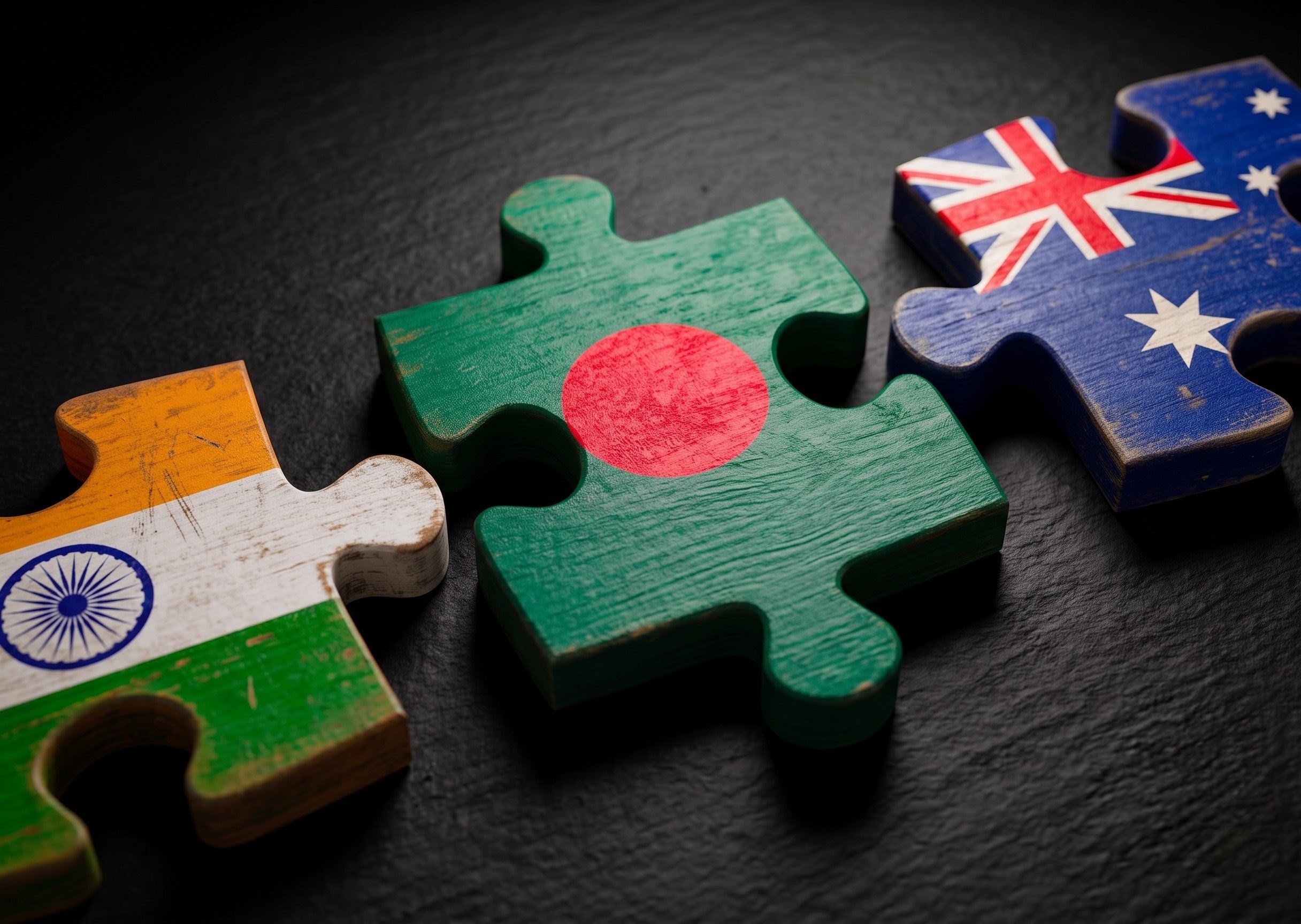
BANGLADESH’S TRANSITION UNDER THE BNP: A CASE FOR STRONGER INDIA-AUSTRALIA COOPERATION
WRITTEN BY GRACE CORCORAN AND ADITYA GOWDARA SHIVAMURTHY
30 July 2026
Bangladeshi Prime Minister Tarique Rahman recently concluded a four-day visit to China in June 2026 as part of his first international tour. The trip underscored Bangladesh’s interest in seeking partners to help bring new life into the country’s economy, infrastructure, and governance structures. After 18 months of interim rule, Rahman inherited a fragile economy, a politically divided country, and a polarised foreign policy landscape where relations with India — Bangladesh’s neighbour and primary regional and economic partner — had deteriorated significantly. While his administration is working with its Indian counterparts to rebuild the relationship, major issues remain unaddressed.
Rahman’s decision to visit China before India is therefore significant, signalling Beijing’s continuing influence over Dhaka and expanding presence in the Bay of Bengal and broader Indo-Pacific. At a time when India continues to navigate a strained relationship with post-Hasina Bangladesh, reliable partners such as Australia must do more to support Bangladesh’s stable transition.
Bangladesh in the Indo-Pacific
Bangladesh is located at the heart of the Bay of Bengal, and sits along critical trade routes between South Asia and Southeast Asia. As the world order pivoted to the East, and pirouetted around the Indo-Pacific, Bangladesh emerged as a geo-economic and connectivity hub. The country leveraged its geography and pursued its economic and infrastructure ambitions through China’s Belt and Road Initiative (BRI). Under Prime Minister Sheikh Hasina (2009–2024), Bangladesh maintained its “friendship with all, malice to none” policy while ensuring that the concerns and interests of its neighbour — India — were addressed. To offer an alternative to China, India expanded its presence in Bangladesh by promoting market access, connectivity, and infrastructure projects. Between 2010 and 2017, India offered credit lines worth USD 7.8 billion to fund infrastructure, defence, training, and education. Similarly, others — including Japan, the EU, Australia, and the US — increased their presence, either bilaterally or in collaboration with India.
Traditionally, Bangladesh’s politics has been dominated by two parties and families — the Awami League led by Sheikh Hasina and the Bangladesh Nationalist Party (BNP), now led by Tarique Rahman. Under Hasina, the country witnessed authoritarianism and democratic backsliding, which culminated in the youth-led July Revolution in 2024 that brought an end to her rule. Over the following 18 months, Muhammad Yunus led the interim government, and financial pressure mounted. In the 2025 financial year, the country spent nearly half of its foreign aid servicing external debt, totalling over USD 4 billion. Mob violence surged amid deepening extremism and religious tensions. On the foreign policy front, the interim government doubled down on its ties with China and Pakistan; relations with India deteriorated quickly with widespread anti-India rhetoric and posturing. In response, India restricted visa services, transhipment, and market access for Bangladeshi goods.
Maritime security presents a high-impact avenue for coordination. Bangladesh possesses one of the most capable armed forces in the region and is the second-largest recipient of Chinese military equipment worldwide.
By the time the BNP was elected to power in February 2026, the country faced growing vulnerabilities to coercive economic and political influence from creditor states. Nearly USD 78 billion (of an overall debt of USD 113 billion) was owed to external creditors alone, with over USD 26 billion to be serviced in the next four years. Dhaka owes around USD 10 billion to China, making it the second-largest bilateral creditor after Japan, whose loans are concessional and on a long-term repayment basis. Dependence on creditor states, particularly China, grew deeper with the withdrawal of USAID and was further exacerbated by fuel shortages as a result of the war in Iran.
Domestically, the 2026 elections saw the mainstreaming of hardline elements — especially by Jamaat-e-Islami, which won the largest number of seats in the party’s history. This performance underscored divisions across the country, raising questions about minority protections, women’s rights, and the country’s democratic principles.
The urge to diversify
Rahman is in a difficult position. His administration intends to mend ties with India and diversify the country’s economic and diplomatic partnerships. His visit to Malaysia on 21 to 22 June 2026, just before his China visit, was a key first step. Rahman’s administration also aims to implement its 31-point plan to redefine socio-economic development, in lieu of the interim government’s July Charter.
For its part, India is actively working to rebuild ties with Bangladesh. It engaged in multiple high-level interactions before the elections, and sent the Foreign Secretary Vikram Misi and Speaker of the Parliament Om Birla to Rahman’s oath-taking. India exported over 45,000 tonnes of diesel in April 2026 during the fuel shortages, at the request of the new government. The Modi government, seeking “experienced” hands to recalibrate ties, appointed Dinesh Trivedi, a career politician and former minister, as the High Commissioner to Bangladesh. The envoy has also been elevated to cabinet minister status — providing him with direct access to the Prime Minister.
However, the relationship is not free of challenges. Decades of trust deficit between India and the BNP, compounded by India’s support for the Awami League and Hasina, are likely to impact decision-making. Issues including access to the Indian market, trafficking, border killings, water sharing, and Hasina’s exile in India remain unresolved, and have continued to ramp up anti-Indian sentiments among several segments of society. India’s deportation of Bangladeshis from West Bengal following the Bharatiya Janata Party’s (BJP) victory in the state elections has also fuelled concerns.
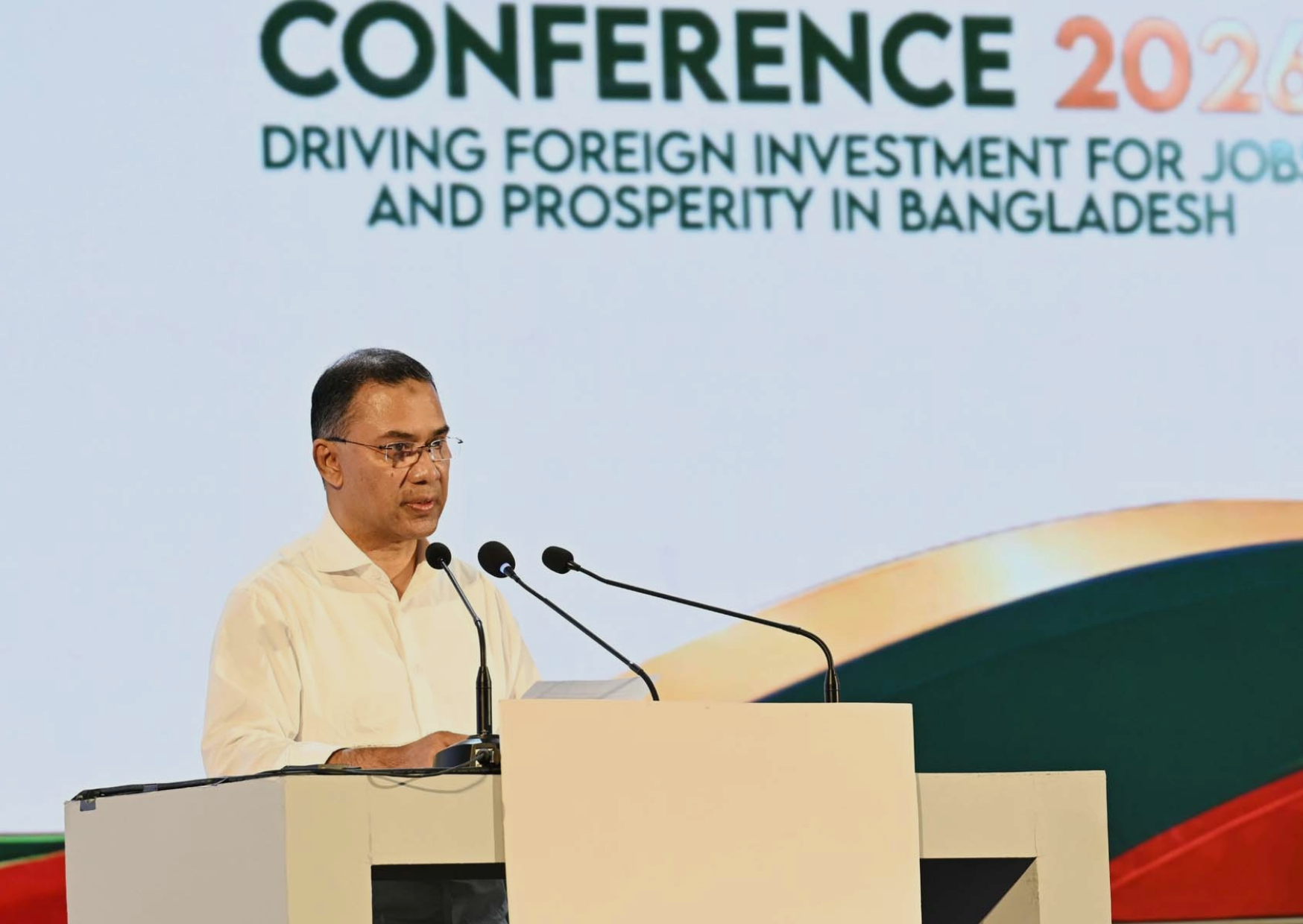
Prime Minister Tarique Rahman delivered the keynote address as the chief guest at the 'FICCI FDI Conference 2026', held at the Bangladesh-China Friendship Exhibition Center in Agargaon, Dhaka, on Thursday, July 23, 2026. Image credit: Wikimedia/Press Information Department.
Rahman’s visit to China should be read against this backdrop. The visit resulted in over 15 memorandums of understanding, covering party-to-party relations, defence cooperation, infrastructure, and economic ties. China has pledged over USD 300 million in grant assistance, and the two governments agreed to explore 2+2 mechanisms to boost security, strategic, and defence ties. They also discussed shifting Chinese factories to Bangladesh and implementing Chinese economic zones across multiple districts. Both countries agreed to expedite modernisation and development of the Mongla and Chattogram ports, and China pledged its assistance on the sensitive Teesta River water project — making Beijing a stakeholder in both the port sector and the management of water that flows from India. Bangladesh is also expected to acquire around 24 Chinese J-10 CE fighter jets, making it the second country after Pakistan to possess the jets.
Opportunities for cooperation with Australia
These developments have raised questions among Indo-Pacific powers that see India as the primary partner to counter China in South Asia and the Indian Ocean Region (IOR). But with Bangladesh’s new government signalling diversification, other countries must offer credible alternatives through greater engagement and support. While countries like Japan have long played a role in supporting Bangladesh’s development and stability, the scale of Dhaka’s challenges requires additional capable and willing partners. Australia — with its growing interest and engagement in the north-eastern Indian Ocean, close ties with India, and relatively neutral standing in Bangladesh’s politics — could play a valuable role in Bangladesh’s stable transition.
For Australia, an independent, democratic, stable Bangladesh is strategically important. Bangladesh’s rising debt burden and growing proximity to China could undermine regional resilience and create an even more polarised Indian Ocean. China could exploit these circumstances to monitor, shape, or potentially disrupt maritime traffic in the waters surrounding Bangladesh — waters vital to Australia’s trade and energy flows.
With AUD 31.8 million budgeted in 2025-26, Bangladesh is Australia’s second-largest aid recipient in South Asia, but the amount is significantly lower than what Australia’s other partners across the Indo-Pacific receive. Australia should consider increasing its efforts in Bangladesh, cooperating on sectors that have broader implications for the region, including governance, countering misinformation and disinformation, extremism, and women and minority rights.
Australia already has a framework through which it could enhance its presence. The Australia–Bangladesh Development Partnership Plan, launched in October 2025, identifies “policy reform (governance)” its first expected outcome. This ought to include strengthening the capacity of the Bangladeshi government to implement its 31-point reform plan.
An important secondary component of Australia's enhanced engagement with Bangladesh could be limiting Dhaka’s dependence on China by reinforcing India’s engagement. India remains a major investor in Bangladesh’s infrastructure, but implementation and timing challenges have slowed delivery. Australia could supplement India's large investments and support initiatives to rebuild ties with Dhaka.
Australia could align its technical assistance and skills-development programmes to help close delivery gaps in Bangladesh, targeting upskilling in engineering, programme management, or other trades. This would complement India’s efforts to execute projects and regain trust while also allowing Canberra to contribute to Bangladesh’s development. Such collaboration is already visible in Sri Lanka, where Australia has provided security equipment to India-supported airport and seaport projects.
Maritime security presents a high-impact avenue for coordination. Bangladesh possesses one of the most capable armed forces in the region and is the second-largest recipient of Chinese military equipment worldwide. Australia could donate patrol vessels and defence equipment — as it has to the Maldives — to help address maritime security threats and over-dependence on China. Replicating the arrangement with the Maldives, India could provide maintenance, servicing, and training for the vessels, normalising its security role in the region and supporting Bangladesh’s security diversification.
As China continues to make inroads in the Indo-Pacific, India and Australia should explore joint opportunities to address Bangladesh’s needs and support its transition. Modi’s visit to Australia in July 2026 offered an opportunity to explore cooperation in the IOR and specifically in Bangladesh, which could bolster ties between New Delhi and Dhaka and ensure the Rahman government has ample choice of partners beyond China. The India–Australia Joint Declaration on Defence and Security Cooperation, released in July 2026, provides a framework for this kind of coordinated engagement on mutual interests and concerns. It is time for Indo-Pacific partners to step up their support for a stable and prosperous Bangladesh.
DISCLAIMER: All views expressed are those of the writer and do not necessarily represent those of the 9DASHLINE.com platform.
Author biographies
Grace Corcoran is a Research Fellow and the Senior Policy and Projects Manager in the Security and Geopolitics team at the Australia India Institute. She is particularly interested in Australian foreign and defence policy in Asia, Indian Ocean security, and minilateral cooperation.
Aditya Gowdara Shivamurthy is Associate Fellow, Neighbourhood Studies, at the Observer Research Foundation. He focuses on strategic and security-related developments in the South Asian region. He is the editor of the book China-India Contestation in South Asia: Perspectives and Responses from the Region published by Routledge. Image credit: Gemini AI.