The Philippines’ hard balancing statecraft won’t deliver the South China Sea Code of Conduct
the philippines’ hard balancing statecraft won’t deliver the south china sea code of conduct
WRITTEN BY PHENG THEAN
23 March 2026
In maritime security, “hard balancing” refers to a state’s effort to counter a perceived threat by expanding maritime capabilities, deepening formal alliances, and reinforcing coercive diplomacy. While defensive in intent, such measures often trigger reciprocal countermeasures from the opposing side, thereby producing a hard-to-hard spiral that invites mistrust and confrontations.
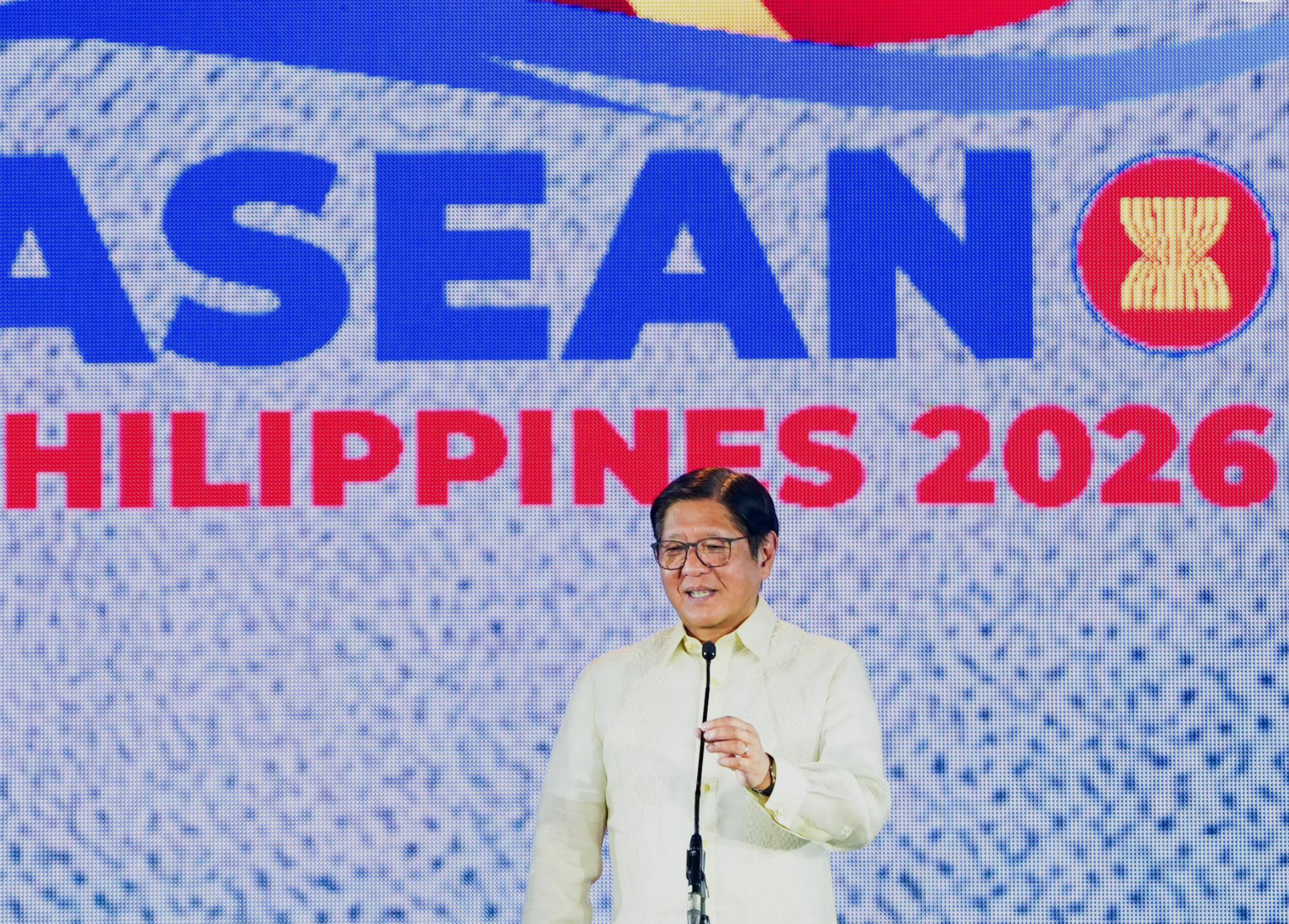
The Philippines now stands squarely within this dilemma. There is a strategic disconnect between what the Philippines does and what it seeks to achieve. As the ASEAN chair for 2026, it has pledged to conclude a legally binding Code of Conduct (COC) in the South China Sea. While the code is intended to establish clear rules and mechanisms for better compliance with international law and accountability for actions at sea — spanning maritime governance, operational safety, and communication enforcement oversight — such negotiations between ASEAN and China remain unresolved despite years of constant efforts. The urgency is clear; Philippine Foreign Secretary Theresa Lazaro has announced that ASEAN–China working group meetings would shift from quarterly to monthly sessions to accelerate the code’s negotiations. Strategically, however, Manila’s parallel prioritisation of hard balancing against China creates three structural obstacles involving reputational costs, an externalisation narrative, and shrinking flexibility.
Alliance signalling and reputational costs
First, Manila has aimed to improve its relative maritime capabilities through US-Philippines alliance consolidation. This raises the reputational cost of concession, particularly when Beijing prefers bilateral dispute settlement. While diplomacy with China continues, Manila is leaning more towards sustained US–Philippines partnership. In a joint statement on 16 February 2026, following the 12th Philippines–United States Bilateral Strategic Dialogue, both sides pledged to strengthen the alliance to re-establish deterrence in the Indo-Pacific. This commitment is expected to encompass more than 500 military and security activities throughout the year, including large-scale iterations of Exercise Balikatan, maritime cooperative activities, air engagements, and subject matter expert exchanges.
If the Philippines seeks a realistic pathway towards a functional COC — and to preserve ASEAN’s credibility as a neutral convening platform — it must complement its instruments of statecraft with more targeted diplomatic adjustments.
This visible security cooperation, whether intended or not, narrows political room for Beijing to manoeuvre. A meaningful COC requires calibrated ambiguity, sequencing, and face-saving flexibility. No major power willingly risks appearing to concede under conditions of heightened strategic signalling. The harder the alliance posture, the higher the reputational barrier to compromise. At times, such constraints become even more pronounced given China’s own force posture, with its rapidly expanding coast guard and maritime militia forces. The People’s Liberation Army Navy (PLAN) is already the world’s largest by ship count, with more than 370 battle force ships and submarines, including aircraft carriers and advanced destroyers. From its vantage point, intensified US–Philippines alignment fits into what many Chinese scholars describe as a broader containment architecture along the First Island Chain since the ‘Pivot to Asia’. Regardless of intent, perceiving Washington’s actions as attempts at containment, Beijing will predictably step up its own countermeasures in response to Manila’s balancing. The security dilemma always looms large — particularly in great power rivalries where status, deterrence, and credibility are at stake.
Multilateral defence networks and externalisation
Second, the Philippines’ expanding defence partnerships at the multilateral level reinforce China’s narrative of external interference in the management of South China Sea disputes. Beyond Washington, Manila has expanded its security cooperation with Japan, Australia, and more recently European partners, including a new bilateral defence cooperation agreement with Italy signed on the sidelines of the Munich Security Conference 2026.
For its part, these partnerships undeniably enhance Manila’s maritime capacity and operational readiness. Japan has transferred coastal surveillance radar systems and signed the Acquisition and Cross-Servicing Agreement, allowing reciprocal logistical support during joint exercises. Australia is investing in infrastructure upgrades at Philippine bases and expanding joint maritime patrols and interoperability initiatives. France and Canada have also increased their participation in Balikatan, marking the largest multilateral involvement in the exercise’s history.
Collectively, what is emerging resembles a structured deterrence network — one that incrementally reduces Manila’s capability gaps and strengthens its maritime domain awareness. Strategically, however, it carries diplomatic trade-offs. Defence multilateralism risks either isolating Manila from Southeast Asian regionalism or framing ASEAN-led negotiations as unfolding within a broader alignment architecture. Should Beijing interpret such developments through this lens, strategic delay or dilution of the COC becomes an increasingly rational course of action.
It is therefore a strategic miscalculation to assume that diversified defence networks alone can generate a useful result or revitalise relations with China. Such statecraft may enhance deterrence, but it is unlikely to grant Manila diplomatic leverage or a binding agreement on favourable terms. On the contrary, it may reinforce Beijing’s incentive to withhold symbolic accommodation during ASEAN’s Philippine chairmanship.
Mutual nationalist pressures
Finally, hard balancing — increasingly paired with coercive transparency — hardens domestic and regional expectations in ways that complicate compromise. Publicised alliance deepening, expanded military exercises, and maritime transparency initiatives elevate nationalist sentiment for both China and the Philippines. In the Philippines, visible deterrence shapes domestic political expectations. As Manila acquires greater maritime capacity and operational confidence, it faces growing pressure to ‘resolve’ the country’s disputes. However, the mounting pressure is also amplified by domestic political fragility, with three impeachment attempts lodged against the vice president in close sequence. Under such conditions, any concession that appears to dilute sovereignty claims risks being weaponised in domestic political contestation. Hard balancing, therefore, narrows Manila’s room for manoeuvre. The more capacity it builds, the stronger the expectation to use it decisively.
For Beijing, the dynamic is no less constraining. The Chinese Communist Party faces the need to demonstrate strength to a domestic audience increasingly attuned to narratives of national rejuvenation. Its long-term strategic objectives such as Taiwan contingencies, the East China Sea, and broader regional deterrence architecture carry far greater strategic weight than the South China Sea COC. Within that hierarchy, the COC — while diplomatically important — does not constitute an existential imperative demanding expedited concession to Manila during its chairmanship.
Nevertheless, none of this suggests that the Philippines should abandon deterrence. Hard balancing can still stabilise the tactical environment and prevent unilateral escalation. But deterrence and negotiated rule-making operate under different logics. Strength at sea does not automatically translate into agreement at the negotiating table.
A useful lesson
A valuable contrast lies in Vietnam’s engagement with China. The scale of Vietnam’s island building is second only to China’s — creating more than 3,500 acres of land — but Beijing’s public denunciations of Hanoi’s maritime activities have been comparatively muted and far less provocative than its rhetoric towards Manila. The difference lies not in material capability alone, but in escalation management and reputational signalling. Hanoi has modernised its maritime forces and fortified its outposts, but it has done so alongside sustained party-to-party channels, high-level bilateral engagement, and relatively lower-profile public messaging. Hanoi has also started joint naval patrols in the Gulf of Tonkin with Beijing to serve as a symbolic benign gesture. This aligns more closely with Beijing’s stated preference for non-confrontational and bilateral dispute handling.
Lamentably, given the accumulated mistrust, it remains difficult for Manila and Beijing to fully appreciate each other’s defensive intentions. As this action–reaction spiral becomes further entrenched, the Philippines’ approach reveals a strategic disconnect: the very instruments it employs to strengthen deterrence simultaneously constrain the diplomatic space required to conclude a meaningful COC. Alliance signalling raises the reputational cost of concession, multilateral defence networks reinforce perceptions of external interference, and domestic pressures on both sides narrow the room for relative compromise.
If the Philippines seeks a realistic pathway towards a functional COC — and to preserve ASEAN’s credibility as a neutral convening platform — it must complement its instruments of statecraft with more targeted diplomatic adjustments. This could include sustaining and deepening bilateral channels with China alongside ASEAN processes, sequencing negotiations to allow face-saving flexibility, and moderating confidence-building efforts in emerging non-traditional maritime areas. Without such calibration, hard balancing may stabilise tensions at sea, but it will remain insufficient to deliver agreement at the negotiating table.
DISCLAIMER: All views expressed are those of the writer and do not necessarily represent those of the 9DASHLINE.com platform.
Author biography
Pheng Thean is a Junior Researcher at the Center for Southeast Asian Studies (CSEAS), Institute for International Studies and Public Policy (IISPP). His research interests focus on ASEAN studies, Japan foreign & security policy, and securitisation theory. Image credit: Communications Office of the President of the Philippines.