What the evolution of China’s Health Silk Road means for the World Health Organisation
What the evolution of China’s Health Silk Road means for the World Health Organisation
WRITTEN BY PAULO AFONSO B. DUARTE AND ANABELA RODRIGUES SANTIAGO
25 March 2026
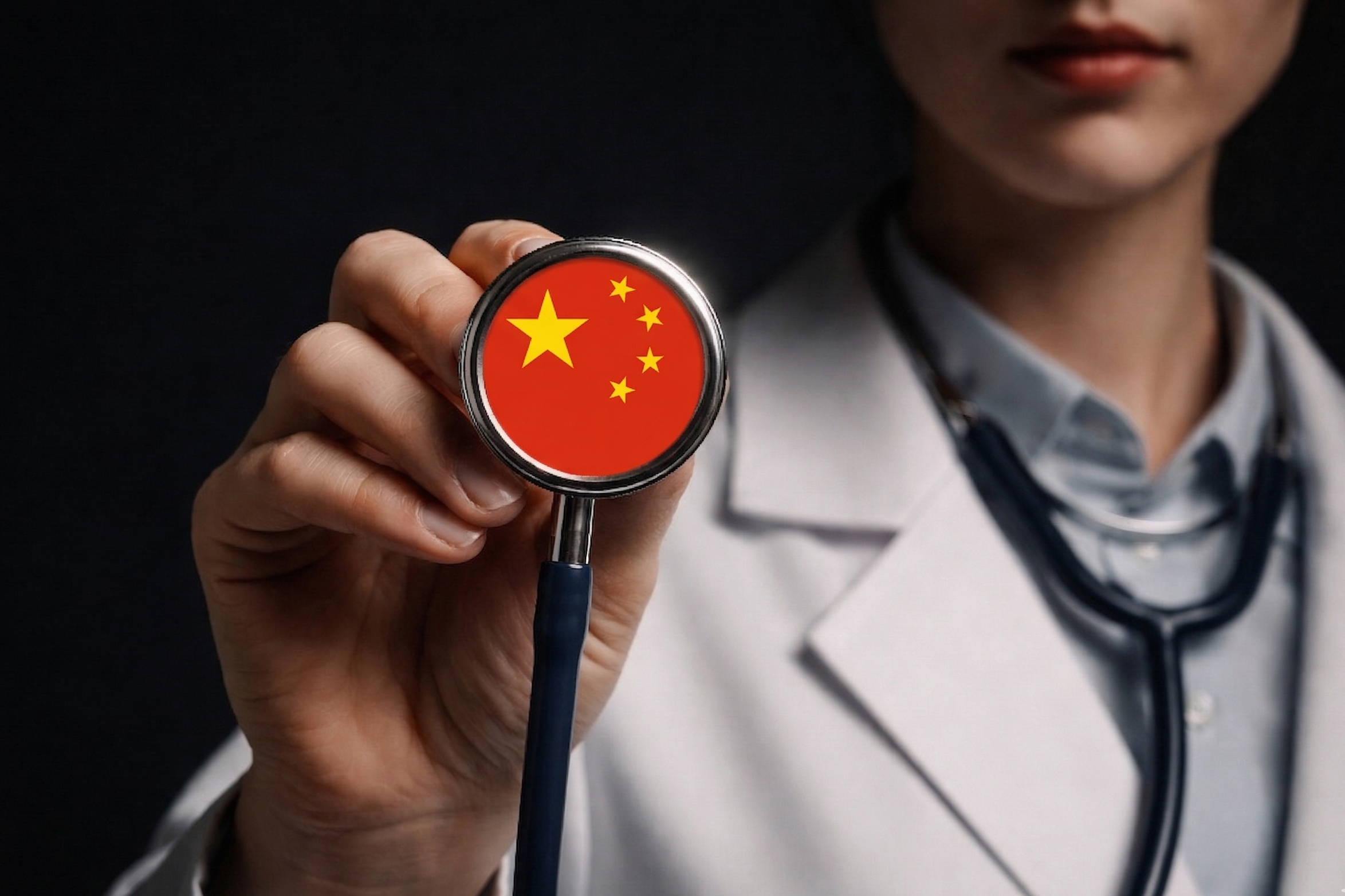
Over the past decade, global health governance has evolved into an arena of strategic competition: a shift made visible, rather than created, by the COVID-19 pandemic. China has played a central role in this transformation. Instead of pushing for reforms from the outside, Beijing has sought influence within the World Health Organisation (WHO) through participation, financing, and programme implementation. China’s engagement with and within the WHO forms part of a longer-term strategy connected to its so-called Health Silk Road (HSR) — one of the five corridors of the Belt and Road Initiative (BRI) — through which health cooperation functions simultaneously as development assistance and institutional positioning.
China’ expanding influence within the WHO
Since the beginning of the twenty-first century, and especially since Xi Jinping came to power in 2013, Chinese foreign policy has increasingly positioned health as a core instrument of external engagement. Within this context, the WHO has become a privileged arena for projecting Chinese influence in global health governance.
Between 2014 and 2019, China ceased acting merely as a bilateral donor and began operating within the institutional architecture of the WHO. During this period, China also became one of the WHO’s largest voluntary contributors, primarily through earmarked funding. For instance, China shifted from episodic bilateral health assistance — such as deploying medical teams, building hospitals, and providing training, medicines, and equipment — to structured participation within the institutional framework of the WHO. Its assessed contribution share increased from roughly 2 per cent of the WHO budget in 2010 to nearly 8 per cent by 2019, while voluntary earmarked funding rose from under USD 10 million per biennium to approximately USD 70–90 million in 2018–2019, making China an important contributor to the organisation.
Through participation, financing, and programme implementation, the HSR enables China to translate practical health engagement into institutional influence within the WHO, shaping priorities and norms within the multilateral system.
The financial expansion was accompanied by operational engagement, including the deployment of more than 1,200 medical personnel to WHO-coordinated Ebola missions and the establishment of around 60 WHO collaborating centres, indicating a transition from bilateral donor to embedded institutional stakeholder. Through its growing presence within WHO technical bodies and voluntary funding mechanisms, China gained opportunities to shape agenda priorities and normative frameworks that subsequently reinforced the HSR’s external partnerships. In this sense, engagement with the WHO not only accompanies the HSR, but also helps structurally underpin its external consolidation.
At the same time, elements of the Chinese public health model — characterised by a prominent role for the state, particularly in the centralisation of epidemiological surveillance — became increasingly visible within global health governance. The WHO also became a platform for expanding Chinese influence in areas such as traditional medicine, culminating in the official inclusion of traditional Chinese medicine (TCM) in the International Classification of Diseases in 2019. China has also promoted its approach to digital health governance within international discussions on health monitoring and epidemic response. In doing so, it has advanced models centred on large-scale health data systems and digital surveillance infrastructures. Together, these developments symbolise China’s growing capacity to shape international health standards.
The period from 2020 to 2022 marked the peak of the organisation’s politicisation, characterised by several critical moments. In January 2020, China notified the WHO of the emergence of a new coronavirus in Wuhan, leading the organisation to declare a Public Health Emergency of International Concern on 30 January 2020. From March 2020 onwards, however, US allegations that the WHO delayed declaring the pandemic and uncritically accepted Chinese data — thereby becoming dependent on China — placed the WHO at the centre of a narrative contest between the two actors.
Through what became known as “mask diplomacy,” China sought to counter US criticism of the so-called “Chinese virus” by supporting COVAX programmes, distributing Sinopharm and Sinovac vaccines, and sending medical equipment to more than 150 countries. From this point onwards, the HSR became fully operational, with the pandemic providing Beijing an opportunity to institutionalise transnational health networks under Chinese leadership. On 14 April 2020, in response to China’s growing role, the Trump administration suspended US funding to the WHO, accusing the organisation of political bias in favour of China and signalling its intention to withdraw.
Origins and purpose of the Health Silk Road
Conceived as a health-dedicated extension of the BRI, the HSR has evolved into a policy umbrella through which China links domestic public health priorities with global health governance. While the BRI was launched in 2013 as a connectivity-focused project structured around five pillars — policy coordination, facilities connectivity, unimpeded trade, financial integration, and people-to-people bonds — the HSR gradually emerged from the health dimension embedded within the people-to-people pillar and was subsequently articulated as a distinct corridor.
A key point in understanding the HSR is that it is not merely a set of ad hoc medical aid deliveries. Rather, it is a framework consolidating different instruments of health diplomacy, development assistance for health, technical cooperation, and standard-setting. Health cooperation under the HSR is explicitly associated with epidemic information-sharing, exchanges of prevention and treatment technologies, training of health professionals, joint capacity to address public health emergencies, targeted cooperation on priority diseases (including AIDS, tuberculosis, and malaria), and the expansion of cooperation in traditional Chinese medicine.
This programmatic breadth signals that Beijing treats health simultaneously as a functional domain of cooperation and as a reputational asset within a wider narrative of “win-win” collaboration, especially with the Global South. Illustrative cases include China’s response to the West African Ebola outbreak and its financing and construction of the Africa Centre for Diseases Control headquarters. These efforts demonstrate a dual logic: materially strengthening continental public health capacity while simultaneously projecting Beijing as a reliable development partner within its “win-win” cooperation narrative.
In operational terms, the HSR presents as a mechanism designed to produce both material outputs (e.g. training, infrastructure, and technology transfer) and political outcomes (e.g. agenda influence, partnership dependence, and normative visibility). The implementation plan highlights cooperation principles that combine multi-level engagement, a pilot-oriented project logic, a multi-actor approach aligned with governance principles, and a blend of assistance with longer-term cooperation. Importantly, this indicates that the HSR is framed not only as humanitarian outreach but also as a vehicle for enhancing soft power and credibility in “regional and global health governance”.
The HSR is also shaped by the heterogeneity of health systems and epidemiological risks across BRI regions. Partners’ contexts vary markedly, ranging from advanced European health systems to diverse East and Southeast Asian systems with high contagion potential, to less developed systems in parts of West Asia and North Africa with limited epidemic response capacity. Accordingly, “one-size-fits-all” cooperation proves both impractical and potentially ineffective. HSR’s viability depends on China’s capacity to tailor cooperation models, allocate resources rationally, and sustain projects beyond symbolic announcements.
Constraints and implications of the Health Silk Road
The HSR faces persistent constraints that complicate assessments of its impact. A central tension lies between China’s preference for state-centric, sovereignty-sensitive diplomacy and the governance expectations embedded in a post-Westphalian global health order — characterised by polycentric governance that extends beyond interstate cooperation to include international organisations, private actors, and civil society, and emphasises transparency, compliance, and rule-based coordination. This creates friction with Beijing’s approach, which continues to privilege intergovernmental negotiation, non-interference, and flexible implementation modalities over formalised oversight and standardisation within multilateral frameworks. A second constraint concerns the fragmentation and uneven visibility of health assistance projects, which may reduce continuity and complicate efforts to measure outcomes across time and space. Finally, intensified strategic competition — especially during and after COVID-19 — has encouraged scepticism among Western actors regarding China’s motivations, the quality of certain medical products, and the potential securitisation of health aid as an instrument of geopolitical influence.
These constraints suggest that the HSR is best analysed as an interface between health cooperation and geopolitical signalling. Its logic is simultaneously pragmatic — addressing transnational disease risks, building capacity, and supporting health-system development — and political, as it contributes to China’s broader construction of its role as a more central actor in global governance. This dual character of the HSR finds its clearest expression in its engagement with established multilateral institutions, most notably the WHO, where operational cooperation is translated into recognised forms of global governance.
The HSR does not operate independently from the WHO; rather, it depends on the Organisation as a multilateral arena of legitimation. While the HSR generates operational networks through bilateral and regional health cooperation, the WHO provides the normative and institutional framework within which these initiatives acquire global recognition and standard-setting potential. This interaction transforms health assistance into institutional influence. The significance of this relationship lies in its structural implications: it illustrates how China’s rise in global health governance is occurring not through institutional rupture, but through embedded participation, financial leverage, and incremental norm diffusion within existing multilateral structures.
The evolution of China’s HSR has implications not only for bilateral health cooperation, but for the WHO itself. Rather than constructing parallel institutions, China increasingly operates through embedded multilateralism, transforming operational health cooperation into agenda-setting capacity. Through participation, financing, and programme implementation, the HSR enables China to translate practical health engagement into institutional influence within the WHO, shaping priorities and norms within the multilateral system.
DISCLAIMER: All views expressed are those of the writers and do not necessarily represent those of the 9DASHLINE.com platform.
Author biographies
Paulo Afonso B. Duarte is Assistant Professor at the University of Minho, Portugal. His works have been published in Pacific Review, Global Policy, Journal of Contemporary European Studies, Journal of Asian Security and International Affairs, Global Security: Health, Science and Policy, and Journal of Eurasian Studies.
Anabela Rodrigues Santiago is Integrated Researcher at Centro de Estudos Internacionais (CEI-Iscte), Portugal, and Member of COST Action: Science in Diplomacy Network: implementing multilateral policymaking in intersectoral, cross-disciplinary & strategic domains (SiDnet). Image credit: Gemini AI.