Stabilised risk: Thailand’s patronage-technocrat alliance under the 2026 oil shock
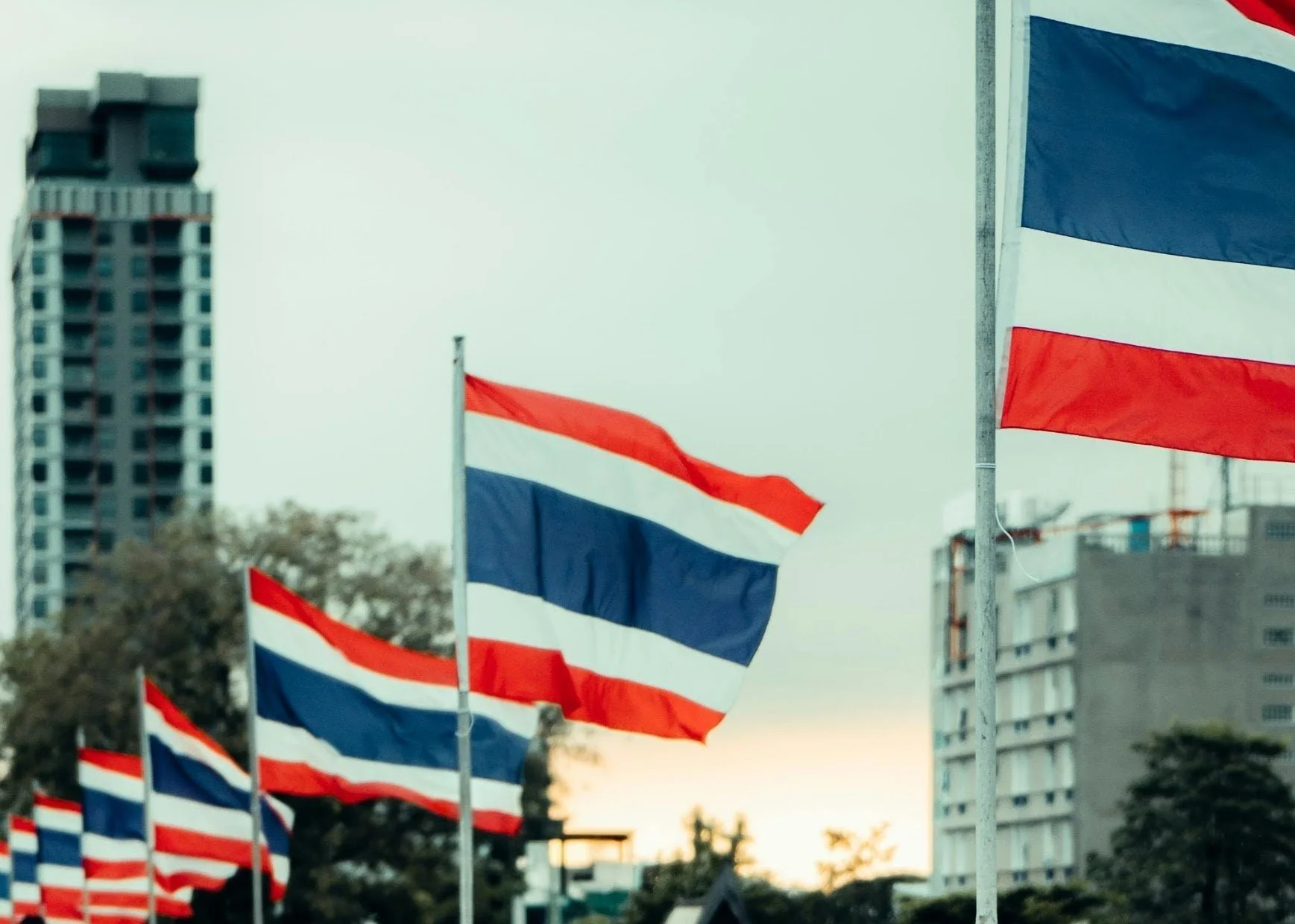
Stabilised risk: Thailand’s patronage-technocrat alliance under the 2026 oil shock
WRITTEN BY APIPOL SAE-TUNG
14 May 2026
The eruption of a full-scale military conflict between Israel, the US, and Iran in the first quarter of 2026 has restructured the global energy landscape and threatened the structural stability of oil-dependent nations. The shock is impacting Thailand at a critical moment of domestic political consolidation, following the February 2026 general election in which the Bhumjaithai Party (BJT) secured a 193-seat plurality and formed a conservative-led coalition. The incumbent administration — led by BJT Prime Minister Anutin Charnvirakul — finds itself navigating the intersection of a global energy supply disruption and a fragile domestic political and economic situation. This crisis has exposed friction between the regime's traditional patronage networks and the urgent need for transparent technocratic crisis governance.
The patronage-technocrat alliance
The BJT’s victory in the Thai general election on 8 February 2026 represents a significant consolidation of conservative, pro-establishment forces — effectively thwarting the momentum of the reformist People's Party, which finished a distant second with 118 seats, well short of pre-election polling expectations.
The BJT’s success was built on a platform of nationalism and border security, supported by localised patronage networks that gave the party a more resilient institutional base than predicted by pre-election polling. Prime Minister Anutin Charnvirakul positioned himself as a stabiliser, emphasising military readiness and national pride, a theme that resonated amid renewed border tensions with Cambodia in 2025. The administration's conservative nature is reinforced by its perceived alignment with the patronage networks of traditional business elites and the palace. This alignment grants the government institutional immunity, insulating it from the judicial activism and extra-parliamentary interventions that historically disrupted previous administrations, while embedding elite economic interests into state planning to facilitate policy continuity.
The regime’s institutional architecture is designed for continuity, but the energy crisis has introduced a level of volatility that requires a more agile and transparent response than the regime’s patronage-driven conservative roots traditionally allow.
However, this consolidation of power has also brought intense criticism regarding the cabinet’s conflicts of interest. Public scrutiny still lingers over the BJT’s recent scandals surrounding disputed land and senate elections, alongside the party’s ties to politicians with ‘grey capital’ — illicit or unregulated business wealth tied to transnational networks. The formation of the current Anutin cabinet is a strategic exercise in blending the traditional patronage networks of local political dynasties with technocratic professionalism. This patronage-technocrat balance is intended to address the perception of a corrupt regime rooted in patronage and to project an image of professional competence, appealing to both conservative voters and international investors. However, the onset of the Iran War immediately tested this architecture. The conflict has severely disrupted global oil exports, forcing Thailand to remove its fuel price caps and causing a sudden price spike that triggered widespread panic-buying and fuel hoarding — revealing points of friction between political interests and crisis management.
The energy crisis and the limits of patronage
The government’s initial response to the oil crisis was led by Deputy Prime Minister and Minister of Transport Phiphat Ratchakitprakarn, who was appointed director of the Joint Management and Monitoring Center for the Situation in the Middle East, a newly established emergency committee. Phiphat’s appointment drew immediate and sustained criticism due to his substantial financial stake in PTG Energy PCL — one of Thailand’s largest oil companies — which Phiphat himself founded and where his younger brother currently serves as CEO. Phiphat holds approximately 2 million shares in PTG Energy, valued at roughly THB 17.6 million (approximately USD 540,000) — a connection that anti-corruption campaigners argued created an inherent conflict of interest in decisions regarding fuel pricing, national oil procurement, and the allocation of the state-run Oil Fuel Fund. Because domestic retail fuel prices in Thailand are heavily subsidised and capped by the state-run Oil Fuel Fund, the government's decision to lift those caps resulted in a price spike of THB 6 per litre (approximately USD 0.18) on 26 March 2026 — a 12 to 36 per cent increase across the board — and triggered panic-buying at petrol stations. Despite Phiphat’s denials of any involvement in energy policymaking or advance knowledge of price hikes, widespread fear over fuel shortages and rising profit margins made his position untenable. His appointment illustrates the friction within the patronage-technocrat alliance, as his industry ties became a political liability that delegitimised the government's crisis response.
Amid fuel shortages and severe price volatility, Deputy Prime Minister and Minister of Commerce Suphajee Suthumpun has come under the spotlight as the government’s primary technocratic asset, tasked with managing the economic fallout of the energy crisis. Her appointment was widely seen as Anutin’s attempt to inject corporate expertise and strategic risk-taking into a conglomerate cabinet. With a career spanning three decades at companies including IBM, Thaicom, and Dusit International, Suphajee has a reputation for turnaround success and international credibility. However, her credibility as a government figure has been undermined by the allegations surrounding her 1988 MBA from Northrop University in the US, which closed in 1991 following financial problems and a loss of accreditation involving irregularities in credits and recruitment.
The regime’s stabilised risk
The patronage-technocratic alliance under Prime Minister Anutin Charnvirakul remains stable for now, supported by a significant parliamentary majority and institutional backing. However, the crisis has exposed a fundamental tension within the regime: between traditional patronage-driven economic and political interests, and public pressure for professional, transparent governance.
The regime’s ability to weather such scandals often relies on prioritising results over process. To restore public confidence, Prime Minister Anutin announced on 1 April 2026 that Phiphat would be replaced as head of the Monitoring Center by Deputy Prime Minister and Finance Minister Ekniti Nitithanprapas, who also took on oversight of the Energy Ministry. Anutin framed this move as a response to public sentiment rather than an admission of misconduct, emphasising the need for professional judgement without the shadow of vested interests. The reassignment leveraged Ekniti’s technocratic reputation to insulate the government from further allegations of cronyism during a period of high economic stress. This shift exemplifies the 'stabilised risk' approach, in which the administration replaces a patronage liability with a technocratic asset to lower the political cost of the crisis without altering the underlying regime structure. Similarly, Suphajee spearheaded the “Thai Chuay Thai” campaign, delivering nationwide price relief on essential goods and mitigating the immediate inflationary impact of the energy crisis on domestic consumers. This success, alongside her negotiation of a strategic trade agreement with the US, has kept her functional utility ahead of the controversy over her academic credentials.
The Anutin government currently occupies a position of stabilised risk, leveraging its patronage-technocratic balance to navigate the pressures of the energy crisis. Nevertheless, this tactical realignment remains a temporary shield that does not resolve the structural threats posed by volatile fuel imports and entrenched political networks. In the short term, the conflict has forced a pivot from ambitious populist policies to reactive crisis management, straining the state’s fiscal resources and testing the limits of its legitimacy. The regime’s institutional architecture is designed for continuity, but the energy crisis has introduced a level of volatility that requires a more agile and transparent response than the regime’s patronage-driven conservative roots traditionally allow.
DISCLAIMER: All views expressed are those of the writers and do not necessarily represent those of the 9DASHLINE.com platform.
Author biography
Apipol Sae-Tung is a PhD candidate at the Graduate School of International Development, Nagoya University, Japan. His research interests are on foreign policy analysis, domestic politics, comparative democratisation and autocratisation, and more recently on the role of digital control and artificial intelligence in these fields. Image credit: Zaonar Saizainalin/Pexels.