Myanmar's future will not resemble its past
MYANMAR’S FUTURE WILL NOT RESEMBLE ITS PAST
WRITTEN BY DR. HUNTER MARSTON
6 May 2026
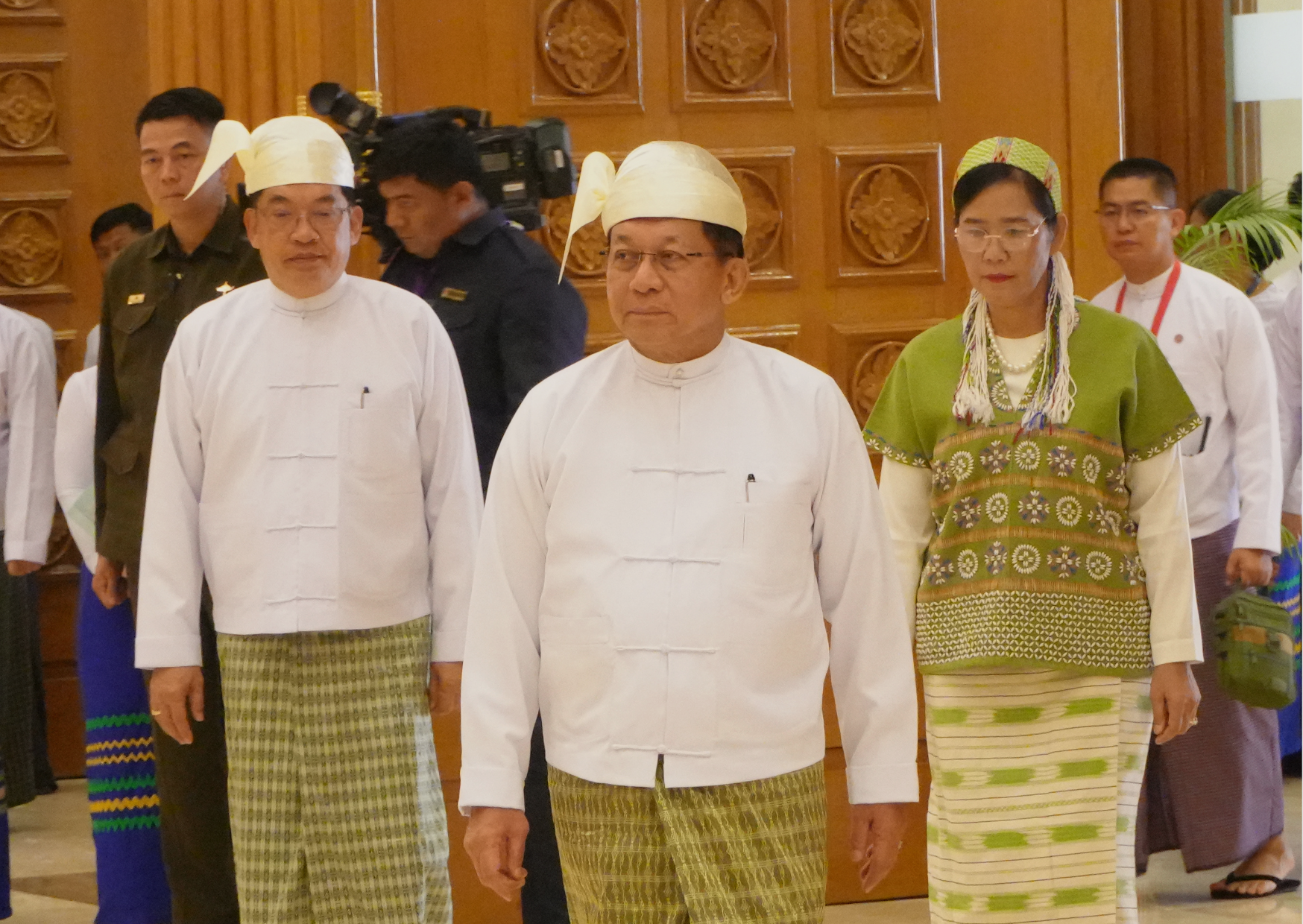
Myanmar has just “elected” its latest crop of retired generals following severely restricted voting carried out in December and January. The heavily manufactured transfer of power looks eerily similar to a previous attempted transition to democracy a decade and a half ago. Opposition leader Aung San Suu Kyi remains behind bars, and coup leader Min Aung Hlaing has finally managed to make himself president. However, new challenges render the military’s efforts to recreate the political and economic transformation of the 2010s exceedingly unlikely.
Is Myanmar doomed to relive its past?
In early 2011, Myanmar’s military-dominated Parliament convened for the first time in decades, with the armed forces’ proxy, the Union Solidarity and Development Party (USDP), occupying an overwhelming majority of seats following heavily controlled elections the previous year. Yet when the sheepish retired general Thein Sein took up the presidency that year, he defied expectations by ushering in a series of reforms that paved the way for greater democratic participation and civic freedoms. For example, the USDP allowed the formation of labour unions for the first time since 1962, relaxed media censorship, and released hundreds of political prisoners. As a result, the economy grew at an average annual rate of 7 per cent from 2011-2015.
When the Myanmar military, also known as the sit-tat, seized power in an unconstitutional coup in 2021, it reasserted control over politics and erased a decade of political and economic progress. Min Aung Hlaing’s power grab came at enormous cost in both blood and treasure. The World Bank estimates that Myanmar’s economy contracted by 18 per cent in the first year after the coup, and it remains 10 per cent smaller than it was at the outset of 2021. The resultant civil war led to the death of nearly 8,000 civilians and pro-democracy activists and the displacement of more than 3.6 million.
The root of Myanmar’s crisis is political: as long as the military holds power, the country will be at war, and the economy will underperform.
Looking back, the 2010 election and subsequent political transition reinforced the military’s hold on politics by institutionalising and legitimising the military-drafted 2008 Constitution. By entrenching the sit-tat’s position and interests, the 2010 election paved the way for the 2021 coup and made possible the generals’ return to power through the undemocratic elections of 2025-2026.
What is different today?
Given the continuity in government, few are hopeful of the prospects for genuine change in the near future. Political analyst Ye Myo Hein concludes that a military-led Myanmar is “likely to remain trapped in a cycle of corruption, conflict, repression, and resistance”. But there are important differences between today and the last military-engineered transition in 2011.
First and most importantly, the country is even more divided and war-ravaged than it was in 2011. In addition to the more than a dozen ethnic resistance organisations (EROs) that have long contested centralised military control in Myanmar, there are now countless People’s Defence Forces (PDFs) and alliances of resistance groups crisscrossing the country, which control most of the country’s border regions. Popular resistance to military rule is now virtually unanimous across Myanmar. According to one long-time analyst, Kim Jolliffe, the country’s “network of anti-authoritarians” is not only “far larger” than the military, it “is more aligned and resolute than at any point in recent history”. As a result, the military remains locked in a brutal and costly war with its own people.
Second, the junta cannot simply repeat the investment boom of the 2010s and kickstart economic growth again. The ongoing conflict and related political instability have scared off most of the largest international investors aside from China, Singapore and Thailand, which never left. Though Khin Yi, the leader of the ruling USDP and speaker of Myanmar’s lower house, has emphasised the “need to communicate with every country…even Western countries” to attract international investment, the country’s banking and physical infrastructure remains in shambles.
Moreover, sanctions from the United States, European Union, United Kingdom, Canada, and Australia remain in place and continue to cast doubt over Myanmar’s viability as an investment destination. Without significant concessions, such as the release of Aung San Suu Kyi and other political prisoners, Western countries are unlikely to remove those sanctions.
Whither Myanmar’s future?
While the future is unwritten, we can draw several observations from the present morass. First, the root of Myanmar’s crisis is political: as long as the military holds power, the country will be at war, and the economy will underperform. The military is the root source of conflict and political instability in the country. Moreover, its restrictive fiscal policies, such as printing money and requiring exporters to convert foreign currency holdings, have caused the kyat to plunge 80 per cent between 2021 and 2025 and led to soaring inflation. At 24 per cent, Myanmar’s inflation remains well above that of its regional counterparts.
Second, transfers of political power are inherently unstable, and the country’s institutions are extremely brittle. Min Aung Hlaing enjoys virtually no popular legitimacy among the Myanmar public, and his government controls less of the country than at any point since the mid-1950s. With a warrant for his arrest pending at the International Criminal Court and few friends abroad (outside of Bangkok and Moscow), he will be looking over his shoulder for the foreseeable future. Moreover, newly appointed commander-in-chief Ye Win Oo has yet to cement his power. Morale among rank-and-file soldiers as well as public support for the military are at an all-time low, and the new government enjoys little international legitimacy aside from backing from the likes of China, Russia, and Thailand.
Finally, grassroots opposition to military rule remains stronger than ever in Myanmar’s history. New, bottom-up alliances have sprung up, uniting disparate members of the resistance, including the National Unity Government and longstanding ethnic armed organisations such as the Kachin Independence Army and Karen National Union. Emerging governance structures, social and education programmes, and digital banking initiatives distinguish the current moment from previous periods of revolution and political contestation and make it more difficult for the military to assert control over the country. This contested political landscape means that armed struggle will persist for the foreseeable future. On a more positive note, however, the mosaic of grassroots resistance groups also lays the groundwork for a genuine federal democracy to flourish in the future.
Whatever happens next will not be a simple replay of Myanmar’s previous political transition of 2011-2021. The cards are stacked against the new military government. The stakes are higher and the country far more divided. This time the generals are playing for keeps, and Min Aung Hlaing has everything to lose.
DISCLAIMER: All views expressed are those of the writers and do not necessarily represent those of the 9DASHLINE.com platform.
Author biography
Dr. Hunter Marston is an Associate with 9DASHLINE and an Adjunct Fellow with the Southeast Asia Program at the Center for Strategic & International Studies. He holds a PhD in International Relations from the Australian National University. Image credit: Zawzawaungthwin / Wikimedia.