A signal, Not A Spearhead: Russia’s Kuril Message And Japan’s Northern Front
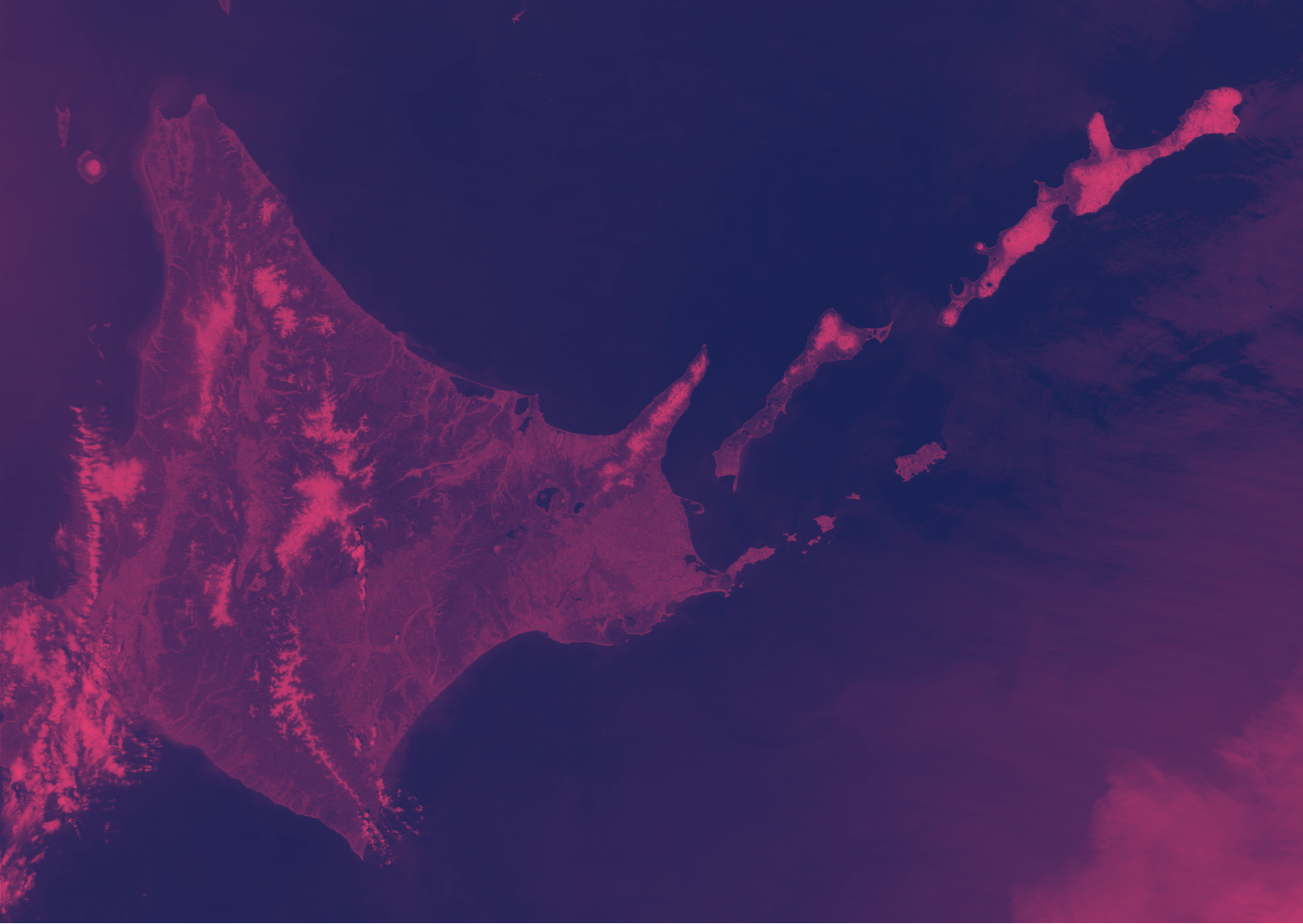
A signal, not a spearhead: Russia’s Kuril message and Japan’s northern front
WRITTEN BY LEONARDO MOREALE
2 October 2026
On 13 August 2026, Vladimir Putin set foot on the Kuril Islands for the first time, travelling to Iturup, one of the islands that Japan claims as its Northern Territories. Prime Minister Sanae Takaichi called the trip “absolutely unacceptable” and “against Japan’s consistent position on the Northern Territories”. Foreign Minister Toshimitsu Motegi described the islands as “an inherent part of Japan’s territory both historically and under international law” and summoned the Russian ambassador to lodge a formal protest. The dispute has no settled answer in international law: under the 1951 San Francisco Treaty, Japan renounced the Kurils, but the treaty named no beneficiary and was never signed by the Soviet Union. Tokyo maintains that the four southern islands were never part of what it gave up. However, Russia, and the Soviet Union before it, has controlled them since 1945 and considers the matter closed. The US backs Tokyo’s claim, but most states treat it as a bilateral dispute and take no side.
Putin’s visit changed nothing on the ground, and that is the point. Russia’s posture in the Kurils is a defensive freeze rather than a springboard for attack: militarily it is built to hold, not to advance, but politically it is an assertive signal that Moscow can press this front whenever it chooses. As Japan reorients southwards towards Taiwan, the north remains a second front that will not close, a standing cost even if the shot is never fired.
The timing of the visit was no coincidence: nine days earlier, on 4 August, Tokyo released its Defense of Japan 2026 white paper, naming China as Japan’s greatest strategic challenge and Russia’s military activity in the Indo-Pacific, alongside its partnership with Beijing, as a serious security concern. The white paper singled out Russian deployments in the Northern Territories, including new equipment and expanded facilities. Putin’s answer was simply to step onto one of them. It was a reply written in the plainest possible hand: we have not forgotten this front, and we will not be lectured about it.
A front built over years
Russia has spent years turning the Kurils into a fortified barrier along Hokkaido’s northern approaches. It keeps some 3,500 troops permanently stationed on the disputed islands, with Bastion coastal-defence systems deployed across the chain — from Matua at its centre to the disputed islands themselves — and anti-ship and air-defence missiles whose range covers most of Hokkaido. With existing radar and air-defence sites, they screen the passages between the Sea of Okhotsk and the Pacific, the waters through which Russia's submarines move. The purpose is to seal off the bastion where the Pacific Fleet’s submarines operate, not to project power outwards.
Where Beijing pursues active expansion across the East and South China Seas, changing facts on the water and testing where resistance is weakest, Moscow seeks entrenchment — a stalemate held on its own terms. China advances; Russia holds; Japan must account for both at once.
In 2025, Japan scrambled fighters 214 times against Russian aircraft, part of a steady rhythm Japanese Defence Minister Shinjiro Koizumi has called a daily reality. The aircraft are no longer only Russian: Russian and Chinese bombers now fly joint long-distance missions around the archipelago, and in July 2026 their warships passed together through the Kuril straits. Tokyo’s white paper reads these joint patrols as demonstrations of force directed at Japan, obliging the Self-Defense Forces to watch two coasts at once and to treat the north as an active edge rather than a settled rear area.
The islands alone have kept Tokyo and Moscow from signing a peace treaty formally ending the Second World War. Talks have been frozen since March 2022, when Russia broke them off in retaliation for Japanese sanctions over Ukraine and ended visa-free access for former island residents. Moscow declared the question closed under its 2020 constitutional amendments, which forbid ceding Russian territory. Nonetheless, Japan remains formally open to negotiation. With the talks abandoned, Tokyo has little reason for restraint, and Moscow none to compromise over islands it already considers Russian.
There is a deeper shift underneath. For decades, China backed Japanese sovereignty over the Kurils. In 2023, a year after the “no limits” partnership signed by Xi Jinping and Vladimir Putin weeks before the invasion of Ukraine, Xi reportedly told Putin that Beijing “does not take either side” — a quiet retreat to neutrality. Officially Beijing stays out of the dispute, but militarily it acts with Moscow openly. The northern front is no longer a bilateral Russo-Japanese quarrel over four islands. It has become one seam of a broader alignment, and the joint bomber flights and naval transits are its clearest expression: two powers pressuring the same target from more than one direction.
Seoul faces its own northern squeeze: Russia's deepening ties with North Korea, cemented by Pyongyang's support for the war in Ukraine, have made Moscow a direct security problem for South Korea, and Russian and Chinese patrols now range around the Korean Peninsula as well as the Japanese archipelago. Tokyo and Seoul have drawn closer of late, deepening cooperation under the trilateral framework with Washington, but the rapprochement is pragmatic and fragile, and their historical and territorial disputes are shelved rather than resolved. The asymmetry is revealing: the two powers pressing the flank act in concert, while the two under pressure hold together only as long as the pressure lasts.
A defensive freeze, an assertive signal
Yet it would be a mistake to read the Russian military build-up in the Kurils as the prelude to an offensive. The August 2026 Pacific Fleet exercises, the bomber flights, the joint patrols, and the scramble figures are all tangible and all recent. But they are demonstrative: dozens of warships and thousands of troops, with live-fire drills around two of the disputed islands, meant to signal resolve and hold ground, not to rehearse an assault. Coastal-defence missiles, hardened islands, and area denial are the instruments of a power that wants to hold what it has and raise the cost of any challenge, not of one preparing to seize more.
Russia is bogged down in Ukraine, with its ground forces, budget, and strategic attention absorbed by a war with no clear end. Its Pacific Fleet fields a capable submarine force, but is in no condition for a sustained naval confrontation in the western Pacific, and it is the weaker partner beside China’s larger and more modern navy. Moscow is not building a springboard in the North Pacific, but a wall — one that shields the bastion where its submarines operate in the Sea of Okhotsk, armed with the tools of denial rather than projection.
Putin’s visit was a deliberate provocation aimed at a government that has sanctioned Russia and backed Ukraine, and a reminder that Moscow holds the initiative. The freeze is the strategy: keep the territorial question closed, keep the islands fortified, keep Japan looking over its northern shoulder, all without firing a shot. Where Beijing pursues active expansion across the East and South China Seas, changing facts on the water and testing where resistance is weakest, Moscow seeks entrenchment — a stalemate held on its own terms. China advances; Russia holds; Japan must account for both at once.
The cost of a frozen front
For Japan, a frozen front is still a front. Tokyo has been reorienting its defence southwards, towards Taiwan and the Ryukyu chain, where it sees the decisive contingency taking shape. The north was meant to be the quiet flank, managed with a light hand while resources flowed south. Putin's visit was a reminder that Japan cannot turn its back on Hokkaido while it concentrates on the southwest. A stalemate that never erupts still imposes a cost, fixing attention, tying down ships and aircraft, and denying a country the luxury of choosing where to look. For Japan’s Self-Defense Forces — already stretched by a recruitment shortfall and widening list of threats — a second front that demands vigilance without ever offering resolution is a serious burden, whatever the odds of conflict.
A Russian assault on Japanese soil is barely conceivable. The forces are too thin, and attacking a well-defended, US-allied country would cost Moscow enormously while winning it nothing it does not already consider its own. Japan’s task is to manage the northern front, not fear it: keep the commitment of forces minimal, strengthen its defences steadily, and resist the pull to shift resources north with each Russian provocation.
The real test lies to the south, where a move against Taiwan would disrupt the sea lanes on which Japan depends: close to a third of its trade and nearly 60 per cent of its energy supplies pass through the waters around Taiwan and the South China Sea. The danger is not that Russia breaks the freeze, but that it pulls Japanese attention and resources away from the front where the decisive contest will be fought. The wall in the north does its work by standing still: it costs Moscow little, commits it to nothing, and keeps one of Asia's most capable militaries looking in two directions at once.
DISCLAIMER: All views expressed are those of the writer and do not necessarily represent those of the 9DASHLINE.com platform.
Author biography
Leonardo Morreale is an independent analyst specialising in Indo-Pacific security and Japanese strategic affairs. Image Credit: NASA