The Cost of Consistency: Beijing’s Miscalculation in the First Island Chain
The Cost of Consistency: Beijing’s Miscalculation in the First Island Chain
WRITTEN BY HERMAN S. TAYLOR
1 September 2026
This year, as every year for the past decade, the Philippines marked the anniversary of the 2016 Arbitral Award on the South China Sea with a series of diplomatic statements. This year’s outpouring, however, was unusually broad: a joint statement with 14 signatories, a separate statement by the European Union, and public expressions of support from foreign ambassadors. Beijing’s response was the same as always: a protest insisting the award was illegal, null, and void.
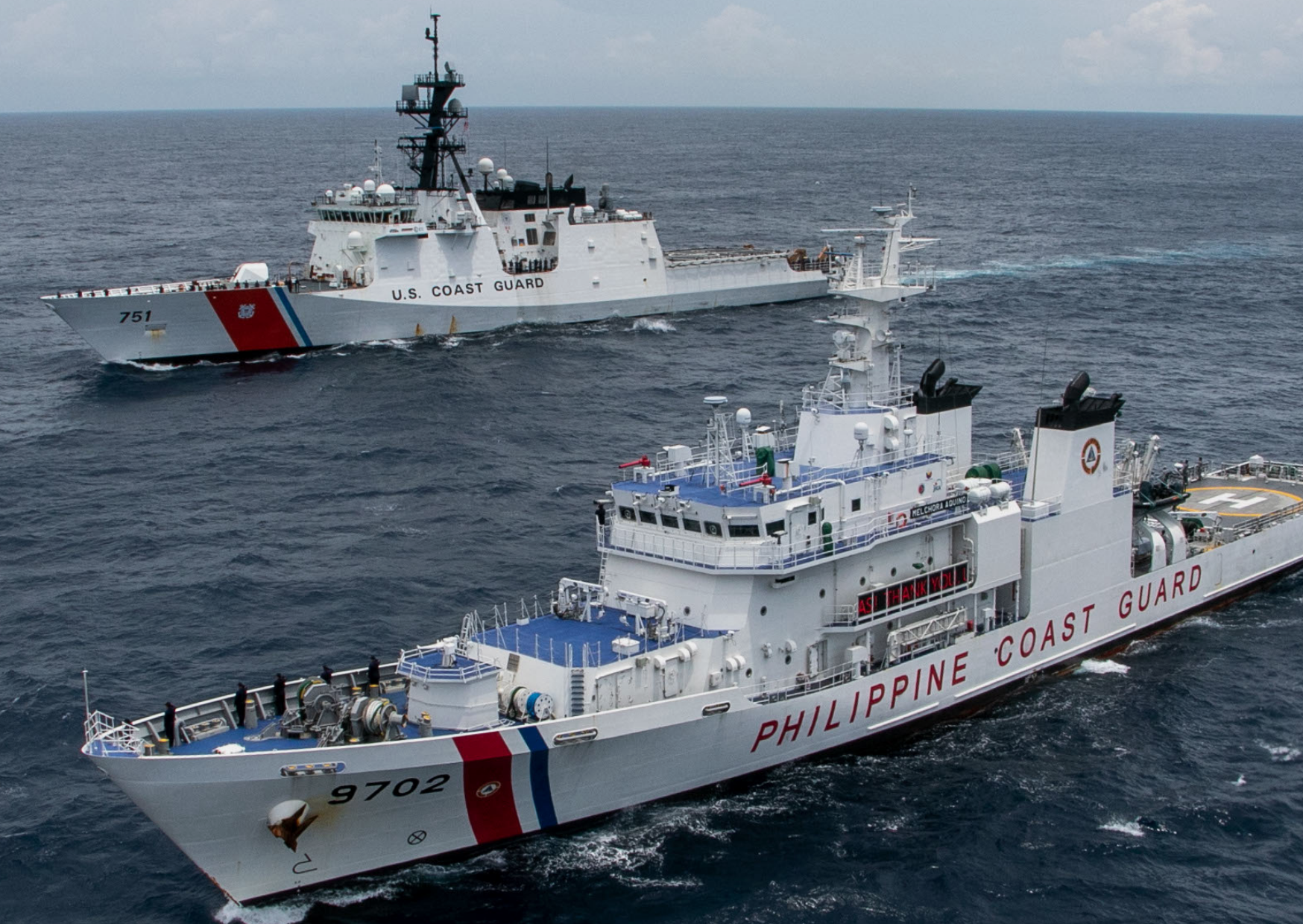
Over the past year, with an eye towards its ongoing dispute with China in the West Philippine Sea, Manila signed or brought into force a series of defence-related agreements and greatly increased its military spending. And, at a time when US partners face ever-increasing scrutiny, the Philippines received unequivocal assurances as well as US funds, materiel, and operational planning support. Philippine Secretary of National Defence Gilberto Teodoro Jr. described the common cause countries around the world had found with the Philippines as being channelled "into purposive action" — a commitment far harder to reverse than a diplomatic position.
These events represent one of China’s most consequential strategic failures. In pushing its territorial claims, Beijing has converted a strategically located country from a potential neutral party into one whose electorate and institutions are almost irreversibly opposed to its ambitions.
China's failure lies in the asymmetry between what it requires for its security and what any adversary would need to threaten it. Seen from Beijing, the first island chain is a wall across China’s eastern perimeter, running from Japan through Taiwan to the Philippines and penning its navy in. The Philippines anchors the southern end of that wall and commands the two sea lanes China must use to reach the open Pacific. Neutral, Manila leaves them open and reaps the benefits of engagement with China. Aligned with Beijing’s adversaries, it can close those lanes. A more hostile Philippines makes China's position less secure.
The missed opportunity for neutrality
There was a time, even after the arbitral award, when a neutral Philippines was conceivable. In the months after the ruling, then-President Rodrigo Duterte made a serious attempt to reconnect with China and distance the Philippines from its traditional partner, the US. This was not surrender or naivety. It followed a political and economic logic: the populist appeal of breaking with an establishment long identified with Washington, and the attraction of Chinese capital.
The dispute with the Philippines was temporarily set aside rather than settled, leaving room for neutrality. Then Beijing brought the same coercive reflex to Manila that it used everywhere. The failure was not China’s refusal to yield its claims, but its inability to adopt softer tactics.
The Build Build Build programme was part of that logic — the infrastructure drive Chinese capital was meant to underwrite. But even as the two capitals courted each other, activity on the artificial islands did not pause. In 2017, China built hangars, radar, and missile shelters on Fiery Cross, Subi, and Mischief Reefs. Its one concession was fishing access at Scarborough Shoal, a goodwill gesture it could easily take back.
The cost of accommodation was felt before any of the benefits. The fragile promise of cooperation eroded amid Chinese overreach, domestic elite pushback, and the spectre of bureaucracy and corruption. China pushed for security cooperation, but the resulting headlines fed mistrust. Chinese investment in energy and telecommunications drew suspicion from the security apparatus. An influx of Chinese citizens caused concerns about trafficking and drove up housing costs. Around the same time, the 2018 Bangsamoro agreement closed a bloody conflict and allowed the military to refocus on territorial defence.
With surprising uniformity, the Philippine centres of political, military, economic, and electoral power started to push back against China. The sentiment was strong enough to override long-held disdain for the country’s former coloniser, crystallising around resistance to Duterte’s February 2020 move to terminate the Visiting Forces Agreement with the US.
A slow policy reversal began that would be completed under Duterte’s successor, Ferdinand Marcos Jr. In October 2025, Marcos abolished Philippine Offshore Gambling Operators (POGOs), an industry fuelled by Chinese investment and migrant labour, despite the cost to the real estate sector. The military began buying ships and aircraft as its mission shifted once more towards territorial defence. The issue of the West Philippine Sea moved to the centre of national attention.
Rather than adapting to these new circumstances, China applied the usual tactics more vigorously. The back and forth of formal diplomatic communications and sparring at the UN continued throughout, as did construction and naval patrols. But as relations soured, Beijing gave the China Coast Guard more leeway around the Philippines, as it had elsewhere in the South China Sea. That led to water cannons aimed at fishermen, confrontations with the Philippine Navy over resupply operations, and ramming incidents. These incidents vindicated and hardened anti-China rhetoric in the Philippines.
Pressure misapplied
By the time Marcos took office in 2022, China had secured two military objectives offered by the South China Sea. The first was a forward line along the first island chain. Its fortified outposts in the contested waters of the West Philippine Sea anchor the southern end of that line. The second was a protected bastion for its ballistic missile submarines in the deep water off Hainan, ensuring sea-based second-strike capability. Neither turned on the shoals Beijing fights so forcefully to hold.
What China still lacked was assured passage into the open waters of the western Pacific. Its naval strategy turns on reaching the open ocean, the path to which runs through the Philippines: the Luzon Strait to the north and the straits of the archipelago itself. Scarborough Shoal, Second Thomas Shoal, and Reed Bank, where the China Coast Guard and militia confront Philippine vessels, do nothing for its submarine bastion and little for the defensive perimeter already anchored to the south and at Hainan. Instead, China’s activities in those waters put its remaining objective further out of reach, turning the country astride its route to the Pacific into an adversary.
An involuntary adversary
A decade after the arbitral award, China faces a Philippines that has credibly expanded its military capabilities and alliance network. While many US allies worry about the price and reliability of American commitments, the Philippines has received concrete reassurance: treaty language repeated in public, advanced systems deployed, expanded military sites, joint planning, exercises, and a standing task force for operational cooperation. Manila has no blank cheque, but it has become one of the few allies with which the US is building operational architecture, not merely promising presence.
The cost for Manila is lost credibility on the multilateral stage, where China has started to treat it as part of the opposition. This showed in the Philippines’ 49–142 loss in the June 2026 Security Council election, which was striking even considering claims that domestic turbulence was to blame. The absence of many ASEAN members from statements on the anniversary of the arbitral award is also telling in a year when Manila holds the ASEAN chair.
China, in contrast, has normalised presence and pressure on Philippine fishers. Historically, China has been willing to settle its territorial disputes on land, but with rising nationalism under Xi Jinping and its economy tied to maritime trade, it has not done so in the Pacific. The dispute with the Philippines was temporarily set aside rather than settled, leaving room for neutrality. Then Beijing brought the same coercive reflex to Manila that it used everywhere. The failure was not China’s refusal to yield its claims, but its inability to adopt softer tactics — it took a decade of global pushback for China to arrive at restraint. It has changed the facts at sea, a tactical victory. The reality, though, is a rare strategic failure, which Beijing pays for in reduced security along the first island chain. China understands the strategic environment, but it also seems incapable of changing it.
DISCLAIMER: All views expressed are those of the writer and do not necessarily represent those of the 9DASHLINE.com platform.
Author biography
Herman S. Taylor is a New York-based writer on foreign policy and political economy, with a particular interest in how perception shapes coalition dynamics and state behaviour. Image credit: Elijah Murphy US Coast Guard/Dvids.
Editor’s note: author’s name withheld at their request.