New Caledonia’s election settles little
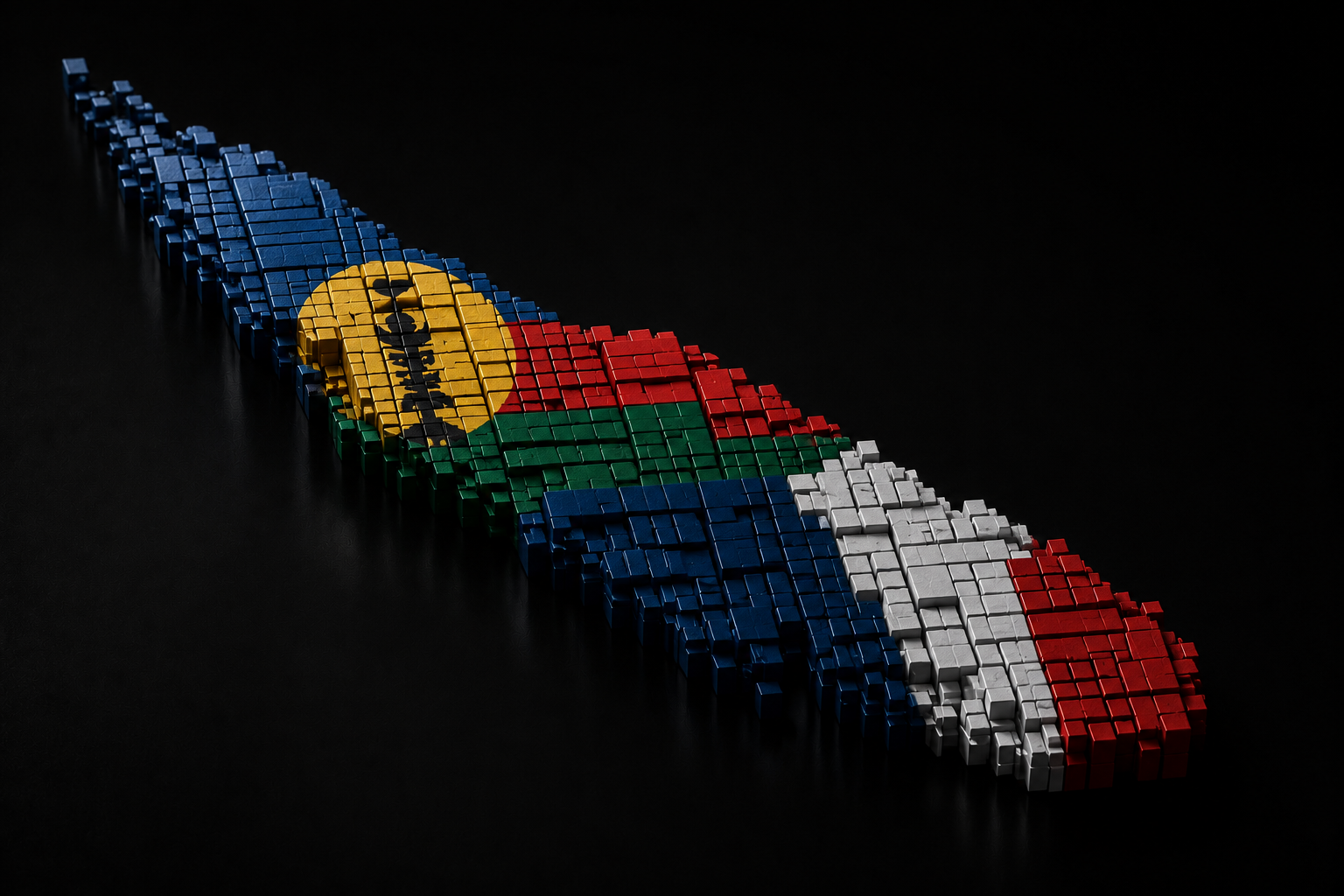
New Caledonia’s Election Settles Little
WRITTEN BY DR PACO MILHIET
17 July 2026
On 28 June 2026, New Caledonians went to the polls to elect members of their local parliaments. The vote was two years late: originally scheduled for May 2024, it was postponed three times amid deadly riots and political wrangling over the territory’s institutional future. The result changed little — no bloc secured a majority, and the pro- and anti-independence divide that has defined Caledonian politics for decades remains as entrenched as ever. Each cycle of institutional deadlock leaves the territory’s political future unresolved, strains its economy, and deepens geopolitical uncertainty.
This outcome carries wider regional implications. New Caledonia’s nickel reserves, its 1.3-million-km² exclusive economic zone, and its place in France’s Indo-Pacific strategy have drawn real external interest, from China to the United States and other secondary actors. But that interest remains, so far, marginal: no external actor has yet translated attention into leverage over the territory’s trajectory. What continues to drive New Caledonia’s instability is not foreign interference but unresolved internal divisions between pro- and anti-independence citizens — a schism that four decades of referendums, political agreements, or elections have failed to resolve, and that the French state has so far been unable to mitigate.
From colonisation to crisis
New Caledonia is an archipelago located in the Southwest Pacific under French sovereignty, with a current population of around 265,000. Its main island, Grande-Terre, has been inhabited by Melanesian populations (Kanak) for more than 3,000 years; it was discovered by the British navigator James Cook in 1774 and proclaimed French in 1853.
The territory was first used by France as a penal colony. Successive waves of immigration by European settlers and Asian workers, combined with disease, war, and alcoholism, rapidly marginalised the Kanak population in their own homeland. Having endured discrimination and land spoliation under colonial authority, the Kanak people gradually gained access to civil rights after the Second World War, though they remained largely excluded from economic development. The wave of independence granted across the Pacific — to Samoa (1962), Nauru (1968), Fiji and Tonga (1970), the Solomon Islands (1975), and Vanuatu (1980) — fuelled cultural and nationalist claims, and explicit demands for independence.
Left unresolved, this deadlock carries its own strategic cost: renewed instability would further strain an already fragile economy, deter the investment needed to revive the nickel sector, and cast doubt on France’s capacity to manage its own territory.
From 1984 to 1988, political tensions escalated into a quasi-civil war, culminating in 1988 when independence militants killed four French gendarmes and took 27 hostages on the island of Ouvéa. The French army’s rescue operation left 19 pro-independence fighters and two soldiers dead. After a series of political agreements granting greater autonomy, three decades of relative peace followed. That fragile equilibrium shattered in 2024, when violence erupted once again, leaving considerable economic and material damage — 15 per cent GDP contraction, 500 businesses destroyed, 12,000 unemployed — alongside a divided population and heightened geopolitical uncertainty.
Political imbroglio
This binary divide — for or against independence — has fuelled decades of instability. After the Ouvéa crisis, the Matignon (1988) and Nouméa (1998) agreements opened a 30-year transitional period, promising three independence referendums alongside socio-economic transfers meant to correct historical imbalances.
Voters rejected independence in both 2018 and 2020 (56.67 per cent and 53.26 per cent “no,” respectively), while the 2021 vote — boycotted by pro-independence parties over COVID-19 — produced 96.5 per cent rejection on turnout of just 41.87 per cent, undermining its legitimacy and drawing criticism from the United Nations’ decolonisation committee and the Pacific Islands Forum. Voting patterns remain shaped by ethnicity: Kanak communities overwhelmingly back independence, while other communities favour remaining within the Republic.
In 2024, a proposed reform to unfreeze the electoral roll triggered riots that killed 14. After multiple failed mediation attempts, draft agreements signed in Bougival in July 2025 and at the Élysée in January 2026 were both rejected by the national parliament, leaving the political process at a dead end and forcing the long-postponed provincial elections to proceed.
The June 2026 vote, marked by low turnout of 64 per cent, settled little. Loyalists dominated the South, while pro-independence parties retained control of the North and the Loyalty Islands. The territorial Congress remained almost evenly split, with 24 anti-independence seats, 26 pro-independence seats, and four held by the centrist Éveil Océanien, which once again retains its kingmaker role. With no bloc commanding a majority, and two successive agreements having collapsed, New Caledonia now faces a new round of negotiations with no clear starting point — unlikely before France’s 2027 presidential election.
This prolonged paralysis has come at a steep economic cost, and its consequences are not confined to the territory itself: it is undermining France’s broader strategy in the region.
Strategic archipelago
New Caledonia’s relevance extends well beyond its size. The territory holds the world’s fifth-largest nickel reserves and ranks among the top five producers of a metal indispensable to stainless steel and EV batteries. Yet the local industry is struggling: competition from Indonesia, China’s near-monopoly on ore-to-metal processing, and volatile fuel costs have battered the sector. None of the territory’s three smelters is currently profitable. In 2024, Koniambo Nickel SAS (KNS) shut its plant after Glencore withdrew, ending a decade of losses that cost the Swiss trader roughly USD 9 billion and left more than 1,200 unemployed.
Nickel nonetheless remains critical, accounting for roughly 90 per cent of the territory’s exports. Its strategic weight has not gone unnoticed. China, the world’s largest nickel consumer and processor, is watching closely — illustrated by a Chinese industrial group’s recent proposal to take over the KNS site. A few years earlier, it was the US multinational Tesla that expressed interest in Caledonian nickel, signing on as a technical partner at the Goro mine in 2021; that partnership has yielded little since.
Beyond its mineral wealth, New Caledonia is also central to France’s broader Indo-Pacific strategy. Under President Emmanuel Macron, Paris has relied on its overseas territories to assert its status as a resident Indo-Pacific power, and New Caledonia is a cornerstone of that strategy. Grande Terre spans more than 16,000 km², making it the largest French island, whether in metropolitan or overseas France. It is surrounded by an exclusive economic zone of over 1.3 million km² — around 13 per cent of France’s total EEZ, itself the world’s second largest. The territory also hosts permanent French military assets, deployed to protect its sovereignty and vast maritime domain, as well as to support humanitarian assistance and disaster relief operations.
These strategic assets — its vast maritime domain, abundant mineral resources, and existing military facilities — are precisely what make New Caledonia a territory of geopolitical significance, and a growing object of interest for external actors.
Geopolitical backdrop
The Pacific Ocean sits at the heart of US-China rivalry. Long considered an “American lake”, the region has seen two decades of expanding Chinese influence through economic leverage, development aid, bilateral and multilateral engagements, illustrated by Foreign Minister Wang Yi’s 2022 tour of eight Pacific states.
New Caledonia is no exception, though Beijing’s direct influence remains modest. Unlike French Polynesia, the territory has no established Chinese community. A Sino-Caledonian friendship association, closely linked to United Front networks, has attempted to develop cultural relations, but its impact has remained limited. Still, many anti-independence figures warn that a French departure could open the door to greater Chinese influence, as Beijing’s footprint continues to expand in the nearby Solomon Islands, Vanuatu, and Tonga.
Washington, meanwhile, courts the territory both economically and politically. Beyond Tesla’s 2021 interest in New Caledonian nickel, Google and SubCom have recently invested in trans-Pacific submarine cable infrastructure and expressed interest in linking New Caledonia’s Gondwana-2 cable to their future network. That geo-economic interest also carries political significance: the US government invited pro-independence leader and then-President of the Government, Louis Mapou, to the 2022 and 2023 Pacific Islands Summits in Washington, while French diplomats were notably left off the guest list.
Beyond the Sino-American duopoly, other actors have sought to capitalise on New Caledonia’s situation. Azerbaijan — seeking to challenge France, a historic partner of Armenia, amid its ongoing rivalry with Yerevan — has leveraged the Baku Initiative Group, an NGO established in 2021, to promote anti-French narratives and invite pro-independence Kanak and Polynesian representatives to international conferences. Russia and Turkey have, more cautiously, echoed similar rhetoric questioning French sovereignty.
Taken together, these episodes are real but modest: no external power has translated its interest into decisive leverage over New Caledonia’s trajectory. What continues to shape the territory’s fate is not Beijing, Washington, or Baku, but the unresolved dispute within the Caledonian society itself.
Domestic deadlock
New Caledonia’s June 2026 election has not resolved the question that has shaped its politics for four decades — it has merely postponed it once again. This unresolved deadlock, rather than the outcome of the vote itself, carries the most significant implications. The temptation, both in Paris and among outside observers, is to read this prolonged impasse through the prism of great-power competition — to ask whether France risks losing New Caledonia to Beijing or Washington.
Such a framing overstates the case: Chinese influence remains limited, American engagement has yet to move beyond symbolic gestures, and secondary actors such as Azerbaijan operate at the margins of international relations. The more urgent risk is not that New Caledonia will be prised away from France by a rival power, but that it will remain suspended to its own internal divisions indefinitely.
Left unresolved, this deadlock carries its own strategic cost: renewed instability would further strain an already fragile economy, deter the investment needed to revive the nickel sector, and cast doubt on France’s capacity to manage its own territory. That doubt resonates well beyond Nouméa, shaping how Canberra, Washington, and Pacific Island states weigh Paris’ reliability as a security partner in the region. Indefinite paralysis, more than any external manoeuvring, is what could ultimately erode France’s credibility in the Indo-Pacific.
DISCLAIMER: All views expressed are those of the writer and do not necessarily represent those of the 9DASHLINE.com platform.
Author biography
Dr Paco Milhiet is a Visiting Fellow at the S. Rajaratnam School of International Studies. Image credit: OpenAI.