Defending Canadian Internationalism in Asia: Views from Singapore’s Civil Society
Defending Canadian Internationalism in Asia: Views from Singapore’s Civil Society
WRITTEN BY DAVID MATIJASEVICH
23 October 2026
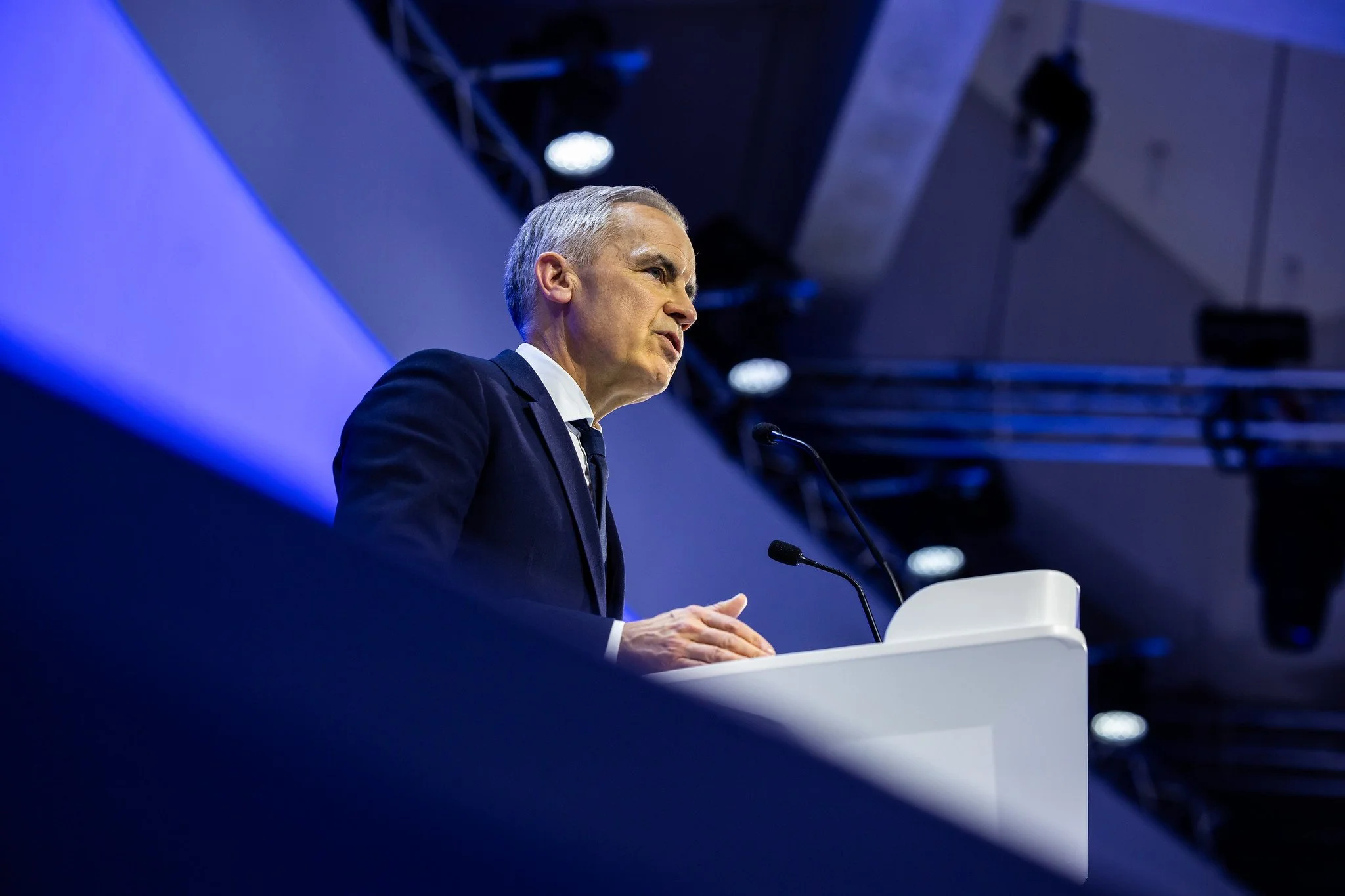
Canadian foreign policy under Prime Minister Mark Carney has turned away from its long-held liberal internationalist position. In Foreign Minister Anita Anand’s September 2025 speech to the United Nations, Canada’s commitment to “core values”, including human rights and democracy, noticeably came third on the list of key pillars, behind security and economic resilience. Carney’s January 2026 Davos speech stated that Canada would aim to be both “principled and pragmatic”, “take the world as it is”, and adopt a doctrine of “values-based realism”. Notably, however, Carney’s first public insistence that Canada “take the world as it is” was made a few days prior in Beijing. His efforts at initiating a strategic reset with the People’s Republic of China sent a signal to the Asia-Pacific that Canadian foreign policy was undergoing a sea change.
Since then, foreign policy commentators have watched Carney’s international visits closely, attempting to glean what an emerging “Carney Doctrine” looks like in practice. After downplaying human rights concerns with China, Ecuador, India, the Philippines, the United States, Vietnam, and several Middle Eastern partners, realism appears to be trumping values. Debates between proponents and opponents of the new approach have been lively, mainly hinging on whether Canada has abandoned its principles too easily under pressure from the United States, and whether the shift will gain or lose global influence.
However, this debate risks being dangerously narrowed by both sides’ state centrism. So far, it has centred on Canadian ethics and interests and the positions of foreign leaders. What has yet to feature prominently are voices from the ground, including from the Asia-Pacific. These are political actors who are not official representatives of sovereign states, such as opposition parties and civil society organisations. Such groups often have distinct views on the need for human rights and democracy, and on the legitimacy of foreign support in achieving them. It is essential that states like Canada recognize this political plurality as they engage a changing world, particularly as this plurality grows with new democratic movements in Asia and beyond.
Democracy from below
Despite nearly two decades of global democratic decline, demand for popular control over politics has reached a recent high. The mass protests of the 2010s have extended well into the 2020s, particularly in Asia. Popular uprisings in Thailand in 2020-21 and Myanmar since 2021 have forged fragile openings for more democratic futures. In 2024, Gen Z protests in Bangladesh against elite privilege, impunity, and democratic backsliding influenced similar episodes throughout the region, some of which led to regime change. Demands for rights, democracy, and dignity across the Indo-Pacific are as loud as ever.
When Carney stated that Canada must “take on the world as it is, not as we wish it to be”, he implied that Canada must accept authoritarian and rights-abusing states as part of the global landscape. But the “world as it is” is more complicated. It is one marked by differences and divisions between states but also within them, including between popular movements and the entrenched elites that repress them. In such a world, Canada cannot credibly claim to support democracy and human rights while ignoring the struggles for them within the states it engages, or the voices of those engaged in these struggles.
As they continue to engage Asia, Canada and like-minded states should remember that diverse political voices are not only alive in the region’s democratic states, but also within its illiberal and authoritarian ones. Repressed voices should not be mistaken for silent consent or acquiescence.
Carney’s recent statement on human rights accountability is one example of how such voices can be ignored. In response to criticisms of Canada’s re-engagement with Saudi Arabia in July 2026, Carney stated that “lecturing from afar” is an ineffective strategy to address human rights concerns. As a general claim, this is debatable. Global human rights experts agree that public declarations of concern by external actors can play a role in shifting state behaviour, particularly when concerned with reputational costs. Canada’s own increased attention to its human rights failures with Indigenous peoples is partly attributable to international pressure.
For certain regimes, Carney may be correct that “lecturing” is ineffective. However, Canada can only truly know which strategies are useful and appreciated by continuing to engage pro-democratic and human rights actors on the ground, who understand local contexts. Such actors exist in most authoritarian and hybrid regimes, including organised opposition forces. Even in states with reputations for being politically closed, civil society activists often hold views on foreign engagement on human rights and democracy that differ from their government’s. Amplifying these voices can also broaden public awareness of the diverse ways Canada can commit to its core values beyond “lecturing”.
The voice of civil society in Singapore
One such country is Singapore, an electoral autocracy central to Canada’s re-engagement with Southeast Asia. As a sign of this renewed centrality, Canada hosted Singaporean Foreign Minister Vivian Balakrishnan on 17 and 18 September 2026 to discuss Canada-Singapore ties, the first visit by a high-ranking Singaporean delegation since 2013. According to the Canadian government’s readout, no discussion of human rights or democracy took place, despite several Singaporean activists having been charged under the sweeping Public Order Act for peaceful public assembly in the week before the visit. In recent weeks, several other Singaporeans have been charged for similar forms of peaceful activism.
While Singapore’s People’s Action Party (PAP) has been dominant since independence in 1965, the size and influence of both the political opposition and reformist, pro-democratic civil society have grown. Perhaps without a global peer, the PAP is also hyperallergic to foreign involvement in its politics, making reformists’ insights on the questions of global support for democracy and human rights particularly valuable.
Recent anonymized interviews with twelve Singaporean civil society activists explored their views on external engagement pertaining to democracy and human rights. Despite the limited sample, their responses underscore the diversity of ways in which Canadian engagement on these issues would be appreciated by those engaged in local democratic and rights-oriented struggles.
On the question of direct bilateral pressure, participants presented varying responses. Three interviewees argued that such pressure should be applied to the Singapore government (and vice versa), as refraining from openly defending human rights and democracy would embolden authoritarian behaviour. Three agreed in principle but suggested that it would not work in practice: the Singapore government would simply double down on its position, and Singaporeans may become defensive. Six others suggested that direct pressure from Western states was hypocritical given their own human rights issues.
Notably, although most participants did not encourage “naming and shaming”, ten out of twelve believed that foreign states have a role in supporting the work of Singapore’s civil society. All respondents stated that, despite longstanding issues with multilateral institutions, other states should earnestly hold Singapore accountable for the international human rights agreements Singapore has signed. As Singapore cares deeply about its reputation as an upstanding member of the international community, respondents believe that traditional multilateral fora, such as the Universal Periodic Review and other treaty body reviews, are effective spaces for engagement. This embrace of multilateralism by pro-democratic, rights-oriented activists on the ground is worth noting for Canadian foreign policy.
Global support for civil society
Interviewees also expressed varying degrees of comfort with democratic states engaging directly with civil society organisations, provided those states respect the perspectives and decision-making autonomy of local activists. Suggested forms of engagement included hosting events at embassies, facilitating meetings with foreign civil society organisations, funding specific projects, funding attendance at international conferences to bolster knowledge sharing and capacity building, and speaking up against pressure to restrict these activities.
Additionally, participants gave suggestions for Canada’s engagement in particular. A small number of respondents maintained that continuity is paramount. These activists, having previously interacted with the Canadian High Commission in Singapore, were grateful for the backing they received, which included events on rights-related topics, information-sharing sessions, and the small but meaningful act of pamphlet printing.
Other participants stated that they had a generally positive view of Canada but admitted to knowing little about it. Many insisted that Canada needed to do more to make itself known to local civil society and to Singaporeans more broadly. One way is to support the local creative scene, including film and writers’ festivals, where advocacy work often takes a cultural form.
More directly, several interviewees insisted that Canada engage local civil society by treating Singapore as the democracy it claims to be. When visiting Singapore, this means Canadian officials should meet opposition party members and invite both formal and informal civil society groups to events, not only organisations affiliated with the Singaporean government and styled as “grassroots”.
Engaging a plural Asia
Ultimately, the case of Singapore shows that plurality remains central to global affairs. Voices from the ground highlight the fact that there are diverse views on the question of foreign engagement pertaining to democracy and human rights. This includes how they can be championed beyond the narrow framing of “lecturing”.
Beyond this issue, as they continue to engage Asia, Canada and like-minded states should remember that diverse political voices are not only alive in the region’s democratic states, but also within its illiberal and authoritarian ones. Repressed voices should not be mistaken for silent consent or acquiescence. Despite constrained political environments and uneven playing fields, reformist opposition and civil society forces will continue their struggles and, in turn, shape the region’s socio-cultural, economic, legislative and geopolitical future as well as its prospects for peace and human security. In this regard, the recognition of plurality is not only a democratic ideal, but also a more realistic appraisal of “the world as it is”. It therefore lays the groundwork for a foreign policy that is both principled and pragmatic.
DISCLAIMER: All views expressed are those of the writers and do not necessarily represent that of the 9DASHLINE.com platform.
Author Biography
David Matijasevich teaches political science at Capilano University in North Vancouver, Canada. His research and teaching interests include populism and protest, regime change and resilience, democratic theory and practice, and the politics of Thailand and Singapore. Image Credit: Flickr/World Economic Forum.