COP30: The struggle for ambitious action in a shifting climate governance order
COP30: The struggle for ambitious action in a shifting climate governance order
WRITTEN BY LUANA CORREIA
9 January 2026
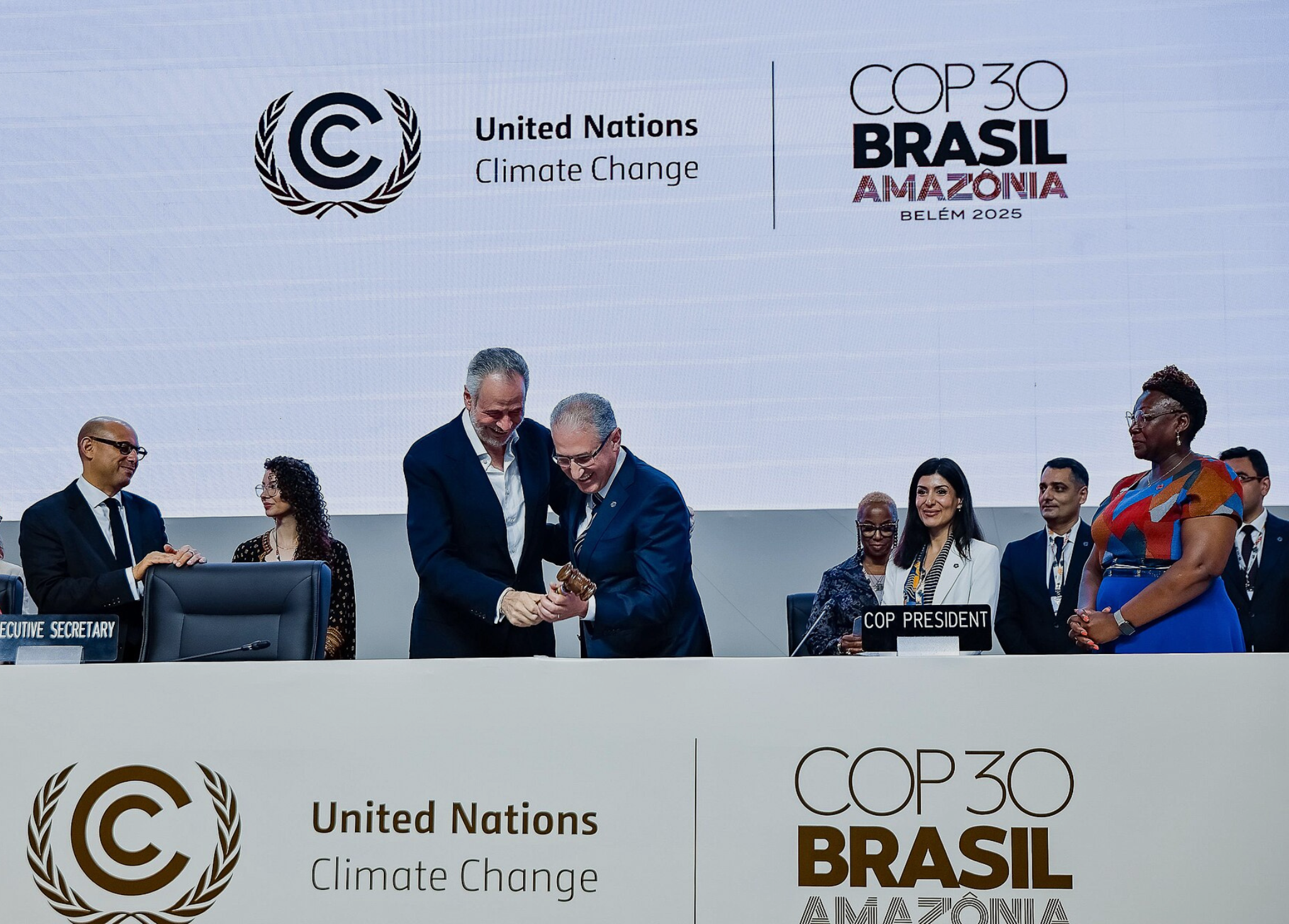
The 2025 United Nations Climate Change Conference (COP30), held in Brazil from 10 to 21 November, was far from uneventful. Bringing together global governments, NGOs, and the private sector to discuss climate action, the conference was interrupted by protests and a fire, before a near collapse of negotiations.
Taking place ten years after the landmark Paris Climate Agreement, expectations for COP30 were particularly high, especially following the disappointing COP29, where developing countries demanded USD 1 trillion in climate finance but only received pledges for USD 300 billion. The Brazilian hosts framed COP30 as the “COP of implementation”, with the goal of putting into practice commitments made at previous conferences. Nonetheless, the final deal drew widespread criticism for being “empty” and a “moral failure”.
Although the final text calls on wealthy countries to triple climate adaptation spending, compromises led to clauses being watered down. A major point of contention was the creation of a binding roadmap for phasing out fossil fuels, pushed by Brazilian President Luiz Inácio Lula da Silva. The plan was supported by around 80 countries and the EU, who view it as a necessary step away from coal, gas, and oil. However, heavy opposition from oil-rich and fossil fuel-dependent nations resulted in a voluntary plan, allowing countries to opt out. This underwhelming outcome reveals a system struggling to translate ambition into binding commitments, constrained more by shifting power dynamics than a lack of stated ambition. Influence in climate diplomacy is becoming increasingly dispersed, as traditional agenda-setters fail to consolidate their authority, creating space for competing interests — and claims to leadership — to shape outcomes.
US absence leaves finance and leadership gaps
Though COP30 is not the first conference to face challenges in landing strong agreements, last year proved especially difficult for international climate cooperation. With US President Donald Trump withdrawing from the Paris Agreement and later declaring global warming a hoax during a UN General Assembly, it came as no surprise that the nation did not send a formal delegation to COP30.
As the world’s largest economy and the second largest greenhouse gas emitter, the US has previously been a central player in setting COP agendas and forging consensus. As stressed by EU climate chief Wopke Hoekstra, past US administrations would often partner with the EU to lead discussions on a clean energy transition. The total absence of the US at COP30, in turn, shifted established negotiation balances and emboldened countries with fossil fuel interests to avoid commitments.
In addition to drawing criticism, Washington’s exceptional absence put pressure on other wealthy and top emitting actors to fill finance gaps and promote unity. One nation that initially appeared fit for the role was the UK, which showed strong support for Brazil’s fossil fuel roadmap and lamented the diminishing of global climate support. In the lead up to the talks, UK Prime Minister Keir Starmer vowed that the UK would lead in tackling the climate crisis, citing global and national benefits of transitioning to a green economy. However, on the eve of the conference, London announced that they would not be contributing to Brazil’s flagship fund to preserve the world’s rainforests — a surprising shift after its heavy involvement in previous preservation efforts.
Influence in climate diplomacy is becoming increasingly dispersed, as traditional agenda-setters fail to consolidate their authority, creating space for competing interests — and claims to leadership — to shape outcomes.
Similarly, much optimism surrounded the EU as the world’s fourth largest emitter, known for demonstrating significant climate leadership globally and regionally. One day before talks concluded, the 27-member bloc threatened to reject the voluntary phase-out plan over its lack of ambition. Despite ultimately backing the final text, Brussels restated its dedication to advancing sustainable practices in the EU and abroad. Yet, just three days after the conference began, the bloc voted in favour of significantly softening its corporate sustainability law. These inconsistencies among some of the world’s wealthiest players weakened their standing as reliable partners, in turn hindering their ability to fill the leadership gap and build consensus for a stronger agreement.
Emerging powers at the forefront
While there are indications that wealthy countries are losing trustworthiness in international climate governance, emerging powers are becoming increasingly vocal. Brazil, for example, was eager to host this year’s conference, consistently directing discussions to a fossil fuel phaseout and more ambitious deals. Nonetheless, talks were overshadowed by controversy surrounding hosting the conference in Belém. The Brazilian city sits on the edge of the Amazon, home to indigenous groups who are critical of environmental damage caused to the rainforest, including through the Brazilian government’s recent decision to grant licences to explore oil in the region.
Defending this decision, President Lula clarified that while fossil fuels must be phased out, dependency is still too high, adding “I want to know [of] any country on the planet that is prepared to have an energy transition and can give up fossil fuels”. Brazil’s calibrated approach, which seeks a balance between global needs and national capabilities, is not unique. For instance, India had previously highlighted national progress in significantly reducing emissions and fossil fuel use — achieving targets years ahead of initial goals. However, in recent years, the Indian government has made substantial cuts to adaptation and prevention budgets, leaving large populations in natural-disaster-prone areas vulnerable.
Likely justifying these cuts, Indian officials were joined by other developing countries in reasoning that more ambitious climate plans only make sense if wealthy countries are willing to increase technological and financial support. This indicates that while developing and emerging countries are keen to do more for the environment, they hesitate to do so without sufficient assistance from those most able — and historically responsible.
China’s shift from participant to central actor
China is emerging as a candidate for providing such assistance. In addition to taking a more active role in negotiations, the Chinese delegation drew attention at COP30 through flashy exhibits showcasing their rapidly expanding renewable energy and electric vehicle technologies. Various diplomats applauded these displays, complimenting Beijing’s innovation and determination to scale clean technologies at competitive rates. This praise-worthy COP presence, combined with China’s remarkable position as both the largest consumer and producer of renewable energy, are affecting the dynamics of international climate governance.
China’s dominance in global supply chains is often seen as a risk of over-reliance and unfair competition, but opinions in the climate sphere appear to be warming. COP30 President André Corrêa do Lago stated ahead of the conference that countries should quit complaining about being outcompeted and instead follow China’s lead in creating solutions for everyone. Other diplomats commented on China’s soft power in negotiations, terming them a “very stable leader” who can strengthen climate governance by bringing together wide-ranging interests from developing nations.
China’s shift from passive participant to key actor has been gradual, with the lack of traditional leadership at COP30 finally giving Beijing the space to step up. This dynamic was also observed at the recent G20 Summit, a forum in which traditional and emerging powers coordinate global governance, held in Johannesburg in November 2025. Under the shadow of a US boycott — due to Trump’s claims that the hosting South African government is persecuting white minorities in the country — China was able to present itself as a consistent and agenda-shaping actor in multilateral governance.
The decline of traditional leadership does not automatically turn China into the next and sole leader of global diplomacy. Still, these power shifts have facilitated the nation’s framing as a reliable alternative to the West: one that continuously shows up, is considerate of the Global South, and is committed to sharing its resources for the greater good. In parallel, Brazil and India are rising on the global stage, demonstrating exceptional initiative and assertiveness — despite certain contradictions in their domestic climate policies.
Power rebalances and a multipolar climate sphere
At COP30, both Brasília and Delhi made it a point to call out wealthy countries for not lifting their own weight in financial contributions and emissions reductions. Beyond the conference, Brazil’s recently launched rainforest protection fund has the potential of becoming one of the largest multilateral funds created, with over 70 developing countries eligible to receive funds. Meanwhile, India’s active role in the co-established Global Biofuel Alliance and other alliances have considerably expanded the nation’s influence within international climate forums. These developments contrast strongly with the US withdrawal from dozens of international treaties and organisations — including the UN Framework Convention on Climate Change — in January 2026. Coming just weeks after COP30, this decision reinforces the argument that traditional climate governance leadership is weakening, leaving gaps in multilateral systems which other actors might seek to fill.
Ultimately, COP30 revealed that climate cooperation is being disrupted by evolving dynamics and power rebalances. Though some wealthy actors, like the UK and the EU, remain vocal supporters of environmental adaptation and prevention, weakening commitment is undermining their legitimacy as leaders, in turn reducing their capacity to lead by example and authoritatively steer negotiations. This not only results in less ambitious outcomes — at least while emerging powers are still solidifying their positions — but also creates outcomes that do not necessarily reflect their own interests.
In parallel, emerging powers — most notably China, Brazil, and India — are increasingly asserting their leadership by advancing climate initiatives aligned with their capacities and strategic interests. While this demonstrates their willingness and ability to fill widening leadership gaps left by US withdrawal from international climate forums, a full replacement is unlikely, pointing to the prospect of a multipolar climate sphere in which influence is dispersed and contested among several centres of power. Whether this transition will bring the decisiveness needed to confront the climate crisis remains to be seen, but with climate devastation accelerating dangerously across all continents, there is little time to contest.
DISCLAIMER: All views expressed are those of the writer and do not necessarily represent those of the 9DASHLINE.com platform.
Author biography
Luana Correia is an assistant editor at 9DASHLINE and a communications intern at the Global Center on Adaptation, with a background in international policy. Image credits: Wikimedia Commons/Lula Oficial.