The Impact of Franco-German competition on India-EU security cooperation
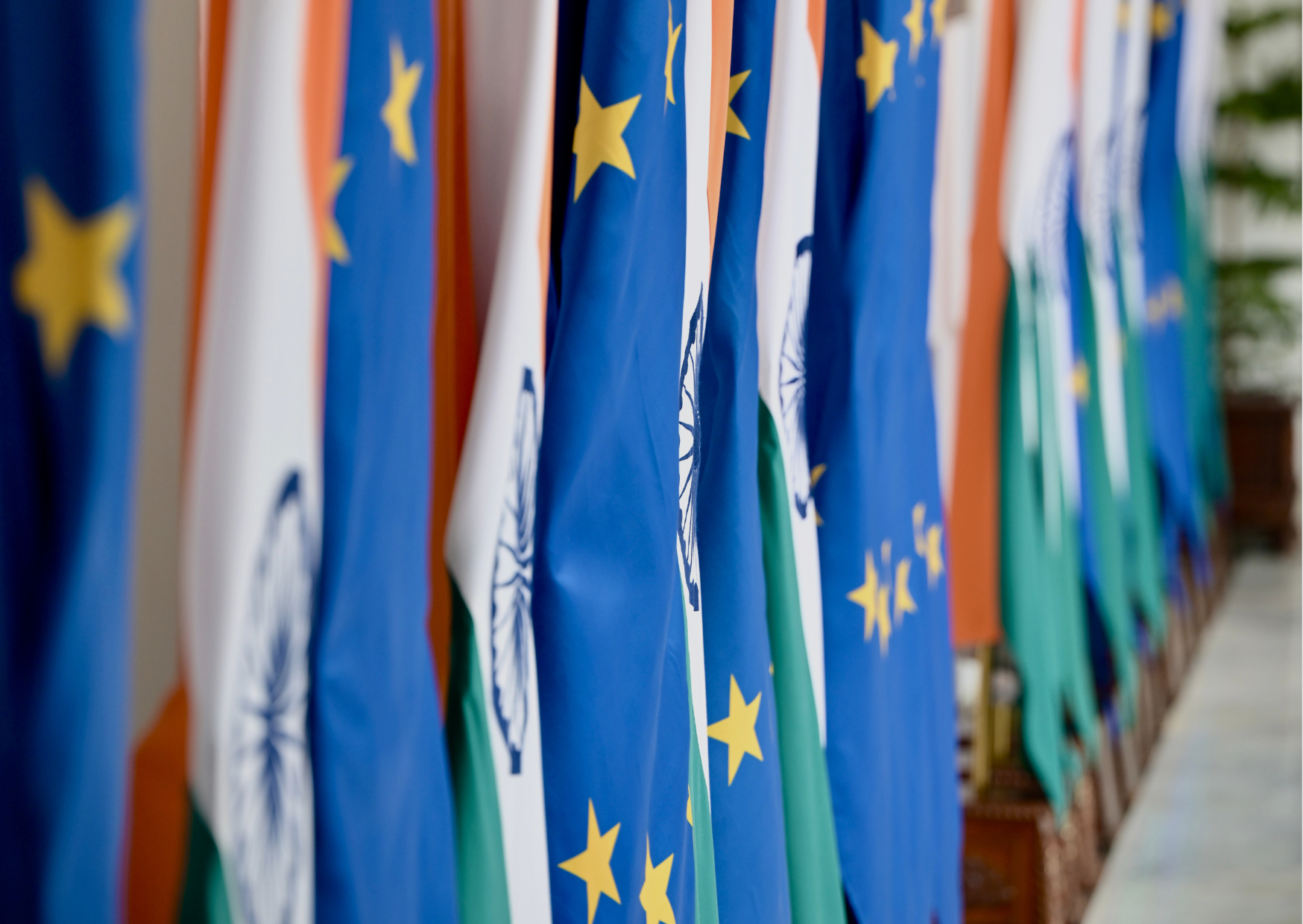
The Impact of Franco-German Competition on India-EU Security CooperatioN
WRITTEN BY SAPNA SURESH
4 May 2026
On 13 January 2026, German Chancellor Friedrich Merz visited India, becoming the first German leader to choose India rather than China as their first destination in Asia. The visit marked the expansion of Indo-German security ties, which have traditionally not been the driver of the relationship. This brings German engagement with India closer to France’s approach, by viewing New Delhi as a vital security partner in the Indo-Pacific. As the two largest defence spenders in the EU — accounting for 43.8 per cent of defence spending of the entire bloc — an emerging Franco-German consensus on deepening relations with India is a significant development. Yet, paradoxically, at a time when Paris and Berlin largely align on the geopolitical importance of deepening their relationship with India, while facing immense geopolitical uncertainty, Franco-German defence-industrial rivalries are likely to get in the way of future India-EU security cooperation.
Prior Franco-German differences
According to a report published by the European Parliament, France was one of the few EU members to recognise the geopolitical importance of India early on. As France sought strategic autonomy vis-à-vis the United States, it led to the development of an independent French arms industry, the creation of an independent nuclear arsenal, and engagement with non-aligned countries, such as India. At a fundamental level, the French vision of strategic autonomy developed by Charles de Gaulle echoes the Indian vision of non-alignment, which has evolved into multi-alignment today. Indo-French nuclear, space, and defence cooperation began in the 1950s and has since deepened, particularly after 1998, when Paris and New Delhi signed a strategic partnership.
By contrast, the Indo-German partnership has historically lacked strategic depth. Since World War II, German foreign policy has prioritised the transatlantic alliance and maintained a pacifist stance, limiting Indo-German defence ties. Under former Chancellor Angela Merkel, Berlin had implemented arms export control policies against India, over concerns of the country’s human rights abuses. By contrast, the central driver of Indo-German ties has been in trade and investment, rather than security ties.
The data reflects the impact of these diverging Franco-German policies toward India. In 2024, India imported arms from Germany worth TIV 22 million, whereas India’s arms imports from France were worth TIV 176 million. Similarly, in the same year, Indo-German trade in goods and services surpassed USD 50 billion, whereas Indo-French trade was at EUR 13.20 billion. However, those traditional Franco-German divides in security and trade that previously characterised relations with India could be on the cusp of ending due to German rearmament.
Berlin shifts its strategy
Since 2022, Berlin’s approach to investing in its security ties with India has begun to converge more closely with the French view. This policy shift was in large part driven by German rearmament, prompted by the Russia-Ukraine War, and transatlantic tensions.
Going forward, the success of India-EU defence cooperation hinges on whether Paris and Berlin can set aside their differences and prioritise the broader strategic picture of ensuring European strategic autonomy.
On 27 February 2022, three days after the Russian invasion of Ukraine, then German Chancellor Olaf Scholz gave a speech to the Bundestag, calling the event a Zeitenwende (meaning “watershed”). In his address, Scholz announced that Berlin would spend more than two per cent annually on defence. As Rachel Tausendfreund, then a senior fellow at The German Marshall Fund to the United States, said, “For the past 20 years, it has usually spent around 1.3 per cent” — a significant shift. In addition, Scholz announced that Germany would establish a EUR 100-million fund for military investments.
In parallel, Berlin has grown concerned over Washington’s commitment to the transatlantic alliance. Events such as the Liberation Day tariffs against the EU, US President Donald Trump’s threats to invade Greenland, and the American national security strategy seeking to “cultivate resistance” from within the EU have severely strained relations. With concerns about the future of the transatlantic alliance, Germany has begun to echo France regarding the need to reduce military dependence on the United States and invest more in European defence instead. This vision was perhaps best illustrated when German Chancellor Friedrich Merz announced in November 2025 that he would build Europe’s “strongest army”.
One consequence of German rearmament is the expansion of Indo-German security relations. In 2024, the German foreign ministry released its Focus on India document, outlining its vision to deepen security ties with India. The document outlines directives that assist New Delhi in reducing its reliance on Russian arms. Those policy statements were followed by concrete policy results, such as when Berlin lifted its arms restrictions on New Delhi in 2024. Following these changes, India became the third-largest buyer of German arms in the first half of 2024. In this regard, New Delhi and Berlin are expected to finalise a USD 8 billion submarine deal in early 2027. Thus, while trade continues to be a key pillar of Indo-German ties, Germany’s Zeitenwende has opened new possibilities for expanding defence cooperation that did not exist before.
What does France think?
While France has welcomed increased German defence spending, it is concerned about what influence Berlin could acquire from its growing military clout. In an interview with The New York Times, French officials said that strategic autonomy will increasingly have a “German accent”. They also apprehended that Germany’s defence industry could challenge the market share of French arms, since a significant portion of its revenue comes from arms exports. Another reason for French fears of German rearmament is rooted in the historical memory of German expansionism during the 19th and 20th centuries, and especially during the two World Wars.
The anxiety that German industry was “stealing their market share” played a role in impeding the Future Combat Aircraft System (FCAS), a joint Spanish, French, and German fighter jet. However, Berlin believes Paris merely wants them to pay for the aircraft carrier. In fact, the fear of Berlin’s bourgeoning defence industry may have prompted Paris to share military technology with New Delhi. As Shanthie Mariet D’Souza, a senior research fellow at the University of Massachusetts Amherst described, France depends on arms exports to India, since “the sheer volume of Indian orders makes it indispensable to the profitability and sustainability of the French defence industry”. According to the Stockholm International Peace Research Institute, India alone accounted for 24 per cent of French arms exports between 2021 and 2025.
The implications for India
Franco-German defence industrial competition has implications for India as it can impede future India-EU security cooperation. For example, in March 2026, Indian media reported that India is seeking to join the FCAS. However, Germany’s ambassador to India, Philipp Ackermann, said that France and Germany need to resolve their differences before India can join. These remarks illustrate that such disagreements can delay future Indian arms procurement and defence coproduction plans.
Fundamentally, given the immense influence the Franco-German engine has over EU trade, technology, industrial, monetary, and security policy, if those two countries are unable to work together, the ability of the EU to act as a coherent bloc would stall. The tensions between France and Germany on defence cooperation illustrate a paradox for India. Previously, one of the main barriers to Indo-German cooperation was the perception that Berlin did not prioritise investing in its relationship with India as France did.
Yet, at a time when Berlin is aligning with France on strengthening security ties with India, France is concerned that Germany will outpace its defence industry. Going forward, the success of India-EU defence cooperation hinges on whether Paris and Berlin can set aside their differences and prioritise the broader strategic picture of ensuring European strategic autonomy.
DISCLAIMER: All views expressed are those of the writers and do not necessarily represent those of the 9DASHLINE.com platform.
Author biography
Sapna Suresh is a master’s student at The George Washington University and was a prior exchange student at Sciences Po. She primarily focuses on India’s relationship with France and the European Union, and more broadly, is interested in the convergence between European and Indo-Pacific geopolitics. Image credit: European Union, 2025 (cropped).