Taiwan's democratic trilemma after Beijing
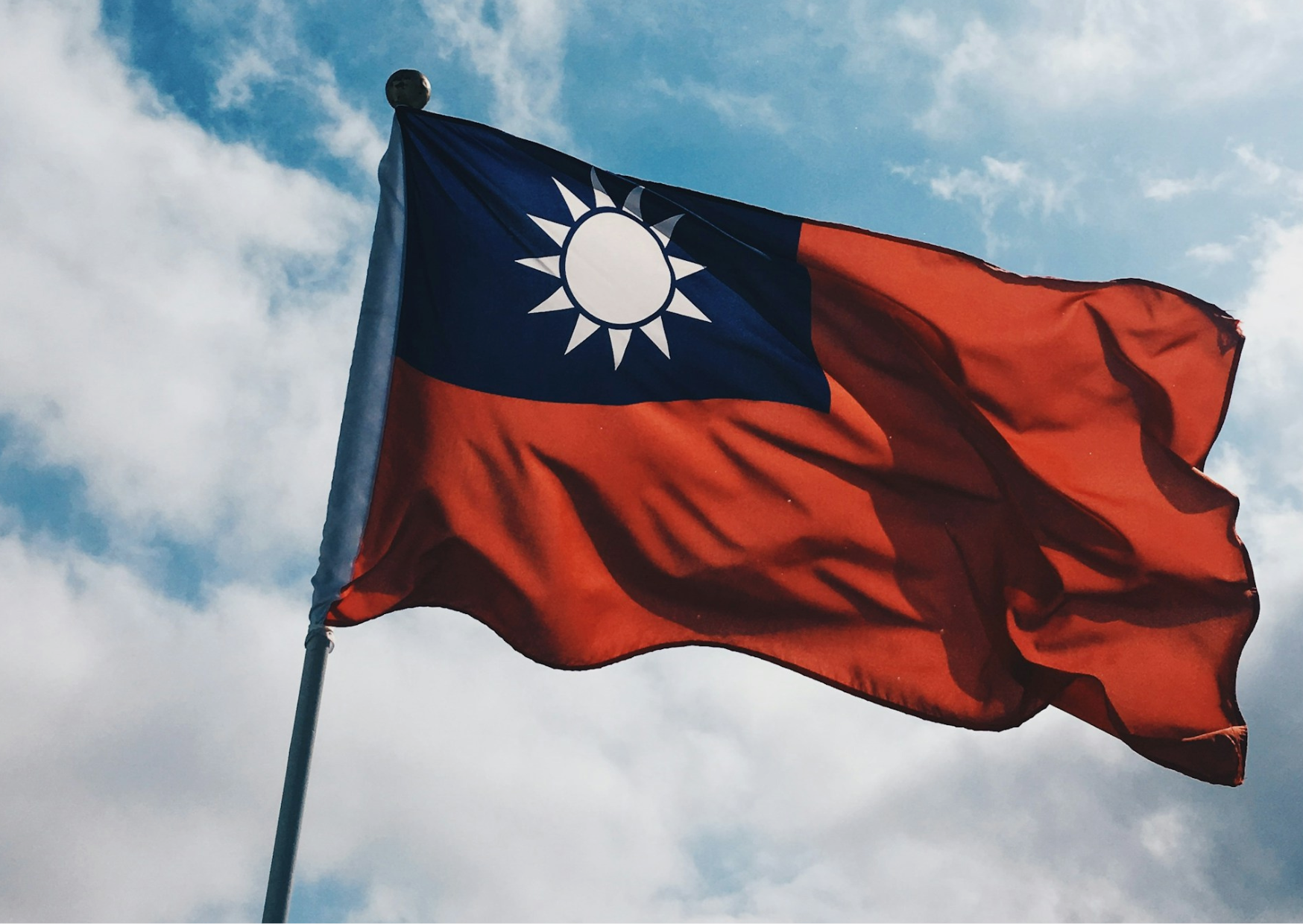
Taiwan's democratic trilemma after Beijing
WRITTEN BY PERCY YIXUANCHEN YU
3 June 2026
The May 2026 Trump-Xi summit in Beijing tried to turn a dangerous relationship into a manageable one. In China's official readout, Xi Jinping treated Taiwan as the most sensitive issue in US-China relations, warning that mishandling it could produce "clashes and even conflicts". The same account, however, presented the summit as a step towards "a constructive China-US relationship of strategic stability": cooperation as the mode, competition within limits, managed differences, and more predictable peace. For Taipei, those two messages cannot be separated. The language of stability may reduce the chance of an immediate US-China rupture, but it can also narrow the space in which Taiwan's elected government is allowed to speak.
This is Taiwan's democratic trilemma. Taiwan is a democratic polity with incomplete formal recognition. Beijing is the stronger sovereign claimant and treats unification as a core national task. The US is Taiwan's indispensable external supporter, but its support remains embedded in a larger China policy. Taiwan must therefore satisfy three demands that pull against one another: keeping its elected voice visible, avoiding a performative assertion of sovereignty that could invite escalation, and preserving US support without becoming a mere bargaining chip in US-China relations. Each demand is reasonable independently. Together, they create a persistent trilemma of democratic agency under external constraint.
The tension between stability and voice became clear almost immediately after the summit. Trump said he would speak with President Lai Ching-te, while Reuters later reported the US and Taiwan had not discussed plans for a call. Taiwan's Foreign Minister Lin Chia-lung said such a call would be viewed positively but that the initiative would have to come from Washington. Beijing, predictably, opposed official US-Taiwan contact. Whether the call will happen remains uncertain. But the politics around it have been revealing.
The politics of voice
A possible Trump-Lai call is not the entire story. It is the diplomatic face of a broader trilemma. In the Taiwan Strait, form is not empty ritual. Who speaks, who waits, and whose voice is filtered through another capital often determines the substance of political status. Beijing's post-summit press conferences showed this clearly: in response to Lai's remarks, the foreign ministry again insisted that Taiwan "has never been a country" and that the PRC government represents the whole of China. The dispute is therefore not only over policy. It is over who is authorised to narrate Taiwan's political existence.
The lesson for Taiwan is uncomfortable but necessary. The AI shield is not a shield unless it is supported by social resilience, Taiwan's own diplomatic voice, and democratically authorised security policy.
A direct call would not amount to recognition of Taiwan as a state, nor would it change the cross-Strait military balance. Its significance would lie elsewhere. It would make Taiwan's elected president visible inside the very US-China risk-management structure that is meant to control the Taiwan question from above. That is why the possibility of a call matters. Taipei could signal willingness, Washington could retain option value, and Beijing must decide how loudly to reject something that may never happen.
This is the asymmetry of silence. Beijing wants Washington to restrain moves towards what it defines as "Taiwan independence". Washington wants to keep the Taiwan issue from overwhelming the rest of its China agenda. Taipei wants stability without being rendered inaudible. If the call happens, it should be framed as disciplined, status quo communication — a democratic leader explaining why coercion, blockade threats, grey-zone pressure, and forced political absorption cannot be treated as normal instruments of stability. If the call does not happen, the episode still exposes the fact that a calmer US-China relationship remains politically unstable if the society most exposed to danger is discussed only by others.
Authorisation under pressure
Taiwan's domestic politics are therefore not distinct from its deterrence strategy. They are the arena in which any strategy for resisting coercion, sustaining US support, and preserving democratic consent is legitimated. Lai's second-anniversary address put this into democratic language. Taiwan's future, he argued, cannot be decided by outside forces or held hostage by fear and division. That claim is not merely rhetorical. It points to the harder question of democratic authorisation.
Taiwan cannot build security policy only through executive signalling to Washington or symbolic resistance to Beijing. Defence budgets, arms purchases, civil-protection measures, and industrial-security policies must pass through a pluralistic political system. A divided legislature can slow the government. Opposition parties can demand scrutiny. Citizens can resist militarisation if they think leaders are asking for sacrifice without explanation. None of this means Taiwanese democracy is weak. It means deterrence has to be authorised, not simply announced.
Recent legislative disputes over defence spending illustrate this dynamic. After the ruling Democratic Progressive Party (DPP) lost its legislative majority in 2024, the Kuomintang (KMT) and Taiwan People’s Party (TPP) gained enough leverage to shape security legislation from the opposition benches. In May 2026, the opposition-controlled legislature approved a scaled-down special defence budget. Opposition parties framed the reduction as oversight and resisted what they described as blank cheques, while the government warned that excluding parts of its package could leave gaps in deterrence. The core issue is therefore no longer only the final price tag or the inventory of missiles and drones. It is whether a security strategy designed to deter Beijing and reassure Washington can be authorised by a legislature the governing party does not control.
This is why Taiwan's whole-of-society defence resilience agenda matters. It shifts security from exclusively military issues and to the everyday capacities of a democratic society: civilian training, critical-supply distribution, energy and infrastructure continuity, medical readiness, emergency communications, transport and financial-network protection, and trust between citizens and the state. These are not substitutes for weapons. They are the political and social conditions under which weapons and alliances become credible.
The trilemma becomes sharper here. The US can provide arms and diplomatic support, but it cannot create Taiwanese consent. Beijing can threaten, punish, or entice, but it cannot fully control how Taiwanese voters interpret pressure. Taiwan's task is to convert disagreement into durable policy. Democratic argument is useful only if it produces decisions that can survive elections, scrutiny, and crisis. Otherwise, pluralism becomes paralysis, and paralysis becomes a vulnerability that stronger powers will exploit.
The AI shield's limits
Tech competition adds another layer to the trilemma. Taiwan's importance in the AI era is obvious, but its position is often misunderstood. Taiwan produces crucial hardware, but AI infrastructure depends on far more: chips, servers, power, data centres, secure networks, skilled labour, and operational trust have to function together. Taiwan's value rests on a working democratic society, not just machines inside its fabrication plants.
This complicates the idea of a "silicon shield". Technological indispensability can attract support, but it can also make Taiwan more exposed. If external actors value Taiwan mainly as a supply-chain asset, they may focus on protecting capacity while overlooking the political community that sustains it. If Beijing sees advanced computing as central to national power, Taiwan's industrial base becomes a pressure point in the struggle for computational advantage. If Washington speaks of reducing exposure to Taiwan rather than strengthening shared resilience with Taiwan, reassurance can begin to sound like preparation for abandonment.
Chips are not the only point of vulnerability. Studies of Taiwan's undersea communications cables show how grey-zone pressure can target connectivity without crossing the threshold of open war. That matters in the AI age because data, cloud services, emergency communications, and financial transactions are also part of strategic resilience. A society can possess world-class manufacturing and still be vulnerable if its links to the outside world, its information environment, and its domestic coordination are repeatedly disrupted.
The lesson for Taiwan is uncomfortable but necessary. The AI shield is not a shield unless it is supported by social resilience, Taiwan's own diplomatic voice, and democratically authorised security policy. Technology gives Taiwan leverage but leverage only counts if it can be converted into policies that survive elections, legislative scrutiny, and crisis. Taiwan must show that defending its high-tech ecosystem means defending the people, institutions, and liberties that make the ecosystem reliable.
The same lesson should guide Washington, Europe, and Indo-Pacific partners. De-escalation cannot mean asking Taiwan to disappear from conversations about its own future. Support for Taiwan cannot mean empty symbolism detached from resilience. The responsible position is harder — reduce the risk of war while preserving Taiwan's ability to authorise its own security, speak for itself, and turn technological value into political weight.
Constructive strategic stability will be tested by this standard. It will not be enough for Washington and Beijing to reduce outward tensions while treating Taiwan as a sensitive file in bilateral relations. A stable order that silences Taiwan would be strategically brittle and morally incoherent. The real test is whether the most dangerous issue in US-China relations can be managed without making the democratic society at the centre of the danger disappear from the process. The Trump-Lai call may or may not happen. Taiwan's demand to be heard will remain.
DISCLAIMER: All views expressed are those of the writers and do not necessarily represent those of the 9DASHLINE.com platform.
Author Biography
Percy Yixuanchen Yu is the inaugural Visiting Research Fellow at Nanjing University's School of International Studies. His work focuses on US-China-Taiwan relations, democratic legitimacy, and Taiwan’s strategic agency under contested sovereignty. Image credit: Leannk/Unsplash (cropped).